

the blog.
Winter Capsule Wardrobe
Winter is here and that means it's finally time to reveal my second capsule wardrobe! I had a lot of fun with my Fall Capsule and loved putting together this wardrobe, armed with months of capsule experience. (Learn how to build a capsule wardrobe here!) Some of my choices last time just didn't get worn, so I'm hoping to make wiser picks in my Winter Capsule that can handle the range of weather conditions and temperatures that Toronto winters throw at us Torontonians!
Winter is here and that means it's finally time to reveal my second capsule wardrobe! I had a lot of fun with my Fall Capsule and loved putting together this wardrobe, armed with months of capsule experience. (Learn how to build a capsule wardrobe here!) Some of my choices last time just didn't get worn, so I'm hoping to make wiser picks in my Winter Capsule that can handle the range of weather conditions and temperatures that Toronto winters throw at us Torontonians!

First things first, I promised I would review my first ever capsule wardrobe experience!
F A L L C A P S U L E W A R D R O B E R E C A P

T H E G O O D.
- I LOVED the capsule wardrobe experience and never want to go back to the standard closet explosion of earlier years!
- The neutrals meant that almost every item went with everything else, which made getting ready so much faster!
- I loved the minimal and neutral style I curated for myself.
- I really enjoyed the challenge to create different combinations from the same pieces for the 3 months. Go check out my instagram to see what I put together!
- This experience made me realize that I can downsize my wardrobe even more than I did during my KonMari minimizing spree, which is super exciting for a clothing hoarder like me!
- The majority of my clothes were super comfortable which was AWESOME.
T H E B A D.
- My tall black boots broke the first time I tried to wear them. Yeah.
- I barely wore the dressier items I included - the two white button downs and the deep v neck long sleeve tops in black and white. My day to day and work environments are very casual and I had barely any opportunities to dress up, other than auditions. Since audition wear isn't included in my capsule I just didn't need these items!
- The dress pants, track pants, and green jeans I included are cropped and it was often too cold to wear them, despite wanting to.
T H E U G L Y.
- I definitely didn't include enough clothing for cold weather - it got VERY cold in December and I had to go outside of my capsule to keep warm enough with more layers and heavier sweaters. This is a tough problem in Toronto where fall weather goes from summer heat to winter chill on a day to day basis. I hope next year I can find a better balance!
And now time for my winter capsule wardrobe reveal...

Once again I'm sticking to an almost entirely neutral palette. I considered including a plaid shirt again, but finally decided against it. Only time will tell if I regret that decision!
I did a lot of thinking and planning around layering options, since the temperature in Toronto ranges quite a bit. I also work in a store that can go from freezing to boiling to freezing again within any give day, so I need to be able to take off and put on layers easily! I'm hoping that I have enough of each layering category to keep me going until the end of March, I actually increased the number of tops in my capsule from 18 to 27(!) so hopefully I've covered all of the bases!
I'm also excited about my new vegan coat (see my unboxing video here) as it's black (surprise surprise), super warm, and very comfortable! 20 points to HoodLamb for making an awesome winter jacket. I plan on doing a detailed review after I've had a bit longer with it!
Just like last time, I'll share where I bought everything if you're interested in picking up a couple of the pieces. Once again, a little disclaimer. As I am an ethical vegan, I do not endorse purchasing any items made from or by animals. A couple of these pieces I purchased before my transition to veganism, and are therefore not in line with my current beliefs. If you are interested in my take on wearing products made from or by animals as a vegan, and why I continue to wear some of my old pieces, check out the post HERE. I won't be linking to items containing animal products but will instead link to a similar item made with vegan materials. I hope you understand and respect why I am choosing to do this! Also, some of the items were given to me or I purchased long enough ago that they are no longer available. In those cases I will link to something similar, or the same item in a different colour!
Alright, here we go!
TOPS (27)
- white cami - similar
- white flowy cami - aritzia
- white tank - similar
- white tee - aritzia
- white v neck tee - urban outfitters
- beige deep scoop cami - similar
- taupe waffle long sleeve - aritzia
- deer baseball tee - similar
- heavy patterned cardigan - similar
- grey cropped tank - brandy melville
- grey tank top - hollister
- grey tee - aritzia
- grey v neck long sleeve - similar
- grey hooded cardigan - similar
- grey & black baseball tee - aritzia
- dark grey tee - aritzia
- beatles tank - similar
- black cropped cami - similar
- black cami - similar
- black tee - aritzia
- black deep v neck tee - similar
- black henley - similar
- black long sleeve top - aritzia
- black v neck long sleeve - aritzia
- black cardigan - similar
- black pullover sweater - similar
- black chunky pullover sweater - similar
BOTTOMS (8)
- black skinny jeans - american eagle
- black zippered leggings - zara
- black leggings - urban outfitters
- black vegan leather pants - similar
- grey high waisted leggings - similar
- high waisted blue jeans - urban outfitters
- blue ripped jeans - similar
- blue jeans - anthropologie
DRESSES (1)
- grey sweater dress - aritzia
OUTERWEAR (1)
- black parka - hoodlamb
SHOES (3)
- vegan doc martens - doc martens
- short black cowboy boots - similar
- black winter boots - nice shoes
That's it! I'm excited to see how this capsule holds up over the next 3 months. I will be committing to no new purchases until mid May or so, when I will be planning my spring capsule! Check out my Style and Capsule Pinterest boards to see what I'm loving for spring as I begin looking for inspiration!
I hope you've enjoyed reading my recap and seeing my new picks for winter 2016! I've been considering filming videos to go along with my capsule wardrobe posts, whether sit down chat style or showing the clothes on my body as more of a look book. Let me know if you'd watch and which you'd like better! If you have any questions or suggestions please let me know in the comments and I hope you'll consider giving capsule wardrobes a try!
Until next time,

Are you doing a capsule wardrobe this winter? Leave your link below so that we can check out your picks!





The Truth About Eggs
A month ago I put together a post on the dairy industry and why I will never again support it - but eggs have gone largely uncovered on my blog, that is, until today. Let's talk facts!
A month ago I put together a post on the dairy industry and why I will never again support it - but eggs have gone largely uncovered on my blog, that is, until today. Let's talk facts!

H E A L T H
Most people claim to eat eggs for the health benefits, especially their protein content. Let's consider the actual makeup of an egg:
An egg is 2% carbohydrates, 63% fats, and 35% protein. One large egg (50g) contains approximately 211mg of cholesterol, no fibre, and 2g of saturated fat (almost half of the total fat content).
Now let's take a look at what this means for the human body.
Carbohydrates
The 100 000 billion cells in our body rely on carbohydrates as their main source of energy, as each and every cell can use them for fuel. We need carbohydrates for all of our major systems including the central nervous system, the heart, and the brain to function properly and they are the easiest macronutrient to convert to energy. For a food touted as the perfect health food, you would think it would be made up of more than 2% of our ideal energy source!
Fat
While we need a small amount of fat in our diets for maintaining cell membranes and providing cushioning for organs, it is widely accepted that a high-fat diet is an unhealthy one. Recommendations for fat intake from physicians and nutritionists range from 35% of daily calories on the high end to 10% on the low end.
Not only are eggs high in total fat, but they are high in saturated fat - the single biggest contributor to high cholesterol and heart disease (which killed more than 17.5 million people in 2012).
Cholesterol
From Virginia Tech's Educational Report on Heart Healthy Eating: "A cholesterol lowering diet should first be low in total fat, especially saturated fat, as well as cholesterol."
The only foods that contain cholesterol are animal products, with egg yolks and organ meats ranking highest for cholesterol content. It is recommended that those with heart disease, high cholesterol, or diabetes keep their dietary cholesterol intake to below 200mg per day - less than that found in a single egg. There is also the (often unmentioned) fact that the human body has no need whatsoever for dietary cholesterol. We make 100% of the cholesterol we need for normal, healthy functioning in our own bodies, and never to excess.
"Patients at risk of cardiovascular disease should limit their intake of cholesterol. Stopping the consumption of egg yolks after a stroke or myocardial infarction would be like quitting smoking after a diagnosis of lung cancer: a necessary action, but late." - Dietary cholesterol and egg yolks: Not for patients at risk of vascular disease
But what about egg whites? While it's true that the majority of the fat and cholesterol is found in the yolk, and if your only concern is reducing dietary cholesterol intake eliminating the yolk may seem like the solution, the unfortunate truth is that the egg white is a much more concentrated vessel for animal protein than the whole egg, and that's not so good for us either.
Protein
Protein has been hailed the most important macronutrient in popular culture for decades, and while it is very important for proper growth in children, tissue repair, preserving muscle mass, and creating essentials hormones and enzymes (among other things), we don't need NEARLY as much of it as people think. The average healthy adult of either gender requires 0.66g of protein per day per kg of weight, meaning a 150lb (68kg) person would need 44.9g of protein per day to meet their daily protein needs. This is easily achievable in a vegan diet, and is quickly surpassed in a vegetarian or omnivorous one.
So what's the problem with getting more protein? Excess protein increases the risk of kidney disease, kidney stones, and some types of cancer. Animal protein in particular has a startling effect on the growth of cancerous tumours, as seen in the extensive research done by Colin T. Campbell in The China Study.


Fibre
Eggs are completely devoid of fibre, which is essential for eliminating waste. Low fibre diets can cause constipation, hemorrhoids, and an increased risk of colon cancer while high fibre diets reduce the risk of heart disease, diabetes, and obesity and lower cholesterol.
Salmonella
More than 100,000 people are poisoned by salmonella-tainted eggs per year in the US alone and experience diarrhea, fever, and abdominal cramps for up to a week.
Diabetes
A review of fourteen studies conducted on the effect of egg consumption on diabetes concluded that highest egg intake increased the risk of developing diabetes by 68% compared to those who consumed the least.
Cancer
Egg consumption has an effect on the development on many types of cancer:
- Consuming 1.5 eggs per week resulted in almost 5 times higher risk of colon cancer when compared to those who consumed less than 11 eggs per year;
- Men who consume 2.5 eggs per week increase their risk for developing a deadly form of prostate cancer by 81% when compared to those who consume less than half an egg per week;
- The WHO found that eating eggs is associated with death from colon and rectal cancer when analyzing data from 34 countries in 2003, and;
- Moderate egg consumption was found to triple the risk of developing bladder cancer in a 2005 study published in International Urology and Nephrology.
Do you still think that eggs are a healthy choice?
A N I M A L R I G H T S
As if the health risks of consuming eggs weren't convincing enough, life is not pleasant for the hens and chicks on factory farms.
While chickens can live up to 14 years on average, hens only lay eggs for about two of those. Guess how many years they're allowed to live on factory farms? Correct. Two. What happens next? They are sent to the slaughterhouse, as they are no longer "useful" for anything but their flesh.
It begins at birth: chicks will never see their mothers and are quickly separated, males from females. Many die from the rough treatment in automated sorting machines. The females are kept and raised to lay, but what about the males? They are of no use to the egg industry and are either thrown in trash bags to suffocate or ground up alive. Babies, only days old, are GROUND UP ALIVE. By the millions. “There is, unfortunately, no way to breed eggs that only produce female hens. If someone has a need for 200 million male chicks, we’re happy to provide them to anyone who wants them. But we can find no market, no need.” - Mitch Head, the spokesperson for United Egg Producers. How is this allowed to go on?
Life for the females may be longer, but is full of suffering nonetheless. Crammed into tiny battery cages, 5 to 11 in each, they are stacked on top of each other allowing the filth from cages above to drop into those below. Dead and diseased hens may be left to decompose in the cages with the living (who are producing eggs for human consumption, mind you), causing further death and disease.
Due to the crammed and stressful living conditions the birds are subjected to, farmers clip off the tips of their sensitive beaks, full of nerve endings, to prevent hens pecking each other to death.
Many turn to organic or "free-range" eggs, under the impression that the hens live happier lives. That is not necessarily the case. Labels on egg cartons, other than "organic", are not subject to any government regulations. That means that there is no government body keeping tabs on the conditions at egg farms ensuring that birds are treated humanely and approving "free-range" status.
Many organic and “free-range” farms are just like factory farms in the way they crowd thousands of birds into sheds or on muddy lots and debeak the hens. Most hens never have the chance to go outside and breathe fresh, clean air. Male chicks are disposed of in the exact same way as on factory farms and death and disease from less-than-ideal conditions still occur regularly.
There is another similarity. The hens will still be sent to slaughter once egg production stops a mere 7th into their lives. The suffering they experience during their lives may be incrementally less than those on factory farms, but they are still only allowed to live until they can no longer bring in a profit.
Chickens are smart, funny, and have distinct personalities from one another. They have a sense of time and can communicate using more than 24 different vocalizations, beginning even before hatching. By the time they have broken out of their shell they can recognize their mother's voice. Chickens have very good memories and can not only count, but understand geometry. They are caring beings who develop relationships and learn from observing the habits of others.
They don't deserve to experience only suffering each and every day of their lives, which are being cut so incredibly short.
Make the healthiest and most compassionate choice available and stop including eggs in your diet today!
Until next time,

What surprised you most about eggs - their negative impact on health or the horrifying conditions of farms?
Not sure what to read next? Try How To Go Vegan or 10 Reasons To Go Vegan!



S O U R C E S
http://nutritiondata.self.com/facts/dairy-and-egg-products/111/2
http://pubs.ext.vt.edu/348/348-898/348-898.html
http://nutritiondata.self.com/facts/dairy-and-egg-products/112/2
http://www.forksoverknives.com/whats-wrong-with-eggs/
http://www.mckinley.illinois.edu/handouts/macronutrients.htm
http://www.who.int/mediacentre/factsheets/fs310/en/index2.html
http://plantbasedbride.com/blog/vegansvsprotein
http://www.ncbi.nlm.nih.gov/pmc/articles/PMC2989358/
http://breakingmuscle.com/nutrition/the-great-egg-debate-4-reasons-you-need-to-stop-eating-eggs
http://www.webmd.com/food-recipes/food-poisoning/salmonellosis-topic-overview
http://www.peta.org/features/egg-industry-cruelty/
http://www.care2.com/causes/hipster-farmers-abandoning-backyard-chickens-by-the-hundreds.html
http://www.care2.com/causes/ground-up-alive-baby-chicks-suffer.html
http://www.care2.com/causes/horrific-conditions-for-factory-farmed-chickens-exposed.html

Say No To Fur (HoodLamb Vegan Coat Unboxing!)
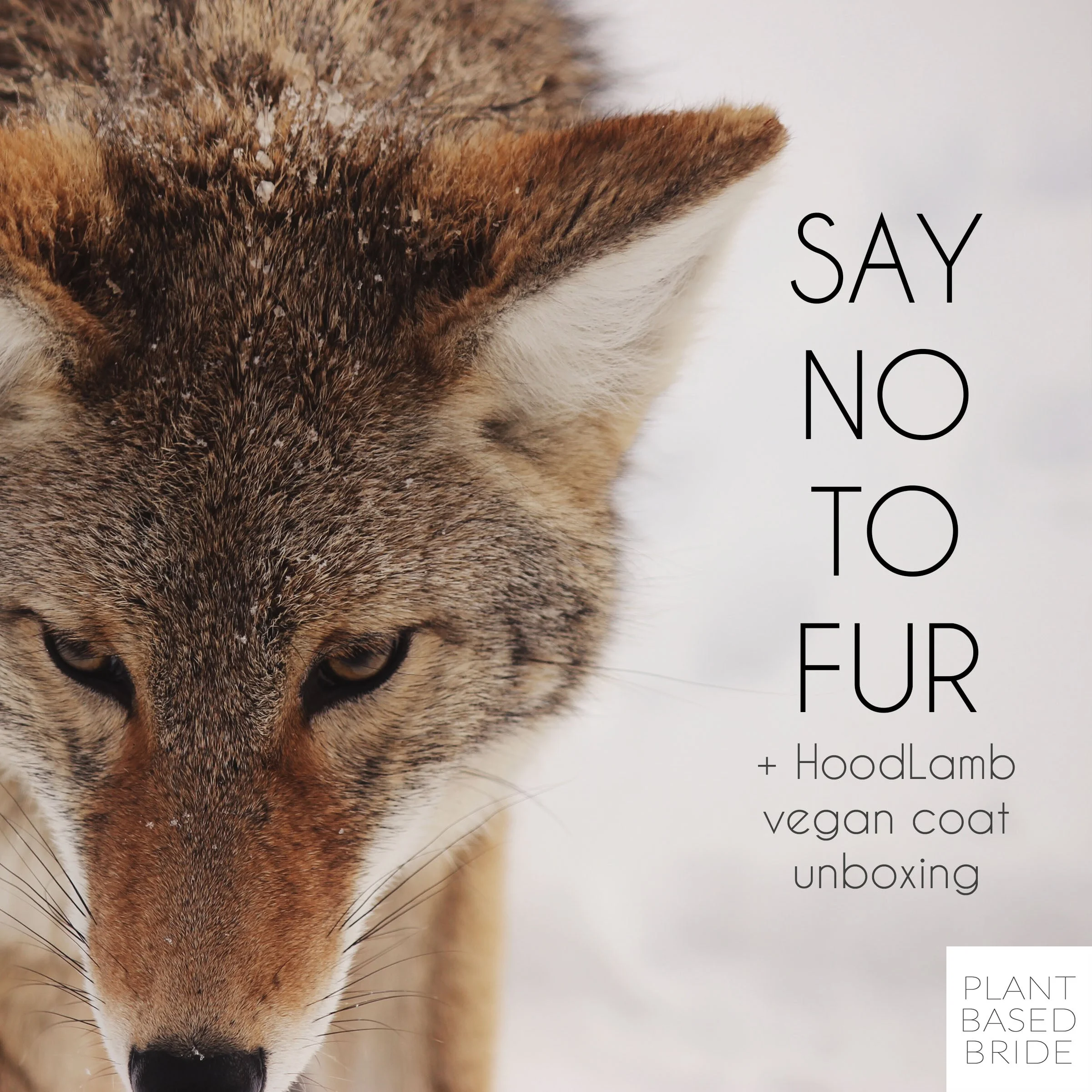
I've never been a big fan of winter, but since going vegan I find the Canadian winters even more difficult to bear. As soon as the temperature starts to drop the winter gear comes out in full force, and that means that almost every person is wearing fur. Before going vegan I owned coats with fur trim and never thought anything of it. I was told that it was natural, that it was the perfect material to keep warm, that it was normal. And I never thought to question it. Now I know better, and every bit of fur I see feels like a punch in the stomach. We no longer NEED to wear fur to keep warm, so why continue to inflict unnecessary suffering? Let's turn over a new leaf and say no to fur in 2016.
I've never been a big fan of winter, but since going vegan I find the Canadian winters even more difficult to bear. As soon as the temperature starts to drop the winter gear comes out in full force, and that means that almost every person is wearing fur. Before going vegan I owned coats with fur trim and never thought anything of it. I was told that it was natural, that it was the perfect material to keep warm, that it was normal. And I never thought to question it. Now I know better, and every bit of fur I see feels like a punch in the stomach. We no longer NEED to wear fur to keep warm, so why continue to inflict unnecessary suffering? Let's turn over a new leaf and say no to fur in 2016.

For some, simply fully accepting the fact that fur is the skin and hair of an animal killed solely for that purpose is enough to change their ways. But unfortunately, most of us have been so brainwashed by our society that even that fact makes zero impact. I refuse to believe that we are past the point of no return, however. Here are 10 facts about fur that should make you squirm, get sad, get angry, and make a change:
ONE More than 50 million animals are abused and slaughtered each year for their fur. This includes rabbits, foxes, minks, cats, and dogs.
TWO 85% of fur comes from animals on fur farms where they are crammed into tiny, filthy wire cages for the entirety of their short, miserable lives. Cages full of animals are thrown to the ground, often breaking their bones.
THREE China is the world's largest fur exporter. There are no laws in China to prevent the abuse of animals on fur farms. Innocent animals are stunned by having their heads clubbed or slammed against the ground, often regaining consciousness as they are skinned alive.
FOUR In Europe and North America, animals are electrocuted genitally or anally to avoid damaging valuable "product" - their fur.
FIVE Buying fur supports an industry that slaughters cats and dogs in the millions each year. In China more than 2 million cats and dogs are killed annually and their fur is sold around the world, including in Canada and the US, intentionally mislabelled as the fur of "less loved" animals or even as faux-fur.
SIX Fur farms are bad for our planet. Fur causes ozone layer depletion, soil and water pollution, and toxic emissions 2 to 28 times greater than other textiles. Each and every year the average Canadian fur farm produces around 240,000 kilograms of manure and requires 600,000 kilograms of feed. The runoff of manure from these facilities is a major threat to soil and water quality, according to the David Suzuki Foundation - affecting humans and wildlife alike: “[t]he Department of Agriculture, the primary promoter of the fur industry, is also the primary regulator” they say. Troubling, indeed.
SEVEN Fur farms in the US are not regulated by the federal government.
EIGHT Furs are treated with toxic chemicals to prevent them from rotting in your closet. Not only is that an unsettling thought, but what are those chemicals doing to the people who are wearing the flesh and hair treated with it?
NINE Animals caught in the wild are often left in traps for days as they suffer from shock, blood loss, dehydration, starvation, frostbite, gangrene, and attacks by their predators. Once collected from the traps they are brutally killed, if not already dead.
In Canada we have many blights on our reputation for our abuse of wildlife. Tens of thousands of baby harp seals are killed by gunshot or bludgeoning with clubs tipped with metal hooks each and every year while hundred of black bears are shot or caught in traps so that their skin can be made into the hats worn by Queen Elizabeth II's Five Guards' Regiments.
TEN Many animals are skinned ALIVE. The lucky ones are clubbed over the head to induce a state of unconsciousness, but often awaken and struggle as their skin is peeled from their bodies. Bloody and in agony, they are thrown onto a pile of dying animals as they blink slowly with shock. They are left to die a slow and painful death.
I will not include pictures or videos in this post, as they are universally horrifying. I couldn't research this post and write this list without stopping to cry every few minutes due to the extreme suffering these animals experience. I truly believe that anyone who fully accepts the horrific nature of the fur industry would be unable to continue to support it financially. Sometimes words aren't enough. If this list hasn't moved you to change I suggest you watch this video (at the bottom of the article). It is graphic. But if tens of millions of animals can go through this hell each and every year, we can at least be honest with ourselves about what we are doing to them. If you buy fur, it's the very least you can do.
Maybe you're convinced that you should cease to support the fur industry. How will you stay warm without fur (and leather, down, and wool) this winter?
Easy. There are more vegan winter-wear options every year, and the technology is rapidly improving! I suggest looking into Vaute or HoodLamb as a start for a warm and stylish coat that is 100% cruelty free!
I decided to buy a HoodLamb coat myself, as The Toronto Hemp Company carries them and I could try it on. I made an unboxing video for the coat which you can watch below!
The weather has been all over the place so far this winter, but on the coldest days this coat has kept me toasty warm! I'll do a review at the end of this winter with my impression of the coat over the long term.
Until next time, keep it fur-free!

If you have a vegan winter coat let me know what you think of it in the comments below!
If you liked this post you may also like... Should You Get Rid Of All Your Leather Now That You're Vegan?





S O U R C E S
http://www.peta.org/issues/animals-used-for-clothing/fur/
http://www.humanesociety.org/issues/fur_fashion/?credit=web_id86162647
http://www.peta.org/features/nine-shocking-fur-facts/
http://features.peta.org/ChineseFurFarms/
http://www.lcanimal.org/index.php/campaigns/fur/fur-trade-facts
http://furbearerdefenders.com/environmental-impacts/environmental-impact-from-fur-farms
http://www.humanesociety.org/assets/pdfs/fur/field-guide-on-real-vs-fake-fur-final.pdf
How To Go Vegan
Last week I encouraged all of you to go vegan for the month of January with Veganuary and promised a "how to go vegan" tips and tricks post. Well, here we are! Whether you signed up for the challenge or are just interested in making the transition to veganism on your own, I'm here to try to make the process as seamless as possible!
Last week I encouraged all of you to go vegan for the month of January with Veganuary and promised a "how to go vegan" tips and tricks post. Well, here we are! Whether you signed up for the challenge or are just interested in making the transition to veganism on your own, I'm here to try to make the process as seamless as possible!

Before we start, did you know that I have a Resources page with lots of goodies to help you on your journey? Be sure to give the list a read through once you finish this post!
Also, one more thing... I made a video version of this post for those of you who prefer listening to reading! You can watch it on YouTube or right here on my website at the bottom of this post!
Ok. Veganism. It's kind of a scary word, isn't it? It conjures up images of an ancient religion, or a strict order, or an overbearing ideology, right? The good news? It isn't any of those things. Veganism is, at its core, compassion. And the even better news? You're already a compassionate person! All you need to do to go vegan for good is to connect the compassion that is already inside of you to the plight of the animals, our fellow humans, our planet, abd your own health!
Now, you may be thinking; "That's great, Elizabeth. But HOW do I do that?"
I'm glad you asked!
For me, this connection came about through exposure to the realities of the animal cruelty inherent in the animal agriculture industry of today. Or, more simply, I educated myself!
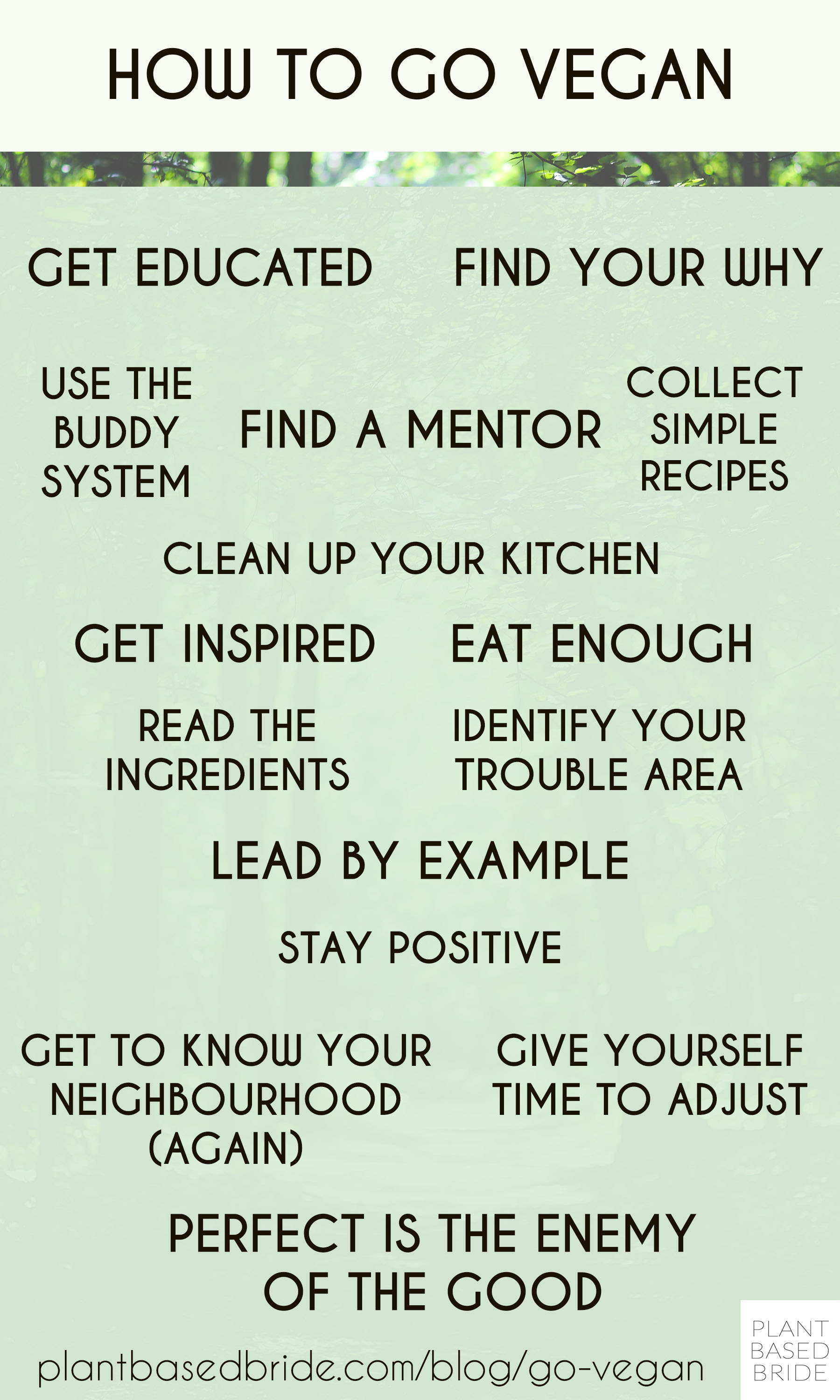
1. GET EDUCATED
The more you know, the easier it is to stay motivated. Every time I learn something new about an aspect of veganism, my resolve strengthens. For example, the recent release of the documentary film Cowspiracy educated me far more deeply on the environmental impact of the animal agriculture industry than I had ever been before, the environment being an aspect of veganism that was low on my list of interess. If you asked me about the benefits of veganism today, saving the planet would be amongst the very first mentioned. If you get in the know now, and keep on top of learning more on an ongoing basis, going and staying vegan won't be nearly such an imposing challenge!
The more I learn, the more committed I become. Click here to open the resource page in another window and sign up below for my Vegan 101 info booklet to give yourself a starting point!
There's another important reason to get educated - the more you know, the more confident you'll be answering the questions of the non-vegans in your life. This is important not only for you - the more confident they see you are, the less like they'll be to question your choices or make jokes at your expense - but for the vegan movement. If you're going vegan you probably have a compelling reason. The more researched and well-spoken you are, the more likely others will be to take your message to heart. And that, my friend, is how vegans make more vegans!
Check out the Plant Based Bride blog archives for lots of informative articles to start with!
2. FIND YOUR WHY
Finding your main motivation(s) behind maintaining a vegan lifestlye is one of the most important things you can do to ensure your success. Perhaps it is about health and healing above all else, or maybe it's about reducing your impact on the planet. For me it is animal ethics, far and above any of my other motivations. Knowing this is a great help to me, and was especially indispensable when I was a new vegan. Any time I felt that it was too hard to be vegan, or I ate a non-vegan food by mistake and thought about giving up, or had had enough of the jokes and comments, I had only to think of the animals I was saving each and every day to get right back on track and to feel more inspired than ever.
Not sure what your reason is? Try beginning with my 10 Reasons To Go Vegan post and use it to identify the aspects of veganism that resonate the most with you and where you are currently in life.
3. USE THE BUDDY SYSTEM
I've said it once and I'll say it again - everything is easier with a friend! I know from personal experience that going vegan alone can be tough. That's not to say it's impossible - I did it, and more do it every single day! But I wish I'd had someone to talk to during my transition who was going through exactly what I was - not so much for the food part, which I found to be the easy part, but for everything else.
It's hard when you feel like no one understands you or supports you, and unfortunately for us, many people take a while to warm up to new ideas that go against everything they've ever been told. Your friends and family may not react the way you hope or expect them to when you tell them about the change you are embarking on, and that can be much harder on you than you might think.
If at all possible, enlist someone in your life to go vegan with you or find a stranger in your city through facebook groups or local meetups to be cyber (or even real-life) vegan buddies!
4. FIND A MENTOR
If you can't find someone to go vegan with you (or even if you can!) consider finding a vegan mentor. Whether they've been vegan for a short time, or for longer than you've been alive, someone who has gone through their transition to veganism has a wealth of knowledge and experience that will be invaluable!
I've acted as a mentor for quite a few people in my life, including my fiance, Jason! Every time Jason had a question, or a struggle, or an observation I was there to answer, aid, and acknowledge his experience. How I wish I'd had someone to do that for me! That is why I continue to act as a mentor for everyone who asks me - whether in person or over phone or skype!
If you have a vegan in your life, you have a built in mentor (and are very lucky!) If not, try jumping into online forums or facebook groups! Most vegans are happy to offer guidance to those who are in the midst of their transitions. Reach out and see what happens! I promise you won't regret it.
5. GET INSPIRED
Inspiration is definitely your friend! Get on Pinterest, follow vegan You Tubers and instagrammers, read books and blogs, watch films, and listen to podcasts every day! One of my favourite things to do is to listen to podcasts as I walk to and from work. It's a great way to find inspiration in what would otherwise be wasted time. Go to my resources page for some of my favourites and check out my Pinterest page!
6. COLLECT SIMPLE RECIPES
While you're shopping around for inspiration, be sure to save any easy, delicious-sounding recipes you come across! Consider buying a couple great cookbooks (see some of my favourites here) or check out some of the many awesome vegan food blogs out there.
One of my favourite ways to find new recipes recently has been to follow instagram accounts run by vegan food bloggers! You can stay on top of all of their new creations, and they often include the recipe right in the picture's description. Try starting with bestofvegan - they curate recipes from vegans all over instagram! It's a great way to get recipes AND to find new people to follow.
7. CLEAN UP YOUR KITCHEN
One of the very first things you want to do once you're ready to go vegan is refresh your pantry and do a kitchen rehaul. Go through everything you have and separate the non-vegan products. Whether you decide to discard them all at once or to use them up over the next couple of days is up to you. For some, eating animal products once they've decided to go vegan is too hard and they need to get those products out of the house as quickly as possible. For others, the waste seems to be the worse crime, and they prefer to use them up.
As you restock your kitchen be sure to load on up the staples: fruit, vegetables, rice and other grains, beans and legumes, oatmeal, frozen fruit and vegetables, and some prepared vegan foods. I don't suggest eating processed foods too often, as they aren't conducive to optimal health, but the one exception to that rule is during the transition. Especially for those with strong addictions to animal products or those with little cooking experience, stocking up on prepared vegan foods and fake meats and cheeses can be the difference between success and failure. One thing to remember: be sure to read the ingredients on all foods you buy, including those that should be vegan. Sometimes fake meat and dairy products can still contain animal products (sad but true) so keep your eyes open!
8. READ THE INGREDIENTS
On that note, get used to reading the ingredients on EVERYTHING. At first it may seem tedious, but over time it will become a habit that you barely even notice. Check out my post on Non-Vegan Ingredients to Avoid and on 25 Surprising Non-Vegan Foods for some ideas to get started.
I also suggest you download the app Vegaholic if you drink alcohol. You can search the specific brand and flavour to see if your favourite drinks are vegan, right on your phone!
9. GET TO KNOW YOUR NEIGHBOURHOOD (AGAIN)
Do a google search of vegan restaurants, cafes, and stores in your area and make a list on your phone. Make time to visit them and ask the people you meet there what their favourite places in the city are for all things vegan! It's kind of fun to get reaquainted with your neighbourhood or city and to visit places you didn't even know existed!
Another thing that helps me all of the time, especially while traveling, is the Happy Cow app! If you're still not sure what's available around you, or are on the go, this app will be a life-saver. You can quickly search vegan, vegetarian, or vegan-friendly restaurants, stores, cafes, and bars near you or in any place you like. It's become indispensible for me!
10. PERFECT IS THE ENEMY OF THE GOOD
Mistakes will happen. You will eat something that isn't vegan by accident. You'll forget to read the ingredients. You will assume something that used to be vegan is still vegan without double checking. Don't dwell on it because, guess what, it literally happens to all of us! Going vegan in an omnivorous world that sees animals as commodities is HARD. But as the saying goes, nothing worth getting comes easy. And living a vegan lifestyle is 100% worth it.
Don't let your need for perfection lead you to giving it up all together. Just do your best! Remember, your best effort to be as vegan as possible makes a HUGE difference for the animals, the earth, your health, and the wellbeing of others. Please don't let a need for perfection crowd out the good you're doing everyday. Be kind to yourself as you are kind to every other living thing on earth.
This also applies to the process of GOING vegan. For some, an immediate change is the best way to do it, and that's great! But for others a gradual approach is needed. And that's also great! Do you know why? Because in BOTH cases the person is moving closer to an ethical, sustainable, and healthy life. Gradual is not bad or wrong. Gradually moving in the right direction is better than going full bore, failing, and giving it up all together.
Don't let perfect be the enemy of the good!!
Ok? Ok.
11. EAT ENOUGH
I don't want to hear you complaining about this one. I mean, seriously, who wouldn't want to be able to eat more everyday and not gain weight? Plant foods tend to be lower calorie per pound than animal products, meaning you need to eat more to fulfill your daily calorie and nutritional needs. I'm not going to give you a minimum calorie amount or a goal because it's a personal and intuitive process that you need to explore yourself. But I will say:
If you're hungry, eat. ALWAYS!*
*And try to make what you eat mostly fruits and vegetables, if you can. Those are the nutritional powerhouses!
12. LEAD BY EXAMPLE
Unfortunately, in this day and age anyone going vegan should expect comments, negative criticism, and jokes. I'm here to tell you not take what people say to heart. It's their insecurities, their ignorance, their guilt, their fear, THEIR thoughts and feelings that are making them say and do those things. It's not about you, it's about them. And that's ok. Everyone is on a different chapter in their life, and it's not up to you to force them to skip ahead if they aren't ready. The very best thing you can do for everyone involved is to lead by example.
I know it's hard. Every vegan goes through their passionate (*angry) stage where they feel they can't contain themselves. I feel you. I've been there. (And it's ok if sometimes you fly a bit off the handle. Forgive yourself!) But that doesn't work. Want to know what does work? Living your vegan lifestyle with nothing but compassion and respect for all living things. People pick up on good energy. They will notice that you never judge or criticize them for their choices, simply make yours and educate when asked. They will come to it in their own time. You just need to give them the chance!
A great way to share information in a non-judgemental way is to watch documentaries together! My personal favourite at the moment is Cowspiracy (which is on Netflix) - it focuses on the environmental effects of the agricultural industry and is not hard to watch. Check out my resources page for more documentary suggestions!
13. IDENTIFY YOUR TROUBLE AREA
This is very important for transitioning success! If you LOVE cheese or bacon, buy some vegan cheeze or vegan bacon to eat when those cravings hit! Knowing your biggest obstacle makes it MUCH easier to overcome it. The good news is that the longer you're vegan, the less and less you'll crave your old omni foods or even the vegan versions!
If dairy is your weakness check out my post on how to give up dairy!
The last thing I want you to remember on this journey is to STAY POSITIVE and to GIVE YOURSELF TIME TO ADJUST. You're making a big change. It won't always be easy, and it will take time for it to become your new normal. Don't give into the deprivation mindset that most people associate with veganism - this is your opportunity to try a plethora of new foods, meet new people, go to new places, and enjoy the richness and variety of the vegan lifestyle!
My most important piece of advice to you is this:
Don't think of going vegan as giving up aspects of your life that have brought joy or pleasure, but rather as moving towards those values that you hold most dear and a deeper, more meaningful life experience.
Good luck, and remember, I'm here for you!
Until next time,

What was or is the hardest part of your vegan transition?
Coined by Elizabeth Jean @xparmesanprincessx, the personal curriculum trend is about creating a self-directed learning plan focused on areas of personal interest, loosely based on a school curriculum structure, including things like assigned reading, goals, assignments, and final projects.
At its core, the personal curriculum movement is about celebrating lifelong learning and intellectual curiosity. It's about being more intentional about how we spend our time when we're not sleeping, or at work, or doing the basic maintenance or admin or chores to keep our lives going. It's about using our free time to enrich our lives in a way that is purposeful and intentional and joyful, indulging our curiosity as adults, even once we're outside of structured school environments, getting excited about learning and allowing ourselves the freedom to go down those rabbit holes in our special interests, to challenge our brains in ways that we maybe don't get the chance to in our day-to-day lives.