

the blog.
10 Reasons to Go Vegan!
Are you sitting on the fence, unsure about taking the leap into veganism? I understand. It took me 8 months of debating and researching after going vegetarian before I made the change. Now I wish that I'd gone vegan years earlier! As they say, hindsight is always 20/20. Perhaps you'll benefit from my hindsight by reading my top 10 reasons to go vegan!
Are you sitting on the fence, unsure about taking the leap into veganism? I understand. It took me 8 months of debating and researching after going vegetarian before I made the change. Now I wish that I'd gone vegan years earlier! As they say, hindsight is always 20/20. Perhaps you'll benefit from my experience by checking out my top 10 reasons to go vegan! (This post contains some affiliate links.)
1. Improve Your Health - Cutting out animal products is good for you! Meat and dairy products are full of hormones, antibiotics, cholesterol, and acidify the body. (Check out this post for a brief explanation of body pH). With a diet consisting of whole plant foods you are all but guaranteed to get sufficient amounts of the nutrients you need, as long as you get a wide variety. (There is a debate on how available B12 is in a vegan diet, so I make sure to take a supplement.) Eating a diet high in fibre, low in fat, and full of vitamins and minerals will lower your risk of diabetes, heart disease, high blood pressure, Alzheimer's, and a whole host of cancers. So ditch the animal products and eat your vegetables!
Want to know more about the health benefits of going plant based? Check out some of my favourite books on the topic:


2. Lose Weight - Have a goal to drop a couple of pounds? Consider going vegan! Vegans are 10-20 lbs lighter than meat eaters, on average, and have lower rates of obesity. Eating foods that are lower on the caloric density scale (like fruits and vegetables) more often can lead to almost effortless weight loss.
Interested in how to lose weight on a vegan diet? Rip Esselstyn's book is a great one to check out:

3. Save Animals' Lives - Are you an animal lover? Then why discriminate between species? Did you know that pigs can learn to play video games and are smarter than dogs? Did you know that the intelligence of chickens has been compared to that of monkeys? Did you know that cows have best friends and get stressed when they are separated from them? One vegan saves more than 100 animals a year. You'll love the feeling you get knowing that you no longer contribute to the killing of any sentient beings for your nourishment!
Want to learn more about the animals commonly killed for your food? Check out this article about the emotional lives of cows, this one about the intelligence of chickens, and this one about pigs showing how incredibly smart and adorable they are.
4. Stop Animal Cruelty - Factory farms are horrible places. Animals are stuffed into wire cages and metal crates within windowless, filthy, buildings to live out their short, unhappy lives. They never get to raise their offspring, build complex social relationships, or interact with their natural environment. Many will never feel the warmth of the sun or breathe fresh air. Factory farms are run as a business dealing in a commodity, not living creatures. Their goal is increasing profit, not the quality of life of their captives. The more animals they can squeeze in, the more money they can make; even with the increased death toll from disease and infection. And if the plight of animals doesn't move you, think about yourself. Did you know that the meat you eat is often contaminated with feces, blood, and other bodily fluids; causing many cases of food poisoning around the world? Or that the antibiotics pumped into animals to prevent excessive death from their subpar living conditions is having a negative impact on your health when you consume their flesh?
It's time to open your eyes to what animal agriculture has become. Ready to learn the truth about where your food comes from? Check out the documentary Earthlings or read the book that made me go vegan:

5. Help People - Factory farming doesn't just hurt animals, it also has a negative impact on the workers and the people who live in close proximity to their facilities. The large amounts of feces sprayed into the air by these farms have resulted in huge increases in human respiratory problems, and the new, resistant, bacterial strains developed due to the overuse of antibiotics in animals are a serious threat to human health all around the world. Poor sanitation and waste management can lead to E.coli and salmonella contamination in our food supply, causing millions to become sick each year, and even die. Zoonotic diseases, those that can be transmitted from animals of other species to humans, like swine flu, are caused by overcrowding and poor waste management on factory farms and result in many human deaths.
Not only does going vegan reduce these negative effects, but it can have a wonderful, global, impact on feeding the hungry. It is estimated that almost a billion humans are suffering from hunger, and almost 900 million of malnutrition. Every year, starvation is the cause of death for over 2.5 million children under the age of five. But we are producing enough food to feed every single human being on earth! So where is all of that food going? A study in 2013 from scientists at the Institute on the Environment and the University of Minnesota demonstrated that if all food crops grown on earth were fed directly to humans, rather than to our livestock, approximately 70% more food would become available for human consumption, feeding 4 billion additional people. This surplus would not only feed the billion hungry people on earth, but an additional 3 billion people, an important fact when studies of human population growth estimate an increase of 3 billion people in less than 100 years.
Still not convinced? Let me break it down further. Cows are not very efficient at turning the food they eat into muscle. This is clear when you look at the numbers: one pound of beef (cow muscle) requires 13-20 pounds of grain to be produced. Put another way, 13-20 times more people could be fed if the grains were eaten directly, rather than to the cow. While pigs and chickens are slightly more efficient, it still requires 7 pounds of grain to produce one pound of pork and 4.5 pounds of grain to produce one pound of chicken. Why are any of the people passionately speaking out about world hunger continuing to eat meat?

Read more about feeding the hungry with plants here and for further information about the negative impact of factory farms on people, see here.
6. Save The Planet - There is no other human action with a greater negative impact on the environment than the raising of livestock for human consumption: the meat industry contributes as much as 51% of man-made pollution, more than all forms of transportation combined (sitting at around 13%). Not only that, but methane gas from livestock is 25-100 times more destructive to the atmosphere than carbon dioxide from vehicles. Did you know that even if we stopped all use of gas, oil, or fuel from today onwards, we would still exceed our maximum carbon equivalent greenhouse gas emissions (565 gigatons) by 2030, exclusively from the raising and eating of livestock? Reducing methane emissions makes an almost immediate (within decades) impact on methane levels in the atmosphere, while reducing CO2 emissions doesn't have a significant effect for as long as 100 years.
One calorie of beef requires 160 times more land to produce than one calorie of potatoes or rice, and causes 11 times more greenhouse gas emissions. Overspilled manure from farm land increases the phosphorus and nitrogen levels in the water supply, reducing oxygen levels and killing aquatic life. Deforestation for the use of livestock farming and agriculture of feed crops (the cause of 91% of the destruction of the planet's rainforests) emits approximately 2.4 billion tons of CO2 yearly. A quatre pound hamburger takes over 660 gallons of water to produce (the equivalent of showering for 2 months straight). 116,000 pounds of excrement is produced every second in the United States alone from farmed animals. Animal agriculture uses 1/3 of the world's fresh water and 45% of the earth's land. Going vegan is the absolute best way to reduce your impact on the environment and do your part to save our planet.
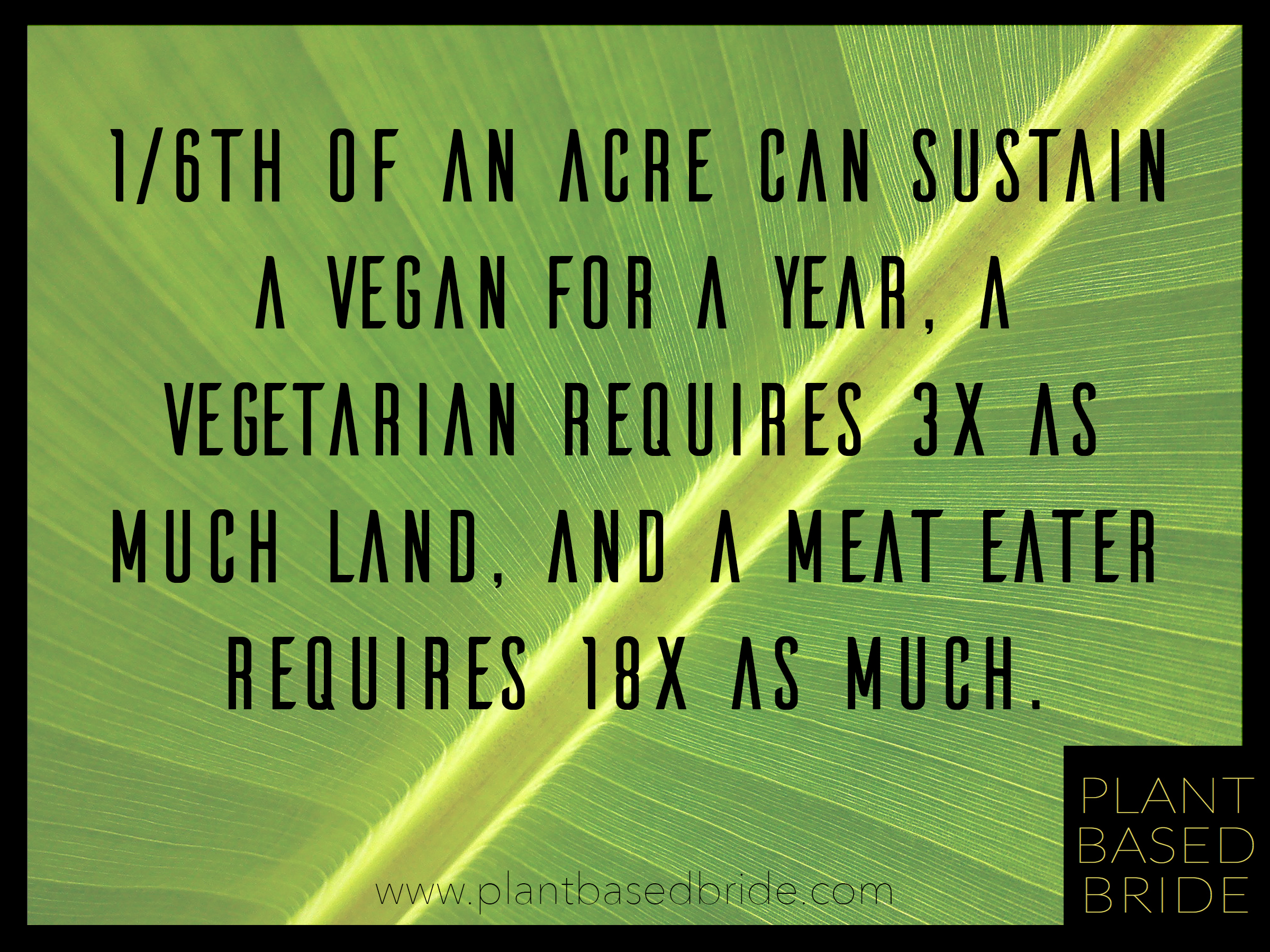
Want to learn more about the environmental impact of animal agriculture? Watch Cowspiracy, an incredible documentary on the subject.
7. Plant Based Food Is Delicious - And I don't just mean meat and dairy substitutes or desserts. After a couple of weeks on a vegan diet you will notice your taste buds change and will be able to distinguish and appreciate the subtly delicious tastes of plant foods in their natural state! (Although, coconut ice cream is to die for.) I dare you to go to a vegan restaurant in your city and not find something delicious!
Want examples of mouth-watering vegan dishes? Look no further than these instagram accounts.
8. Live Longer - Thrive on a vegan diet for years longer than your meat eating friends. Vegans have been shown to live as many as 9 years longer than omnivores due to reduced deaths from illnesses like cancer and heart disease and increased health and vitality from an abundance of nutrients. What could you accomplish in an extra decade of life? Why not find out!
9. Join The Ranks - Did you know that Ellen DeGeneres, Portia de Rossi, Kristen Bell, Natalie Portman, Kate and Rooney Mara, Jessica Chastain, Emily Deschanel, Ellen Page, Jared Leto, Michelle Pfeiffer, Carrie Underwood, and Alicia Silverstone are all vegan? The movement isn't just full of celebrities. Many incredible athletes have made the switch: Brendan Brazier, Robert Cheeke, Rich Roll, Robert Hazely, Georges Laraque, Carl Lewis, Jack Lindquist, Mike Mahler, Patrick J Neshek, Fiona Oakes, Amanda Reister, Jim Morris, and so many more!
If celebrities under all of the pressures of Hollywood and athletes competing at international levels can thrive on a plant based diet, why can't you?
Related Blog Post: Vegans vs Protein
10. Be Happier - Go vegan for a healthy mind: you'll have lower incidences of anxiety and depression than meat eaters! Magnesium, which is plentiful in plant foods and virtuality non-existent in animal products, is important for energy, improving sleep, and regulating your mood while reducing headaches.

You'll also be happier knowing that every single day you're saving 1100 gallons of water, 45 pounds of grain, 30 square feet of forest, 20 pounds of CO2, and one animal's life. Every single day. If you could make that kind of positive impact on the world, would you?
You can. No other choice has such a profound impact on the health of the planet in every single aspect.
Make a change. Go vegan!
Until next time,

Which reason resonates the most with you? Why did you go vegan? Let me know in the comments below!
Subscribe to the Plant Based Bride newsletter to never miss a blog post. Find the form at the bottom of this page!












Building Strong Bones with Plants
Calcium is important, everyone says so. "Get your calcium for strong bones!" they say. And where do you get calcium? If you ask the average person, they'd confidently say "From milk!" If that's the case, how come vegans aren't breaking bones from a minor fall or developing osteoporosis at astonishing rates? The answer is simple.
Milk is not the only source of calcium. It is, in fact, not even the best source.
Calcium is important, everyone says so. "Get your calcium for strong bones!" they say. And where do you get calcium? If you ask the average person, they'd confidently say "From milk!" If that's the case, how come vegans aren't breaking bones from a minor fall or developing osteoporosis at astonishing rates? The answer is simple.
Milk is not the only source of calcium. It is, in fact, not even the best source.
Why We Need Calcium
When most people think about calcium, they think strong bones. And while calcium is a mineral stored (mostly) in our bones and teeth, supporting their structure and hardness, it is utilized in the body for so much more. Calcium is needed for muscles to contract, nerves to carry messages between the brain and the body, blood vessels to move blood, and releasing the hormones and enzymes that control virtually all function in the body. As you can see, calcium is a heavy hitter that you REALLY want on your team.
How Much Calcium A Day?
Calcium recommendations are as follows:

Aim to reach your recommended daily intake but don't overdo it! Calcium overdose (usually due to supplementation) can cause abdominal pain, constipation or diarrhea, headaches, nausea and vomiting, irregular heartbeat, and even a coma.
The Trouble with Milk
Milk consumption actually causes calcium loss from your bones. Yes, you read right. But if cow's milk causes this detrimental effect, why doesn't everybody know about it? I can see why a lay-person might be confused. At first glance, cow's milk seems like a great source of calcium. After all, it contains quite a lot at 300mg per cup. But cow's milk, especially milk that has been pasteurized, contains calcium that is difficult for the human body to absorb. And that's not all. Cow's milk, like all foods containing animal protein, has an acidifying effect on the human body. Why do we care about the body's pH? Most people don't, but your body certainly does. The human body must remain within a very narrow pH range to maintain normal functioning, with the ideal pH registering at 7.4 on the scale. This means that the body must remain in an alkaline state. If it doesn't, a syndrome called acidosis may develop, common side effects of which include fatigue, headaches, insomnia, breathing difficulties, heart palpitations, hot and dry skin on the hands and feet, and supported growth of abnormal cells.
So what happens when the animal protein in milk lowers our pH below the optimal level? Your body, recognizing the need to alkalize, goes in search of a substance to do the job. It finds phosphate, which is great at neutralizing strong acids and bases. And where does your body find phosphate? In the calcium phosphate salts that are the structural component of your bones and teeth. The body pulls the calcium phosphate stored in the bones out into the blood to alkalize it, using the phosphate for that purpose and excreting the calcium in the urine.
That's right, when you eat or drink animal products, including cow's milk, you cause calcium to be pulled from your bones and peed out.
Over time, this drawing on calcium phosphate reserves to neutralize the acid-forming effect of animal protein can lead to structural weakness in your bones and teeth (or osteoporosis). Not only that; increasing your calcium excretion through the genito-urinary system can raise your risk of developing calcium-rich kidney stones.
Scientific studies have proved this effect time and again. So why isn't it common knowledge? That, my friends, is a whole other post.

Foods High In Calcium
Now we know that cow's milk is not the best source of calcium. So what is? Here is a table of select vegan foods high in calcium:

My recommended daily intake of calcium as an adult between the ages of 19 and 50 is 1,000mg. 1 cup of tempeh (184mg), 1 cup of kale (179mg), 1 cup of collard greens (357mg) and 8 oz of a plant milk (300-500mg) is enough to provide my daily calcium needs.
Getting Enough Calcium on a Vegan Diet
Calcium is essential. No one will argue with you on that. But cow's milk is NOT the ideal source, by any stretch of the imagination. Vegans actually have a bit of the upper hand on this one as our lack of animal protein intake reduces our calcium losses in comparison with an omnivore. Still, at the risk of sounding repetitive here, calcium is a very important mineral and must be present in the body in adequate quantities. Be sure to eat your greens and a variety of other plant based foods high is calcium, and supplement if need be. Remember that age, vitamin D levels, alcohol and caffeine consumption and various other factors can affect calcium absorption. Eat a variety of plants, whole, and you'll be doing better than 90% of the milk-guzzling population.
Until next time...

Do you monitor your calcium levels and intake? What is your favourite high-calcium food? Let me know in the comments below!
Be sure to subscribe to the Plant Based Bride newsletter (at the bottom of this page) so you never miss a post!
Sources
- https://ods.od.nih.gov/factsheets/Calcium-Consumer/
- http://www.budwigcenter.com/how-to-maintain-a-perfect-ph-balance/#.VcvB03i6_dk
- http://saveourbones.com/osteoporosis-milk-myth/
- https://drbenkim.com/ph-body-blood-foods-acid-alkaline.htm
- http://aje.oxfordjournals.org/content/139/5/493.abstract
- http://www.vrg.org/nutrition/calcium.php
- http://www.livestrong.com/article/28213-can-person-overdose-calcium/






Are Vegans Chronically Iron Deficient?
The omnivorous lay person's biggest worry for my health as a vegan, after my protein intake (and if you're worried, don't be. Check out my article Vegans vs Protein!), is where I get my iron. My response is usually simply: "From plants." (Because, well, duh. I only eat plants.) But what is the scientific reality of reaching my Daily Recommended Intake of iron on a plant-based diet? Get ready for some science, dear readers. Once I finish singing the Bill Nye the Science Guy theme song, of course.
The omnivorous lay person's biggest worry for my health as a vegan, after my protein intake (and if you're worried, don't be. Check out my article Vegans vs Protein!), is where I get my iron. My response is usually simply: "From plants." (Because, well, duh. I only eat plants.) But what is the scientific reality of reaching my Daily Recommended Intake of iron on a plant-based diet? Get ready for some science, dear readers. Once I finish singing the Bill Nye the Science Guy theme song, of course.

First things first...
What is iron anyway?
Iron is a mineral found in nature which is essential to the normal functioning of the human body. Iron is a major component of hemoglobin, the oxygen binding protein of red blood cells which transfers oxygen from the lungs to all of the tissues of the body. Iron is also a component of the oxygen storage unit of muscle cells, myoglobin, which provides working muscles with oxygen.
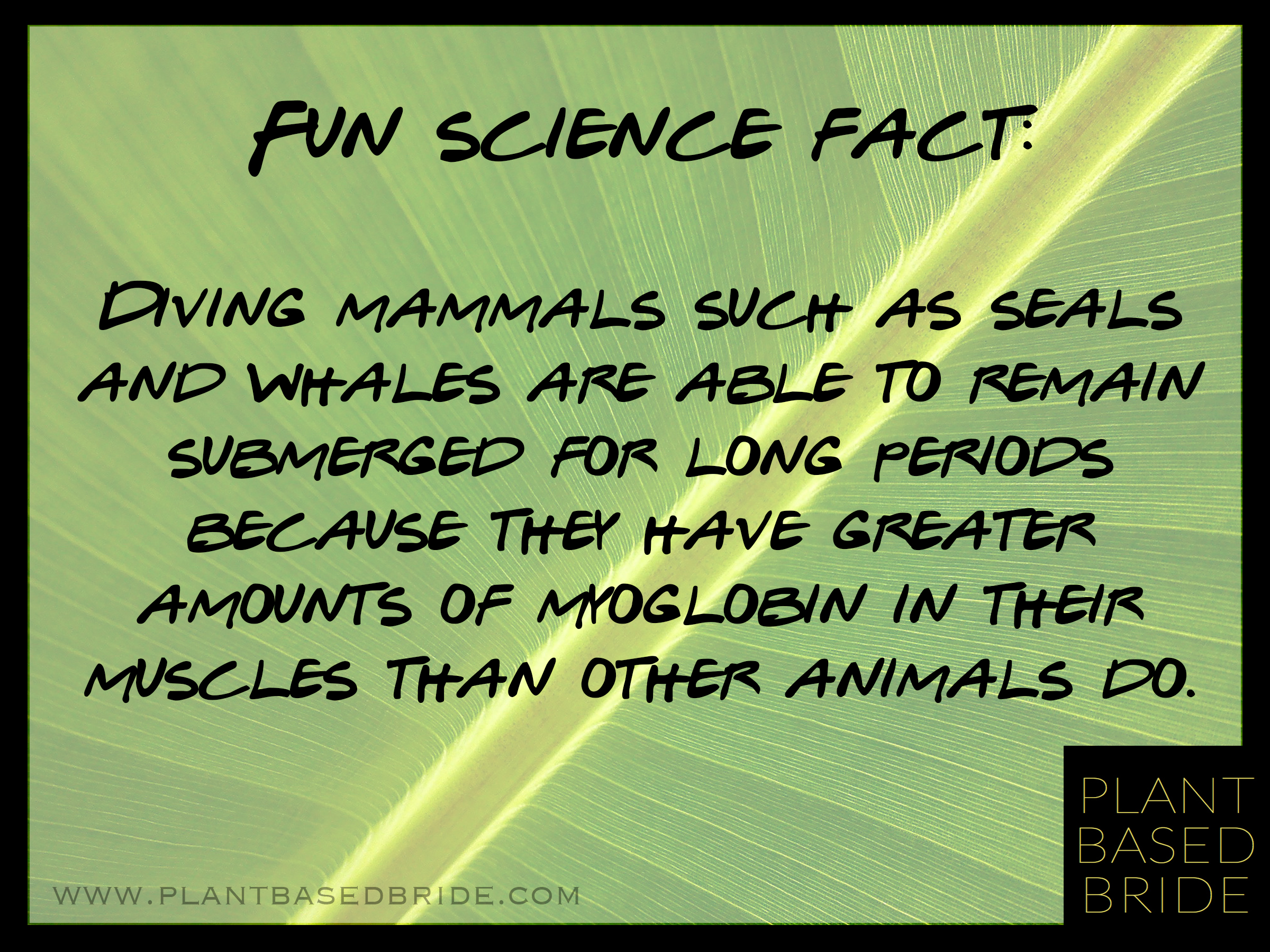
My fiancé thinks I should write a post about training your muscles to be like seal and whale muscles. It's not completely out of the running...
Iron is necessary for proper human growth and development as well as normal cellular functioning and synthesis of some hormones and connective tissues. Both myoglobin and hemoglobin have a molecular constituent called heme which allows them to combine reversibly with oxygen. Iron can be found in the foods we eat as either heme or non-heme iron.
What's the difference between heme and non-heme iron?
Dietary iron has two main forms: heme and non-heme. Heme iron is formed when non-heme iron combines with protoporphyrin IX (a naturally occurring molecule in the body). This combination can happen before the iron is absorbed or within the body after it is ingested Plants, fortified foods, and supplements contain only non-heme iron while meat (including seafood and poultry) contains both non-heme (~55-60%) and heme (~40-45%) iron. Meat, especially red meat, is the best known source of heme iron. This is because when humans eat meat they consume the blood proteins (hemoglobin) and muscle proteins (myoglobin) contained in the flesh of the animal. The animal in question created heme iron in its body while it was still alive by combining the non-heme iron it ingested in its food with the essential molecules generated in its body. Those who eat meat are taking advantage of this pre-completed process.
The good news for vegans and vegetarians out there is that humans can survive on a diet that provides solely non-heme iron. Once the non-heme iron is absorbed in our bodies it is combined with protoporphyrin IX and is put to work storing and transporting oxygen in our cells. But if non-heme iron is a perfectly acceptable sole source of iron in a human's diet, why does everyone claim that eating heme iron is better? Bioavailability is the answer.
Bioavailability is a complicated thing. Researchers don't agree on the exact percentages of each type of iron that we can absorb, and the exact absorption rate is influenced by a whole host of factors. We know that iron differs from other minerals because its balance in the body is regulated entirely by absorption; as there is no physiologic mechanism for the excretion of iron. Algorithms have been developed to estimate bioavailability in single meal studies, however, these algorithms tend to underestimate bioavailability and data from single meal studies exaggerates the effects of individual dietary factors on iron absorption. The only thing researchers DO agree on is that the human body is able to absorb a higher percentage of heme iron than it can non-heme iron that it ingests, in general. The percentages vary from study to study but an example of estimated absorption rates is as follows: non-heme iron 7-11% and heme iron 15%.
So if we don't know the exact bioavailability of each type of iron, what do we know? Much research has been done on the topic of inhibitors and enhancers of iron absorption. Here is a quick list of some of the known factors that can have an effect.
Iron Absorption Inhibitors:
- Phytates are found in whole grains, legumes, nuts, and seeds. They are able to bind to certain dietary minerals including iron, zinc, manganese, and calcium, and can slow their absorption into the body. However, those eating a balanced diet needn't worry about phytates. As a vegetarian or vegan, reducing your intake of wheat bran, as well as cooking and soaking grains before eating them can help diminish the effect of phytates. It's also good to remember that phytates also have positive health benefits including reducing inflammation, lowering food's glycemic load, reducing cardiovascular disease, and stopping the proliferation of cancer cells in laboratory research.
- Polyphenols in black tea, herb tea, wine, and spices can have an effect on non-heme iron absorption depending on their quantity and type. It was shown on a study of Thai women that while turmeric contains more polyphenols than chili, chill had a greater inhibiting effect on iron absorption.
- Calcium was shown to inhibit both heme and non-heme iron absorption in single meal studies, whether it was derived from diet or from supplements.
- Dairy & Eggs. The 2 main types of milk protein, casein and whey, have been shown to inhibit non-heme iron absorption in humans while egg whites added to a meatless meal reduced iron absorption by a whopping 72% in this study.
Iron Absorption Enhancers:
- Ascorbic Acid is a form of vitamin C found in citrus fruits, peppers, cruciferous and leafy vegetables, and more. Many studies have demonstrated its ability to enhance iron absorption and its ability to negate the inhibiting effects of the compounds listed above. Some studies indicate that including ascorbic acid in a meal can increase iron absorption by as much as triple! Cooking and other processing can damage ascorbic acid, removing its enhancing effect.
- Depleted Iron Stores. Iron absorption rates vary wildly between those individuals with sufficient iron and those who are iron depleted. One study found that the estimated absorption of iron in premenopausal women ranged from 13% in women with sufficient iron to 31% in women with depleted iron levels.
Dietary inhibitors and enhancers only affect the absorption of the iron being consumed around the same time, while other factors such as depleted iron stores, genetic disorders, inflammation, obesity, and deficiency in other nutrients in the body affect total iron absorption.
How Much Iron Should You Be Getting Daily?
The table below shows recommended intakes in mg/day.
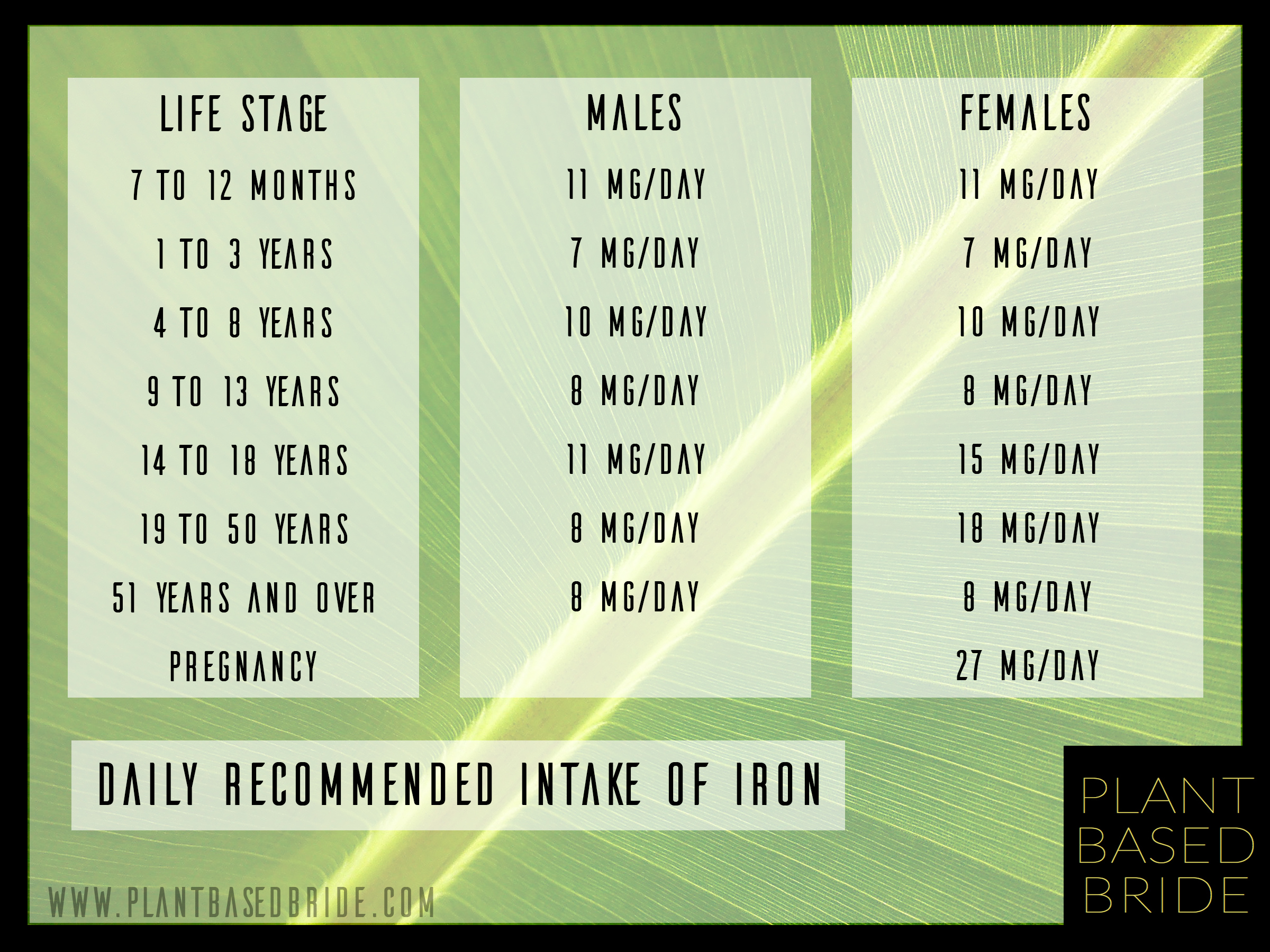
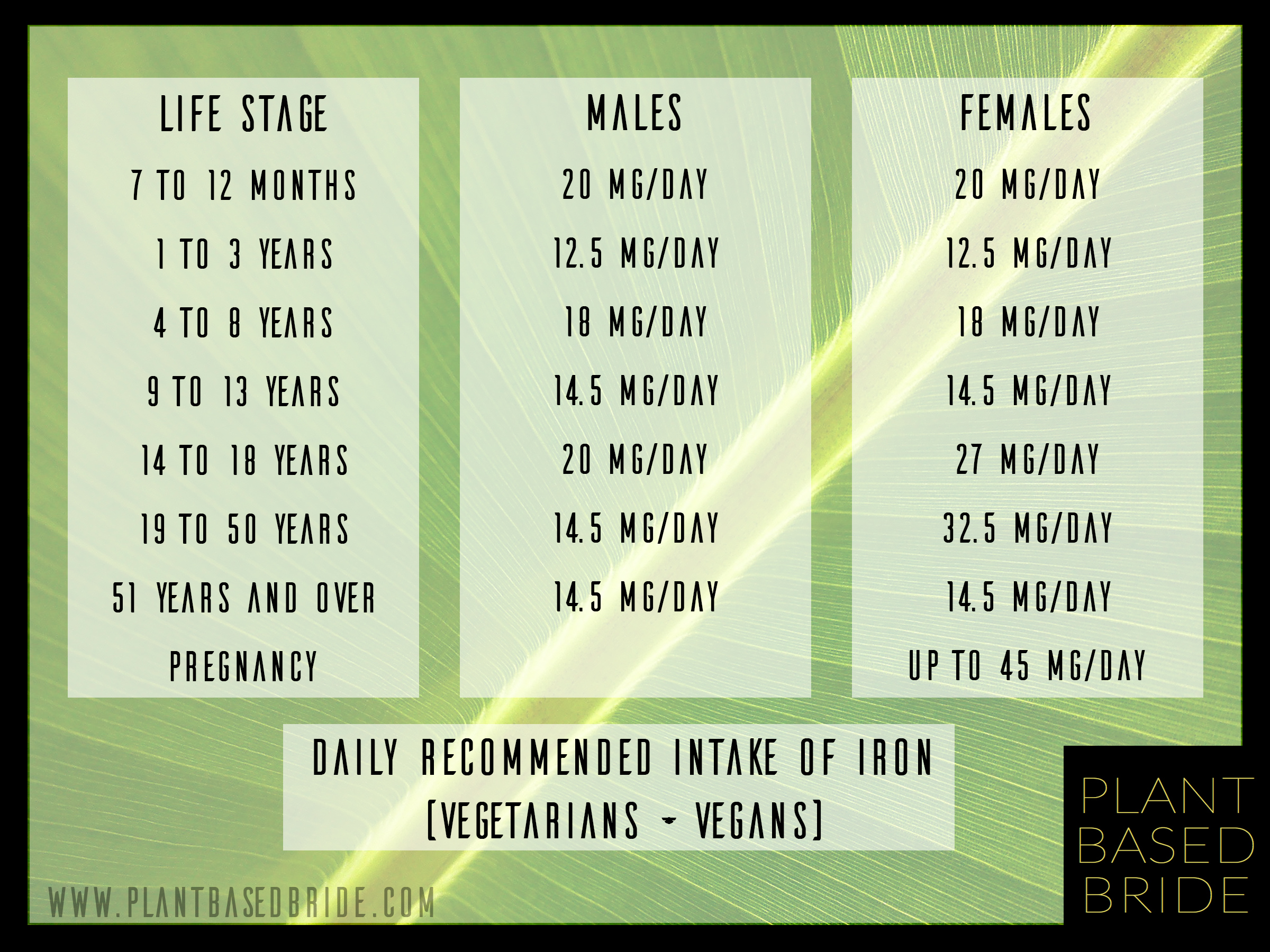
It is generally recommended that vegetarians and vegans get 1.8 times the normal recommended amount of iron daily to compensate for lower absorption rates of non-heme iron. Vegan and vegetarian numbers (those above multiplied by 1.8) are in the table below.
What vegan foods contain iron?
Legumes: soybeans (9mg/cup), lentils (6.5mg/cup), white beans and chickpeas (5mg/cup), tofu and kidney beans (4mg/cup - as much as 5 ounces of sardines)
Grains: quinoa (3mg/cup), brown rice (1mg/cup - equivalent to 3oz of tuna)
Nuts & Seeds: pine nuts (7.5mg/cup - 3 times as much iron as in a cup of turkey), sunflower seeds (5mg/cup), pumpkin seeds (2mg/cup),
Vegetables: tomato paste (8mg/cup - equal amount of iron as in 12oz of ground beef), cooked spinach (6.5mg/cup)
Other: spirulina (32mg/cup - as much iron as is in 53 large hard-boiled eggs), blackstrap molasses (16mg/cup), prune juice (3mg/cup), dried apricots (3.5mg/cup)
So, is it possible to get enough iron on a vegan diet?
Lets say you're the same 25 year old woman we mentioned earlier. Your meat-eating contemporaries are recommended 18mg/day, but you (as a vegan) are told you need 1.8 times that amount daily, or 32.4mg/day. Is it possible?
A meal with 1.5 cups of lentils (9.75mg), 1 cup of tofu (4mg), and 3 cups of cooked spinach (19.5mg) has already surpassed your daily iron needs coming in at over 33mg. And what if you added half a cup of tomato paste (4mg) blended with a tbsp of spirulina (2mg) as a sauce? You'd be approaching the upper levels of what is considered safe iron intake for a day, in one meal. As you can see, a well-planned, balanced diet of whole, nutrient rich foods can easily reach the required iron needs, even taking into account poor absorption rates.
How high is too high: Iron Overdose
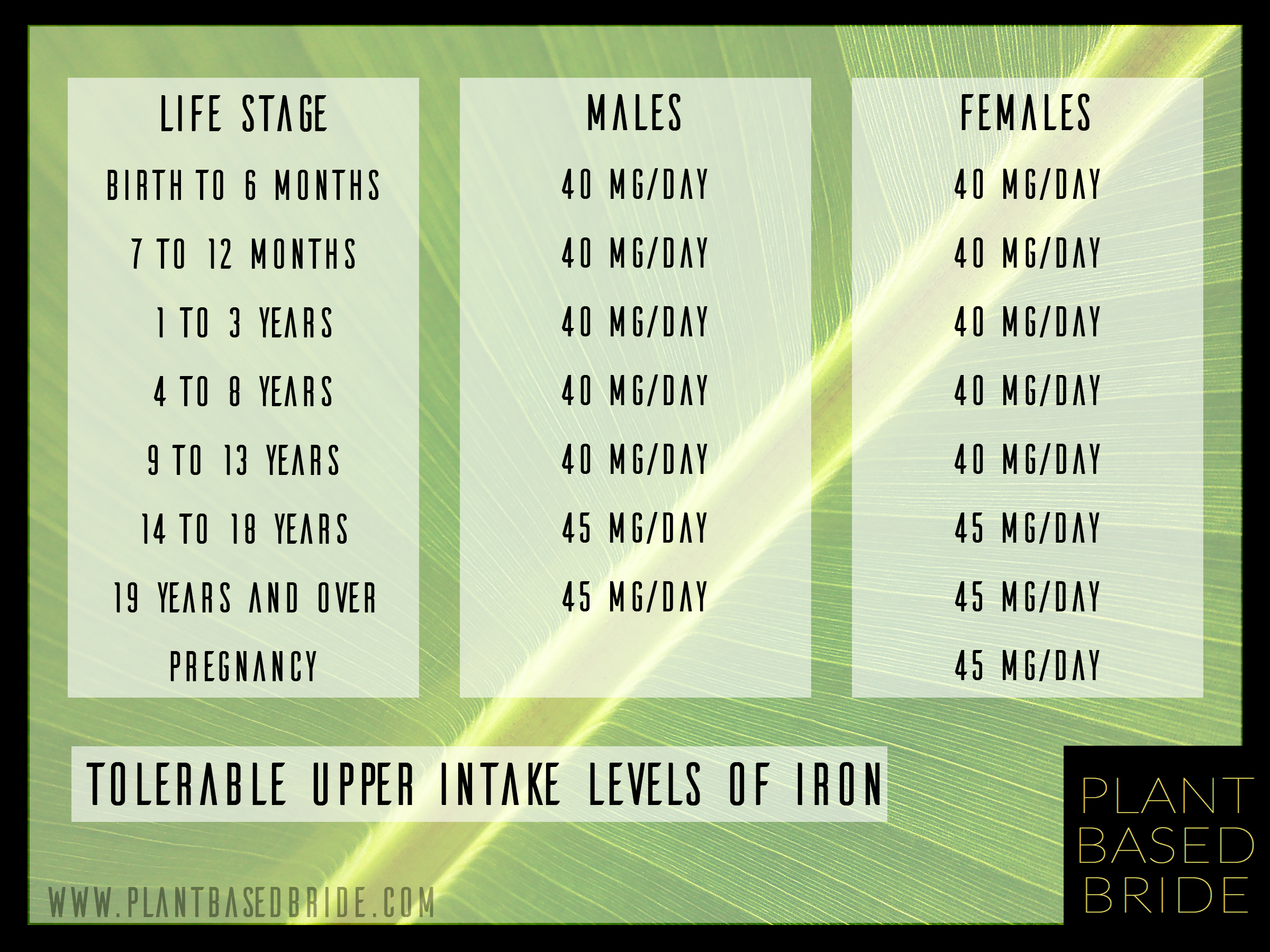
There is little risk of iron overload from diet in adults with normal intestinal function, however, acute intake of more than 20mg of iron per kg of bodyweight from supplements or medication can lead to many unpleasant side effects including constipation, nausea, abdominal pain, vomiting, gastric upset, and faintness. A true overdose of iron (around 60mg in one dose) can lead to multisystem organ failure, coma, convulsions, and even death.
How low is too low: Iron Depletion & Iron Deficiency Anemia
But what if you get enough iron through your food and then lose it? Iron loss through urine, feces, the gastrointestinal tract, and the skin is minimal, however, the major concern is iron loss during menstruation in women, due to the loss of blood. There have been various reliable tests developed over the years to detect early iron store depletion (measuring serum ferritin, a protein found within the cells that store iron in the body), advanced iron depletion (determined by reduced serum iron, amongst other indicators), and iron deficiency anemia (when hemoglobin concentrations in the blood drop below 13g/dL in men and 12g/dL in women). Women should remain aware of their iron intake, especially during their menstruation period, to maintain adequate iron stores in the body.
Iron deficiency is one of the most common nutritional deficiencies, affecting mostly children and women of childbearing age. Anemia symptoms include gastrointestinal disturbances, extreme fatigue, impaired cognitive and immune function, pale skin, impaired temperature regulation, dizziness and headaches. If you recognize these symptoms in yourself please go see a doctor and get tested.
So, are vegans chronically iron deficient?
No. A vegan diet, without supplementation, is completely satisfactory for maintaining healthy iron levels in the body. If you are concerned about absorbing enough of the iron you eat, try combining foods high in ascorbic acid with your meals, soaking your grains, and avoiding tea and wine close to meal time. If you're the type who likes to take extra precautions you can take daily iron supplements to ensure full stores. Just make sure you aren't taking to much! If you keep these things in mind you should have no problem maintaining sufficient iron levels for all of your oxygen storing and transporting needs. Happy blood, happy body. Happy body, happy you!
Until next time...

Do you track your iron intake? What are your thoughts on iron supplementation? Let me know in the comments below!
Also, be sure to use the sign up form at the bottom of the page to get updates from me and new blog posts right to your inbox!
Sources
- https://ods.od.nih.gov/factsheets/Iron-HealthProfessional/
- http://www.britannica.com/science/myoglobin
- http://www.ncbi.nlm.nih.gov/pubmed/23139325?dopt=Abstract
- http://www.nlm.nih.gov/medlineplus/ency/article/003490.htm
- http://www.ncbi.nlm.nih.gov/pubmed/9563847?dopt=Abstract
- http://journals.plos.org/plosone/article?id=10.1371/journal.pone.0111824
- http://ajcn.nutrition.org/content/91/5/1461S.full
- http://ajcn.nutrition.org/content/76/2/419.full
- http://www.irondisorders.org/iron-we-consume/
- http://www.drweil.com/drw/u/QAA400758/Are-Phytates-Bad-or-Good.html
- http://journals.cambridge.org/action/displayAbstract?fromPage=online&aid=606480&fileId=S0954422400000706
- http://jn.nutrition.org/content/136/12/2970.abstract?ijkey=f070f52967954ed45ec2dda737a97385312e1bb2&keytype2=tf_ipsecsha
- http://ajcn.nutrition.org/content/47/1/102.abstract?ijkey=687bd4333f9f4042220c358f35db5139d6bbf776&keytype2=tf_ipsecsha
- http://ajcn.nutrition.org/content/49/3/546.abstract?ijkey=966501a9ffaf4120b1549d10ca4398855e263b5f&keytype2=tf_ipsecsha
- https://www.eatrightontario.ca/en/Articles/Nutrients-(vitamins-and-minerals)/Iron-Matters.aspx#.VbkR7c7BFFJ
25 Surprising Non-Vegan Foods
It can be intimidating to go vegan. Believe me, I know! After 8 months as a vegetarian and researching veganism almost daily I thought I knew without a doubt what foods were and were not vegan. Unfortunately, I was wrong. Over the past 2 and a half years eating a plant based diet I have come across many non-vegan foods that shocked me. And while I was lucky enough to discover the majority of these foods before eating them, not everyone does. Food companies love to include animal products in everything, and I mean EVERYTHING. They even sneak them into "vegan" products! Here is a list of 25 surprising non-vegan foods to avoid.
It can be intimidating to go vegan. Believe me, I know! After 8 months as a vegetarian and researching veganism almost daily I thought I knew without a doubt what foods were and were not vegan. Unfortunately, I was wrong. Over the past 2 and a half years eating a plant based diet I have come across many non-vegan foods that shocked me. And while I was lucky enough to discover the majority of these foods before eating them, not everyone does. Food companies love to include animal products in everything, and I mean EVERYTHING. They even sneak them into "vegan" products! Here is a list of 25 surprising non-vegan foods to avoid.
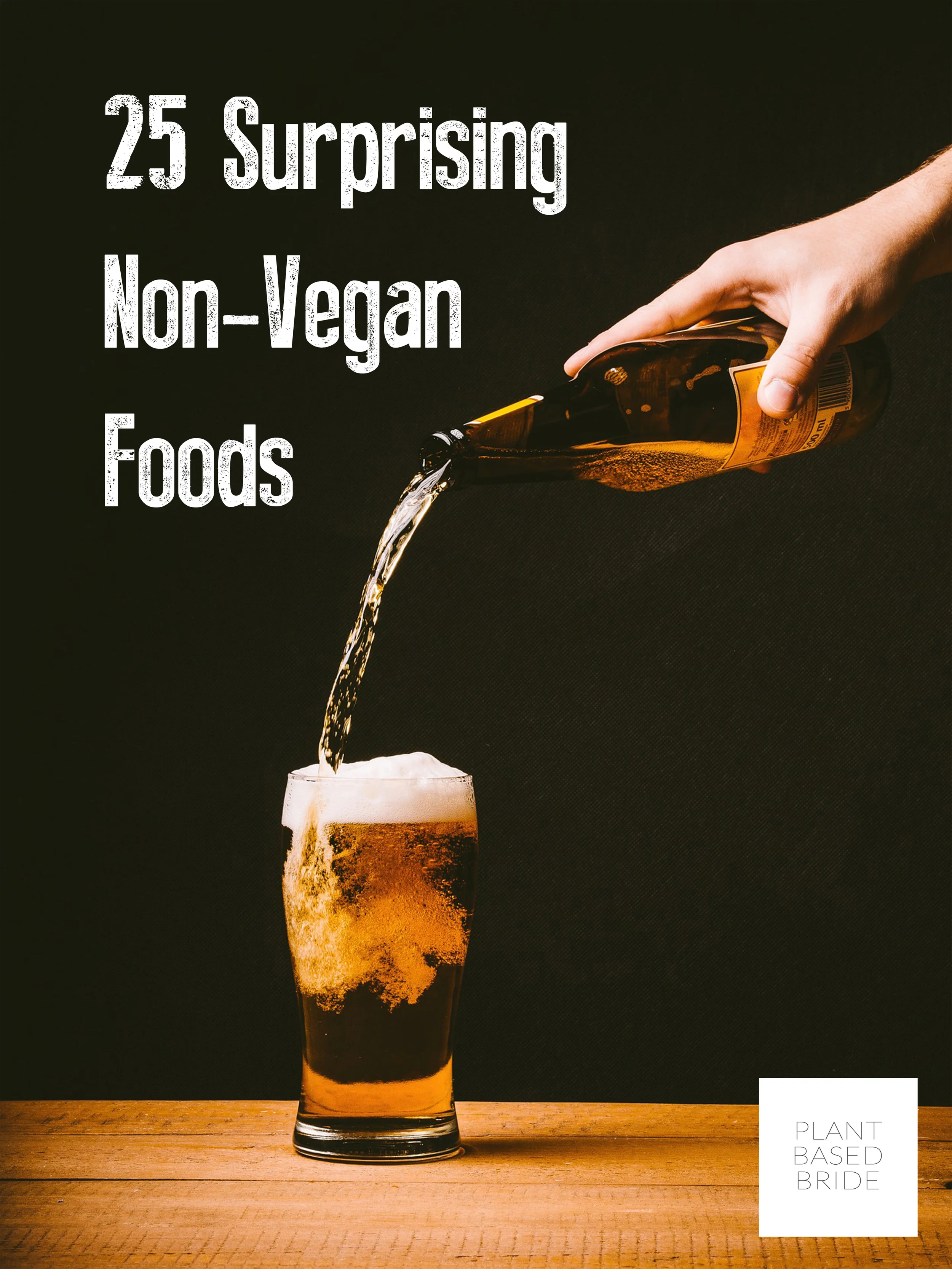
- Beer... many brands use a membrane derived from the bladders of fish to filter their brews. Check out Barnivore to find out if your favourite beer (or wine, or liquor) is cruelty-free!
- White Sugar... some brands process their sugar using bone char to give it its bright white colour (watch out for brown sugar too; it may be processed as white sugar and then have molasses added to make it brown). Always buy beet sugar (not refined using bone char) or organic cane sugar (bone char is not considered organic).
- Non-Dairy Creamer... can contain milk-derived ingredients such as caseinate.
- Red Dye... a popular brand of red dye called Carmine (often listed as Natural Red #4 in ingredient lists) is coloured using the scales of tiny insects.
- Jello... contains gelatin which is derived from animal bones, connective tissues, and organs.
- Vitamin D Fortified Foods... the source of vitamin D may be lanolin, derived from sheep's wool.
- Chewing Gum... often contains animal-derived glycerin.
- Cake Mix... may contain beef fat (often listed as lard in the ingredients).
- Worcestershire Sauce... traditionally contains anchovies.
- Apple Juice... may be clarified with isinglass (obtained from the dried swim bladders of fish). This one I find especially disturbing, having been a HUGE apple juice fan as a child.
- Jam... may contain gelatin.
- Tortillas... traditionally made with lard.
- Marshmallows... often contain gelatin.
- Margarine... may contain gelatin, casein (milk protein), or whey.
- Frosted Mini Wheats... contains gelatin.
- BBQ Chips... may contain traces of milk or animal fat.
- Vitamins and Supplements... often contain animal products. Read the ingredients carefully!
- Orange Juice... can be fortified with omega 3s derived from fish.
- Refried Beans... traditionally made with lard.
- Bagels... the enzyme L. Cysteine is used as a dough conditioner and is derived from poultry feathers.
- Packaged Peanuts... may contain gelatin.
- Soy Cheese... may contain casein. Just because a product's only purpose would seem to require its veganism does not mean it's animal product free! Make sure to read the ingredients carefully, even on "vegetarian" and "vegan" products.
- Altoids... contain gelatin.
- Pad Thai... often contains fish sauce. Be sure to ask!
- French Fries... may be fried in animal fat.
You Might Also Like: 10 Reasons To Go Vegan!
Lucky for us many brands provide vegan options of these foods. Make use of google and sites like Vegetarians in Paradise to investigate brands or products, and always read the ingredients!
Until next time,

Which food surprised you most? Is there a surprisingly non-vegan food I missed? Let me know in the comments below!
Also, be sure to use the sign up form at the bottom of the page to get updates from me and new blog posts right to your inbox!



Coined by Elizabeth Jean @xparmesanprincessx, the personal curriculum trend is about creating a self-directed learning plan focused on areas of personal interest, loosely based on a school curriculum structure, including things like assigned reading, goals, assignments, and final projects.
At its core, the personal curriculum movement is about celebrating lifelong learning and intellectual curiosity. It's about being more intentional about how we spend our time when we're not sleeping, or at work, or doing the basic maintenance or admin or chores to keep our lives going. It's about using our free time to enrich our lives in a way that is purposeful and intentional and joyful, indulging our curiosity as adults, even once we're outside of structured school environments, getting excited about learning and allowing ourselves the freedom to go down those rabbit holes in our special interests, to challenge our brains in ways that we maybe don't get the chance to in our day-to-day lives.