

the blog.

Should You Worry About Your Body's pH?
Have you ever heard someone talk about alkalizing their body? Or avoiding a food because it's too acidic? Did you think to yourself: "Wow, that health-nut has reached a new level of crazy!"? There was a time I would have agreed with you, that spending time worrying about your body's pH was going too far down the road to orthorexia, but after more time and research I've discovered that maintaining a balanced pH should be more than a blip on your radar if you're looking to create an environment for optimal health. (Am I the only one who just imagined a futuristic, sleek, blinking health-radar? I am? Never mind, then...) And aren't we all looking for a way to live a longer, happier, disease-free life?
Have you ever heard someone talk about alkalizing their body? Or avoiding a food because it's too acidic? Did you think to yourself: "Wow, that health-nut has reached a new level of crazy!"? There was a time I would have agreed with you, that spending time worrying about your body's pH was going too far down the road to orthorexia, but after more time and research I've discovered that maintaining a balanced pH should be more than a blip on your radar if you're looking to create an environment for optimal health. (Am I the only one who just imagined a futuristic, sleek, blinking health-radar? I am? Never mind, then...) And aren't we all looking for a way to live a longer, happier, disease-free life?

What's pH again?
If it's been a while since high school, you may have forgotten all about pH. And that's ok! (That's what I'm here for.) pH measures the hydrogen ion concentration of a given solution. High concentrations of hydrogen ions result in a low pH rating and low concentrations of hydrogen ions result in high pH rating. If that sounds backwards to you, you aren't alone. But it all makes sense scientifically, I promise!
The pH scale ranges from 0 to 14, where 0 is the most acidic, 7 is neutral, and 14 is the most basic (or alkaline). See below for examples of different substances and their pH value.

Image from schoolofpermaculture.com
What is your body's pH?
The optimal pH for human blood and tissues is in a very small range, between 7.35 and 7.45 on the pH scale (slightly alkaline). Unfortunately, the average modern diet results in a slightly acidic body of around 6.6 or lower. While 7.4 is the perfect pH level for many tissues in the body, there are some areas that require different levels to properly carry out their function. As you can see in the graphic above, stomach acid is a 1 on the scale, requiring tissue ranging from 1.35-3.5 on the inside layers to 6.9 on the outer layers of the stomach to prevent injury. We see a similar phenomenon in the vagina, where a pH of less than 4.7 protects against microbial overgrowth.
When we are born our bodies are perfectly balanced, but as we grow and make our own food choices our pH shifts. Unfortunately for us, any shift away from the small range of ideal pH values results in negative effects on our health.
Why is body pH important?
The human body has evolved to exist in an alkaline state. It can't thrive in an acidic one, and when it remains in an acidic state for too long many health problems start to develop. An acidic body causes insulin sensitivity (which leads to weight gain), reduces the amount of oxygen delivered to cells, accumulates cholesterol in arteries, causes tissues to regenerate more slowly (resulting in early signs of aging), and backs up the body's elimination system (keeping toxins in the body for longer than they should be). Luckily for us, there are controls in the human body that resist swinging too far in either direction. But even a small change in either direction can cause unpleasant side-effects.
The acidic body
The average person of today eats a diet low in magnesium, potassium, and fibre while rich in saturated fat, simple sugars, and sodium. This kind of diet can result in metabolic acidosis (an acidic body). The effect is exaggerated in the aging population, as there is a gradual loss of renal acid-base regulatory function over time (the kidneys lose their ability to balance the body's pH effectively).
Why should you care about metabolic acidosis? Because it can lead to osteoporosis as well as fatigue, headaches, insomnia, breathing difficulties, heart palpitations, hot and dry skin on the hands and feet, increased stress and anxiety, inflammation (which can result in arthritis), and supported growth of abnormal cells. To explain how acidosis can lead to osteoporosis, let me quote my post Building Strong Bones with Plants:
"So what happens when the animal protein in milk lowers our pH below the optimal level? Your body, recognizing the need to alkalize, goes in search of a substance to do the job. It finds phosphate, which is great at neutralizing strong acids and bases. And where does your body find phosphate? In the calcium phosphate salts that are the structural component of your bones and teeth. The body pulls the calcium phosphate stored in the bones out into the blood to alkalize it, using the phosphate for that purpose and excreting the calcium in the urine.
That's right, when you eat or drink animal products, including cow's milk, you cause calcium to be pulled from your bones and peed out.
Over time, this drawing on calcium phosphate reserves to neutralize the acid-forming effect of animal protein can lead to structural weakness in your bones and teeth (or osteoporosis). Not only that; increasing your calcium excretion through the genito-urinary system can raise your risk of developing calcium-rich kidney stones."
It is estimated that the amount of calcium lost in urine in humans eating the average modern diet over 20 years could be as much as 480gm, or half the skeletal mass of calcium. While urinary calcium loss is not a direct indicator of osteoporosis, this number is staggering.
Are you starting to worry about your pH yet?
The alkaline body
With an interest in keeping perspective, I feel it's important to mention that while an acidic body is not healthy, neither is a body that is too alkaline. Alkalosis (a body with a pH over 7.45) can cause confusion, light headedness, nausea, and twitching or numbness of the muscles.
Which foods promote a healthy pH in the body?

As you can see from this list, all of the alkalizing foods are vegan, while all animal products cause acid formation in the body. Choosing a vegan diet automatically shifts your pH closer to ideal by way of eliminating animal protein, and reducing your consumption of grains, simple sugars, alcohol, and processed foods will improve your pH balance even further! Hopefully this post has demystified body pH for you and shown you how very easy it is to improve your pH balance, especially on a plant based diet!
Until next time,

Have any questions or opinions about pH? Speak your mind in the comments below or on social media!
Are you following me? Find me on Facebook, Twitter, Instagram, and Pinterest!
Don't forget to subscribe to the Plant Based Bride newsletter below the comment section for updates and a free goal setting printable!






How To Start Your Day Off On The Right Foot! Becoming a Morning Person
Everyone wants to start their day off on the right foot, right? You want to wake up refreshed and energetic, ready to go! Unfortunately I'm not a morning person, and often when I need to wake up earlier than 10 am my whole day can get a bit thrown off by grouchiness and brain fog. Most of the time I don't get high quality sleep and wake up often throughout the night, every night. But no more! I've gone on a rampage lately reading all of the articles on becoming a morning person and getting better sleep that I could possibly find and making lists of things that I've noticed help me to wake up feeling more rested and ready to start my day. I decided to compile these things into an article for myself and anyone else who may be struggling with the same issues as I have, with the hopes that it will help at least one other person. I hope not only to be able to wake up at 8am every single morning, but to want to! If that's you, too, read on!
Everyone wants to start their day off on the right foot, right? You want to wake up refreshed and energetic, ready to go! Unfortunately I'm not a morning person, and often when I need to wake up earlier than 10 am my whole day can get a bit thrown off by grouchiness and brain fog. Most of the time I don't get high quality sleep and wake up often throughout the night, every night. But no more! I've gone on a rampage lately reading all of the articles on becoming a morning person and getting better sleep that I could possibly find and making lists of things that I've noticed help me to wake up feeling more rested and ready to start my day. I decided to compile these things into an article for myself and anyone else who may be struggling with the same issues as I have, with the hopes that it will help at least one other person. I hope not only to be able to wake up at 8am every single morning, but to want to! If that's you, too, read on!


Prep the night before.
Set out your clothes and pack your lunch.
Whether you're working out first thing, heading into an office, or working from home, set out your clothes the night before so that you can quickly get dressed and start your day! Packing your lunch the night before, if you'll be away from home for the midday meal, will save time in the morning for more important tasks. I like to pack my lunch from leftovers from dinner. As soon as we finish eating, I'll split the leftovers into tupperware for myself and Jason. Quick and easy!

Do the dishes.
I know you don't want to, but do them. Not only will they be easier to clean right away, but when you wake up in the morning you'll have a clean kitchen to eat breakfast in! If that isn't a mood booster, I don't know what is.

Go to bed early.
This one is so hard for me, but makes the biggest difference. Go to bed early! It doesn't have to be before 10, but if you're regularly up past 1 am you're probably not going to be feeling energetic and awake by 7 or 8. Start incrementally adjusting your bed time earlier until you reach a time that works for you: not so early that you feel it's interrupting your life, but not so late that you can't comfortably wake up at the time you want to. What would you rather spend your time doing? Staying up late watching Netflix or waking up early and feeling focused enough to get things done? Give it a try. The results may surprise you!
Don't drink caffeinated beverages too late in the day.
Different people react differently to caffeine, but no matter what it acts as a stimulant. Drinking coffee or caffeinated tea too late in the day can really affect your sleep, making the next day a drowsy one. I've tried to avoid all caffeine past 2 pm after some sleepless nights, but for you the cut off time may be different. If you're having trouble getting to sleep or sleeping well try reducing caffeine and/or moving its consumption to earlier in the day and you may notice an improvement!
Stop eating 12-16 hours before you want to wake up.
Need to reset your biological clock? Try fasting for the 12-16 hours before you'd like to wake up! New research from Harvard Medical School has shown that this method is very effective in quickly adjusting a person's sleep-wake cycle. Read more about why this works here.
Set your alarm and mean it.
Set your alarm for the time you actually want to get up, not earlier to allow for snoozing. Doing this will help train you to get up when your alarm goes off, rather than struggling to get out of bed after hitting the snooze button 3 times and almost being late to work!
Put your alarm across the room.
Put your alarm across the room so that you have to get up to turn it off. Any time I've done this in the past I've found myself falling back asleep much less frequently! It's a great, simple, way to get yourself up and moving right away, with no snooze!

Stay off electronic devices an hour before bed.
I know I don't have to tell you, but I know that I can always use a reminder on this one. I can be pretty attached to my devices, and have fallen asleep with my phone in my hand more times than I'd like to count... But, I'm starting a new rule for myself: no phone, iPad, or laptop an hour before bed. I can set my alarm on my phone and put it across the room from my bed and just focus on spending quality time with my fiancé, with no distractions. Give it a try! The light from our devices is proven to reduce melatonin production and throw off sleep cycles. Try setting your phone to airplane mode to discourage you from using it. Following this rule just might make your mornings brighter!
Make your bedroom an ideal sleeping environment.
Keep it dark, and slightly cool for the best sleep possible. You'll also want to make sure that your mattress and pillows are supporting you properly while giving enough support. Try Loom & Leaf for incredible plant based memory foam mattresses!
Related Blog Post: 5 Steps for Setting Great Goals
In the morning...
Don't hit snooze.
First things first. Don't hit snooze! Once you get up to turn your alarm off (you did put your alarm across the room, right?) stay up. Don't let your warm, comfy bed call you back. You have things to do and a life to live! So get to it.
Smile.
When you smile, you get happier. Use this to your advantage! When you wake up early and need a kick to get going, get your smile on. It's guaranteed to make you feel a little bit peppier, and isn't that the only real difference between a morning person and a not-so-morning person?
Drink water.
If you're anything like me, you wake up dehydrated. I always fill a large glass of water and drink the whole thing before I even get out of bed! Many people are chronically dehydrated, causing them to feel weak, lightheaded, constipated, and to struggle with headaches. Try getting yourself a large glass or water bottle and tracking how many times you refill it in a day. Challenge yourself to drink more than you did yesterday! You'll quickly notice an improvement in your focus and energy when your water consumption reaches appropriate levels.
I have two of these 32oz Mason Jar Tumblers and LOVE them!
Keep your phone on airplane mode.
This is a REALLY hard one for me, but it can really change the course of your day. If you followed my advice for the night before, your phone SHOULD already be on airplane mode. This makes it easy! Just leave it like that until your finished with your morning routine. For me that means getting up, having a coffee, spending time with my fiancé, eating breakfast, working out, doing some yoga, and having a shower. I try to get all of these things done before checking emails, going on social media, or responding to texts. It's nice to have dedicated time each day to be in the present moment, with my man, without distraction. I find that when I succeed at this step I am a much happier person all day long!
Have a cup of coffee.
Opinions on coffee vary, but I find that a nice black cup of joe in the morning is a great pick me up with no noticeable ill effects. There is even evidence that coffee helps to burn fat and reduces muscle soreness when consumed before a workout! I like to add some cinnamon to my coffee for a bit of flavour and lots of positive health benefits, then hit the mat!
Workout.
We all know that physical activity is good for us. So why do so few of us do it? It can be so easy to fall out of a workout routine, but regular exercise keeps us fit, happy, healthy, and energetic! It also improves your sleep at night, which in turn improves your days, making you more likely to workout! (See how awesome this cycle is?) If you're out of shape or not a fan of exercise, try a morning walk with your significant other, kids, or pet. On days I'm not feeling up for a tough resistance workout or extended cardio I like to roll out my mat and escape into yoga. The great thing about practicing yoga is that it can be whatever you need it to be, and however strenuous you want! I love to buy nice workout gear for motivation. Give it a try!
Meditate.
Try meditation! It can reduce stress, improve brain functioning, increase happiness, improve metabolism, increase attention span, and so much more! Give it a try, even for only 5 minutes a day, and see if it impacts your life for the better!
Eat a great breakfast.
Make sure to fuel your body properly, right from the get-go. I like to fill up on lots of fresh fruit like bananas and apples for energy and a whole host of nutrients!
Play music you like.
Still not enjoying your earlier mornings? Try creating a happy, upbeat playlist of songs you love to put on as soon as you wake up, or even as your alarm! Music can really effect your mood, so use its power for good and get your morning vibes on!
I hope these tips help you on your journey to becoming a morning person. I'm on that path myself, and will be checking in to let you know how it's going and share more tips and tricks as I discover them!
Until next time,

Are you a morning person or a night owl? What's your favourite part of your morning routine? Let me know in the comments below and on social media! (@elizabethturn on instagram and twitter!)
Subscribe to the Plant Based Bride newsletter for updates and a free goal setting printable to go along with my 5 Steps for Setting Great Goals post!
Looking for something to read next? Check out my blog post archive!















10 Reasons to Go Vegan!
Are you sitting on the fence, unsure about taking the leap into veganism? I understand. It took me 8 months of debating and researching after going vegetarian before I made the change. Now I wish that I'd gone vegan years earlier! As they say, hindsight is always 20/20. Perhaps you'll benefit from my hindsight by reading my top 10 reasons to go vegan!
Are you sitting on the fence, unsure about taking the leap into veganism? I understand. It took me 8 months of debating and researching after going vegetarian before I made the change. Now I wish that I'd gone vegan years earlier! As they say, hindsight is always 20/20. Perhaps you'll benefit from my experience by checking out my top 10 reasons to go vegan! (This post contains some affiliate links.)
1. Improve Your Health - Cutting out animal products is good for you! Meat and dairy products are full of hormones, antibiotics, cholesterol, and acidify the body. (Check out this post for a brief explanation of body pH). With a diet consisting of whole plant foods you are all but guaranteed to get sufficient amounts of the nutrients you need, as long as you get a wide variety. (There is a debate on how available B12 is in a vegan diet, so I make sure to take a supplement.) Eating a diet high in fibre, low in fat, and full of vitamins and minerals will lower your risk of diabetes, heart disease, high blood pressure, Alzheimer's, and a whole host of cancers. So ditch the animal products and eat your vegetables!
Want to know more about the health benefits of going plant based? Check out some of my favourite books on the topic:


2. Lose Weight - Have a goal to drop a couple of pounds? Consider going vegan! Vegans are 10-20 lbs lighter than meat eaters, on average, and have lower rates of obesity. Eating foods that are lower on the caloric density scale (like fruits and vegetables) more often can lead to almost effortless weight loss.
Interested in how to lose weight on a vegan diet? Rip Esselstyn's book is a great one to check out:

3. Save Animals' Lives - Are you an animal lover? Then why discriminate between species? Did you know that pigs can learn to play video games and are smarter than dogs? Did you know that the intelligence of chickens has been compared to that of monkeys? Did you know that cows have best friends and get stressed when they are separated from them? One vegan saves more than 100 animals a year. You'll love the feeling you get knowing that you no longer contribute to the killing of any sentient beings for your nourishment!
Want to learn more about the animals commonly killed for your food? Check out this article about the emotional lives of cows, this one about the intelligence of chickens, and this one about pigs showing how incredibly smart and adorable they are.
4. Stop Animal Cruelty - Factory farms are horrible places. Animals are stuffed into wire cages and metal crates within windowless, filthy, buildings to live out their short, unhappy lives. They never get to raise their offspring, build complex social relationships, or interact with their natural environment. Many will never feel the warmth of the sun or breathe fresh air. Factory farms are run as a business dealing in a commodity, not living creatures. Their goal is increasing profit, not the quality of life of their captives. The more animals they can squeeze in, the more money they can make; even with the increased death toll from disease and infection. And if the plight of animals doesn't move you, think about yourself. Did you know that the meat you eat is often contaminated with feces, blood, and other bodily fluids; causing many cases of food poisoning around the world? Or that the antibiotics pumped into animals to prevent excessive death from their subpar living conditions is having a negative impact on your health when you consume their flesh?
It's time to open your eyes to what animal agriculture has become. Ready to learn the truth about where your food comes from? Check out the documentary Earthlings or read the book that made me go vegan:

5. Help People - Factory farming doesn't just hurt animals, it also has a negative impact on the workers and the people who live in close proximity to their facilities. The large amounts of feces sprayed into the air by these farms have resulted in huge increases in human respiratory problems, and the new, resistant, bacterial strains developed due to the overuse of antibiotics in animals are a serious threat to human health all around the world. Poor sanitation and waste management can lead to E.coli and salmonella contamination in our food supply, causing millions to become sick each year, and even die. Zoonotic diseases, those that can be transmitted from animals of other species to humans, like swine flu, are caused by overcrowding and poor waste management on factory farms and result in many human deaths.
Not only does going vegan reduce these negative effects, but it can have a wonderful, global, impact on feeding the hungry. It is estimated that almost a billion humans are suffering from hunger, and almost 900 million of malnutrition. Every year, starvation is the cause of death for over 2.5 million children under the age of five. But we are producing enough food to feed every single human being on earth! So where is all of that food going? A study in 2013 from scientists at the Institute on the Environment and the University of Minnesota demonstrated that if all food crops grown on earth were fed directly to humans, rather than to our livestock, approximately 70% more food would become available for human consumption, feeding 4 billion additional people. This surplus would not only feed the billion hungry people on earth, but an additional 3 billion people, an important fact when studies of human population growth estimate an increase of 3 billion people in less than 100 years.
Still not convinced? Let me break it down further. Cows are not very efficient at turning the food they eat into muscle. This is clear when you look at the numbers: one pound of beef (cow muscle) requires 13-20 pounds of grain to be produced. Put another way, 13-20 times more people could be fed if the grains were eaten directly, rather than to the cow. While pigs and chickens are slightly more efficient, it still requires 7 pounds of grain to produce one pound of pork and 4.5 pounds of grain to produce one pound of chicken. Why are any of the people passionately speaking out about world hunger continuing to eat meat?

Read more about feeding the hungry with plants here and for further information about the negative impact of factory farms on people, see here.
6. Save The Planet - There is no other human action with a greater negative impact on the environment than the raising of livestock for human consumption: the meat industry contributes as much as 51% of man-made pollution, more than all forms of transportation combined (sitting at around 13%). Not only that, but methane gas from livestock is 25-100 times more destructive to the atmosphere than carbon dioxide from vehicles. Did you know that even if we stopped all use of gas, oil, or fuel from today onwards, we would still exceed our maximum carbon equivalent greenhouse gas emissions (565 gigatons) by 2030, exclusively from the raising and eating of livestock? Reducing methane emissions makes an almost immediate (within decades) impact on methane levels in the atmosphere, while reducing CO2 emissions doesn't have a significant effect for as long as 100 years.
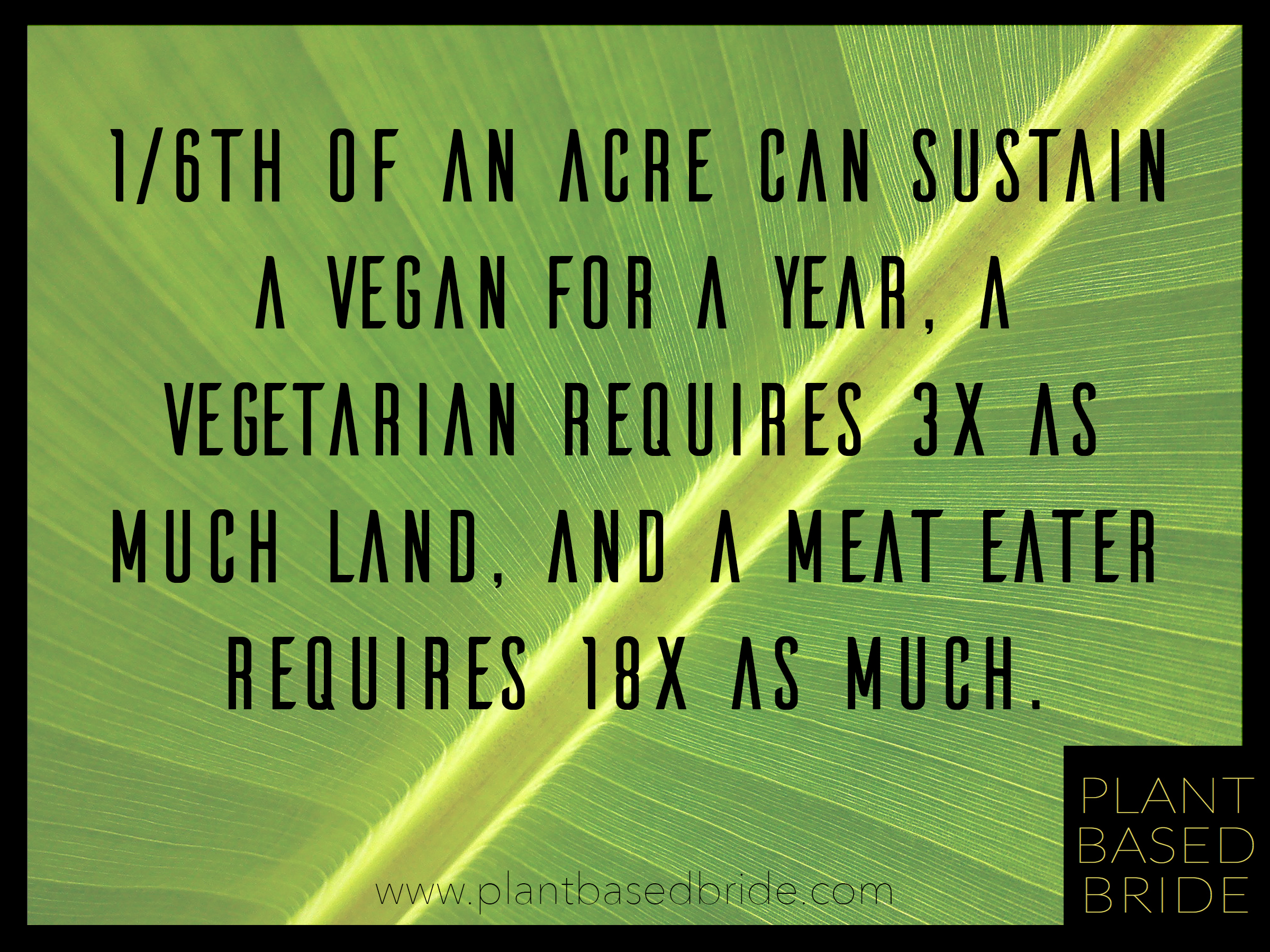
One calorie of beef requires 160 times more land to produce than one calorie of potatoes or rice, and causes 11 times more greenhouse gas emissions. Overspilled manure from farm land increases the phosphorus and nitrogen levels in the water supply, reducing oxygen levels and killing aquatic life. Deforestation for the use of livestock farming and agriculture of feed crops (the cause of 91% of the destruction of the planet's rainforests) emits approximately 2.4 billion tons of CO2 yearly. A quatre pound hamburger takes over 660 gallons of water to produce (the equivalent of showering for 2 months straight). 116,000 pounds of excrement is produced every second in the United States alone from farmed animals. Animal agriculture uses 1/3 of the world's fresh water and 45% of the earth's land. Going vegan is the absolute best way to reduce your impact on the environment and do your part to save our planet.
Want to learn more about the environmental impact of animal agriculture? Watch Cowspiracy, an incredible documentary on the subject.
7. Plant Based Food Is Delicious - And I don't just mean meat and dairy substitutes or desserts. After a couple of weeks on a vegan diet you will notice your taste buds change and will be able to distinguish and appreciate the subtly delicious tastes of plant foods in their natural state! (Although, coconut ice cream is to die for.) I dare you to go to a vegan restaurant in your city and not find something delicious!
Want examples of mouth-watering vegan dishes? Look no further than these instagram accounts.
8. Live Longer - Thrive on a vegan diet for years longer than your meat eating friends. Vegans have been shown to live as many as 9 years longer than omnivores due to reduced deaths from illnesses like cancer and heart disease and increased health and vitality from an abundance of nutrients. What could you accomplish in an extra decade of life? Why not find out!
9. Join The Ranks - Did you know that Ellen DeGeneres, Portia de Rossi, Kristen Bell, Natalie Portman, Kate and Rooney Mara, Jessica Chastain, Emily Deschanel, Ellen Page, Jared Leto, Michelle Pfeiffer, Carrie Underwood, and Alicia Silverstone are all vegan? The movement isn't just full of celebrities. Many incredible athletes have made the switch: Brendan Brazier, Robert Cheeke, Rich Roll, Robert Hazely, Georges Laraque, Carl Lewis, Jack Lindquist, Mike Mahler, Patrick J Neshek, Fiona Oakes, Amanda Reister, Jim Morris, and so many more!
If celebrities under all of the pressures of Hollywood and athletes competing at international levels can thrive on a plant based diet, why can't you?
Related Blog Post: Vegans vs Protein
10. Be Happier - Go vegan for a healthy mind: you'll have lower incidences of anxiety and depression than meat eaters! Magnesium, which is plentiful in plant foods and virtuality non-existent in animal products, is important for energy, improving sleep, and regulating your mood while reducing headaches.

You'll also be happier knowing that every single day you're saving 1100 gallons of water, 45 pounds of grain, 30 square feet of forest, 20 pounds of CO2, and one animal's life. Every single day. If you could make that kind of positive impact on the world, would you?
You can. No other choice has such a profound impact on the health of the planet in every single aspect.
Make a change. Go vegan!
Until next time,

Which reason resonates the most with you? Why did you go vegan? Let me know in the comments below!
Subscribe to the Plant Based Bride newsletter to never miss a blog post. Find the form at the bottom of this page!
One of the most common questions I have received over the past 7 years as a vegan is “How do you get enough [insert macro- or micronutrient here]?” This is a question I have explored in great detail on this blog, with dedicated posts focusing on protein, iron, B12, and so much more. And while I will always believe that getting your nutrition from whole plant foods is the best first choice, it’s not always a possibility for every person. Whether you live in a food desert with little access to fresh foods or struggle with digestive complications that make eating large amounts of high fiber foods a painful experience, sometimes supplementation is the only answer.
Today I will be sharing with you my favourite vegan gummy vitamins for maintaining optimal health as a vegan of over 7 years!