

the blog.
The Ultimate Guide To Winter Dressing As A Vegan
It's cold in Toronto right now. Really cold. -34 degrees celsius cold. And it got me thinking... dressing for the winter as a vegan isn't as easy as it should be. We want to be warm without exploiting animals.
Is being compassionate AND frosbite-free too much to ask?
Luckily the answer is no.
I'm going to share my tips and tricks (and you can trust me because I'm Canadian, and we know cold) and picks to keep you toasty from head to toe!
It's cold in Toronto right now. Really cold. -34 degrees celsius cold. And it got me thinking... dressing for the winter as a vegan isn't as easy as it should be. We want to be warm without exploiting animals.
Is being compassionate AND frosbite-free too much to ask?
Luckily the answer is no.
I'm going to share my tips and tricks (and you can trust me because I'm Canadian, and we know cold) and picks to keep you toasty from head to toe!

*This post contains affiliate links, indicated with an asterisk. This means that if you choose to click through one such link and make a purchase I will make a commission, at no extra cost to you. I will never recommend a product that is not vegan or something I don't use or believe in. If you enjoy my content please consider using these links for your purchases as a way to support Plant Based Bride!
H A T S
We've all heard that a lot of heat escapes from the top of our heads. Keep your noggin warm with the innumerable styles of vegan hats! Here are some of my very favourite...

- Asos Reclaimed Vintage Bobble Beanie
- Asos Cable Beanie
- Hooldamb Ruderalis Hat
- Vaute Couture Boater Felt Hat
- Asos Fine Rib Knitted Turban Hat
- Urban Outfitters Lumberjack Beanie
- Vegan Faux Fur Bobble Hat
- Asos Rib Headband
- Urban Outfitters Brushed Beanie
- Asos Cable Pom Beanie
- Lulus Cuddled Up Grey Knit Beanie*
- Vaute Couture Cole Felt Hat
- Urban Outfitters Classic Beanie
- Urban Outfitters Open Boucle Slouch Beanie
- Asos Fluffy Headband
- Asos Short Turn Up Beanie with Pom
Animal materials to watch out for... alpaca, angora, calfskin, camel hair, cashmere, felt, flannel, fleece, fur, leather, mohair, pashmina, shearling, sheepskin, silk, suede, tweed, wool.
Vegan materials perfect to keep you warm... acrylic, corduroy, cotton, cotton flannel, denim, faux-fur, flannelette, leatherette/imitation leather, linen, moleskin, muslin, nylon, polyester, polyester fleece, rayon, spandex, ultrasuede, velour, velveteen, viscose.
Great North Tip: Always, and I mean ALWAYS keep your head covered. Your brain is essential to the well-being of this planet. And also your ears. Those are less essential, but really hurt when they get too cold. So just wear a hat, ok? Ok.
S C A R V E S
I don't know about you, but I like to prevent cold wind from blowing down my neck and into my coat on bitterly cold days. Scarves are the perfect solution, not to mention cozy and stylish (and they don't need to be made of wool). Check out some of my vegan picks below...

- Asos Oversized Scarf in Colourblock with Tassels
- Urban Outfitters Boucle Cable Hooded Eternity Scarf
- Urban Outfitters Avant Garde Brushed Woven Scarf
- Asos Pieces Ribbed Oversized Blanket Scarf
- Lulu's Que Sera Serape Reversible Black and Ivory Print Blanket Scarf*
- Urban Outfitters Femme Super Soft Square Scarf
- Asos Blanket Scarf In Black And White Design
- Asos Woven Oversized Scarf In Geo Shapes
- Asos Long Scarf In Colourblock With Tassels
- Urban Outfitters Brushed Plush Lined Eternity Scarf
- Urban Outfitters Multi Stripe Blanket Scarf
- Asos Long Scarf With Mixed Stripe And Chevron
- Lulu's Weaving Path Beige Striped Scarf*
- Urban Outfitters Faux-Sherpa Eternity Scarf
Animal materials to watch out for... alpaca, angora, camel hair, cashmere, fleece, fur, mohair, pashmina, shearling, sheepskin, silk, wool.
Vegan materials perfect to keep you warm... acrylic, cotton, cotton flannel, faux-fur, flannelette, linen, modal, moleskin, muslin, nylon, polyester, polyester fleece, rayon, spandex, tencel, ultrasuede, velour, velveteen, viscose.
You might also like... Finding My Wedding Dress: No Silk, Please.
S W E A T E R S
It's called sweater weather for a reason. Get your layers on!

- Asos Jack & Jones Shawl Collar Cardigan in Mixed Yarns
- ModCloth Recipe Club Sweater in Salt*
- Asos Jumper in Twist with Aztec Design
- Lulu's Log Cabin Cream Cable Knit Sweater*
- Urban Outfitters Native Youth Sweater
- Lulu's Cup of Cozy Light Grey Cardigan Sweater*
- Asos Shawl Neck Jumper in Grey Cotton
- Urban Outfitters BDG Elbow Patch Sweater
- Lulu's Icy London Icy France Black and Ivory Sweater*
- Asos Cotton Crew Jumper with Blocking
- Urban Outfitters BDG Parker Cardigan
- Urban Outfitters O'Hanlon Mills Calhoun Sweater
- Lulu's Parker Bridge Black Sweater*
- J Crew Rugged Cotton Sweater
Animal materials to watch out for... alpaca, angora, calfskin, camel hair, cashmere, flannel, fleece, fur, leather, mohair, pashmina, shearling, sheepskin, silk, suede, wool.
Vegan materials perfect to keep you warm... acrylic, batiste, chambray, chino, cord, corduroy, cotton, cotton flannel, denim, faux-fur, flannelette, gingham, khaki, leatherette/imitation leather, linen, moleskin, muslin, nylon, polyester, polyester fleece, rayon, spandex, tencel, ultrasuede, velcro, velour, velveteen, viscose.
Great North Tip: The chunkier the sweater, the more Canadian you look. And we all know that Canadians are irresistible. So throw on that heavy knit sweater with abandon, you sexy thing, you.
C O A T S
I could argue that a good coat is the most important aspect of keeping warm in the winter. We can get away with less than perfect boots, a lack of layers, and no gloves or hat if we have a warm coat with a hood and pockets! But it is difficult to survive the winter in any sort of comfort without a warm coat. Here are some of my picks for men and women, made without animal products:

- Vaute Couture Lincoln
- North Face Men's Thermoball Snow Hoodie
- Vaute Couture Whitman in Primaloft Insulated Moleskin
- Hoodlamb Ladies Parka in Black, this is my winter coat - check out my unboxing video here!
- Nau Luminary Trench
- Vaute Couture Mark Mountain Coat in Primaloft Insulated Moleskin
- Marmot Downtown Component Jacket
- Hoodlamb Men's Tech 4-20
- Vaute Couture Emily in Insulated Moleskin
- Nau Temp Jacket
- Vaute Couture Mark Snow Coat
- North Face Women's Thermoball Hooded Parka
- Nau Men Synfill Hoody Pullover
- Vaute Couture Amanda Maxi Coat
- Fair Trade Vegan Cocoon Coat
- Marmot Uptown Jacket
Animal materials to watch out for... alpaca, angora, calfskin, camel hair, cashmere, down, feathers, fleece, fur, leather, mohair, pashmina, shearling, sheepskin, silk, suede, tweed, wool.
Vegan materials perfect to keep you warm... acrylic, cotton, cotton flannel, denim, faux-fur, flannelette, gore-tex, khaki, leatherette/imitation leather, linen, moleskin, muslin, nylon, polartec wind pro, polyester, polyester fleece, primaloft, rayon, spandex, synthetic down, tencel, thermolite, thinsulate, ultrasuede, velcro, velour, velveteen, viscose, waxed canvas.
There is literally something for everyone! Vegan coats are more abundant than I ever realized until I put research into it, and they can be VERY warm (like my Hoodlamb!)
Check out this post from Green Planet for even more vegan coat options, and a bit more information on synthetic insulation types!
You might also like... Say No To Fur (Hoodlamb Vegan Coat Unboxing)
G L O V E S
Weather it's using your phone or holding your coffee, often you can't just keep your hands in your pockets while you're out in the cold. Keep your digits protected no matter what you get up to with vegan gloves!

- Burton Gore-Tex Gloves
- Asos Echo Touch 'Cashmere Feel' Drawstring Glove
- The North Face Montana E-Tip Gloves
- Manzella Adventure 100 Gloves
- Asos Touch Screen Gloves in Burgundy Fair Isle Palm Print
- REI Tahoma Gloves
- Vegetarian Shoes Vegan Gloves
- Adidas Originals Trefoil Gloves
- Seirus Prism Gore-Tex Gloves
- Asos Plain Touch Screen Gloves
- Dakine Bronco Glove
- Asos Fingerless Gloves In Black
Animal materials to watch out for... alpaca, angora, calfskin, camel hair, cashmere, fleece, fur, leather, mohair, pashmina, shearling, sheepskin, silk, suede, wool.
Vegan materials perfect to keep you warm... acrylic, corduroy, cotton, cotton flannel, faux-fur, flannelette, gore-tex, leatherette/imitation leather, linen, moleskin, muslin, nylon, polartec wind pro, polyester, polyester fleece, primaloft, rayon, spandex, synthetic down, tencel, thermolite, thinsulate, ultrasuede, velcro, velour, velveteen, viscose, waxed canvas.
Great North Tip: Instagram is important, I get it. But losing a finger makes it hard to like all of my photos. So maybe wear gloves with touch-screen technology. It's really the best of both worlds. Pictures of my cats, and all ten digits. #blessed
B O O T S
As anyone who has ever been outside in a snowstorm in inadequate footwear will know, warm toes is a must for winter comfort. Here's a wide variety of vegan men and women's boots to keep your feet warm and dry.

- Kamik Seattle - I own these!
- Vegetarian Shoes Brooklyn Boot
- Vegetarian Shoes Vintage Boot
- BC Footwear Collective Boot
- Brave Gentleman Worker Boot
- Kamik Sugarloaf
- Vegetarian Shoes Veggie Trekker
- Native Shoes Jimmy Winter
- Jambu Artic Vegan
- Dr Martens Vegan 1460
- Vegetarian Shoes Snug Boot
- Vegetarian Shoes Engineer Boot
- Cougar Serge
Animal materials to watch out for... alligator skin, calfskin, fleece, fur, kangaroo skin, leather, shearling, sheepskin, snakeskin, suede, wool.
Vegan materials perfect to keep you warm... acrylic, cork, cotton, cotton flannel, faux-fur, flannelette, leatherette/imitation leather, linen, microfibre, moleskin, muslin, nylon, polyester, polyester fleece, polyurethane, rayon, spandex, tencel, ultrasuede, velcro, velour, velveteen, viscose, waxed canvas.
You might also like... Should You Get Rid Of All Your Leather Now That You're Vegan?
O T H E R L A Y E R S
Layers are your friend! Here are some other layers like socks, long johns, and lightweight tops you may want to consider piling on to keep warm.

- ASOS Esprit Henley T-Shirt
- Urban Outfitters Project Social T Finley Tank Top
- Braintree Clothing Blair Rock Thick Bamboo Socks
- Urban Outfitters Truly Madly Deeply Helena Raw Edge Thermal Top
- Urban Outfitters Polyester Fleece Lined Full Tight
- PETA Vegan Knee High Socks
- Urban Outfitters Project Social T Christy Tunic Tee
- ASOS 2 Pack Crew Neck Jumper in Cotton
- Urban Outfitters Out From Under Leggings
- Urban Outfitters Nassau Galaxy Tank Top
- Uniqlo Women's Heattech Socks
- ASOS Jack & Jones Long Johns
- Bergies Cat Lady Crews
Animal materials to watch out for... alligator skin, alpaca, angora, calfskin, camel hair, cashmere, down, feathers, felt, flannel, fleece, fur, kangaroo skin, leather, mohair, pashmina, shearling, sheepskin, silk, snakeskin, suede, tweed, wool.
Vegan materials perfect to keep you warm... acrylic, batiste, chambray, chino, cord, corduroy, cork, cotton, cotton flannel, denim, elastic, faux-fur, flannelette, gingham, khaki, leatherette/imitation leather, linen, microfibre, moleskin, muslin, nylon, polyester, polyester fleece, polyurethane, rayon, spandex, tencel, ultrasuede, velcro, velour, velveteen, viscose, waxed canvas.
Great North Tip: The more layers you wear the more you will sweat when you finally get inside and can't just start stripping willy nilly. It's just a fact of life. You'll just have to get used to it, or move to the equator. Which actually doesn't sound like a bad idea right about now.
You made it! If I accomplished nothing else, I hope I've shown you how very possible it is to be warm and stylish (no matter what your style may be) as a vegan in colder climates (and maybe made you smile).
To help you out while shopping (and just to simplify everything as much as possible, because I know it can be hard to remember all of the different materials and their origins. Listen, I got you.) I have created a printable list of animal materials and vegan materials.
Best of all? It's free! Sign up below to get your download link right away.
Want inspiration for vegan winter fashion? Follow me on instagram to see my outfits and check out my winter capsule wardrobe to see my foundational pieces!
Until next time, stay warm, stay compassionate!

What are your favourite vegan winter pieces? Any tips to share with new vegans to stay warm? Let us know in the comments below!







Review: e.l.f. Mad For Matte Palette (Vegan & Cruelty-Free)
Hello, friends! It's time for another beauty review... and this time we're taking a look at the e.l.f. mad for matte eyeshadow palette! A compact palette of ten neutral matte shades at a very affordable price... but is it any good? Let's get into it!
Hello, friends! It's time for another beauty review... and this time we're taking a look at the e.l.f. mad for matte eyeshadow palette! A compact palette of ten neutral matte shades at a very affordable price... but is it any good? Let's get into it!

What e.l.f. has to say about it...
'Achieve both beautifully bold or subtle everyday eye looks with these perfectly curated 10 matte eyeshadow shades. This collection of hues is ideal for shading, highlighting, and defining the eyes. The satin matte shadows can be used as a liner, on the lid, and in the crease of the eye for an expertly contoured and blended look.' (from elfcosmetics.com)
Cost: $10 US
Vegan? Of course!
Cruelty-Free? 100%.
Ingredients: Talc, Mica, Silica, Magnesium Stearate, Nylon-12, Ethylhexyl Palmitate, Dimethicone, Phenoxyethanol, Caprylyl Glycol. May Contain:Titanium Dioxide (CI 77891), Iron Oxides (CI 77491, CI 77492, CI 77499), Manganese Violet (CI 77742), Red 40 Lake (CI 16035), Ultramarines (CI 77007)
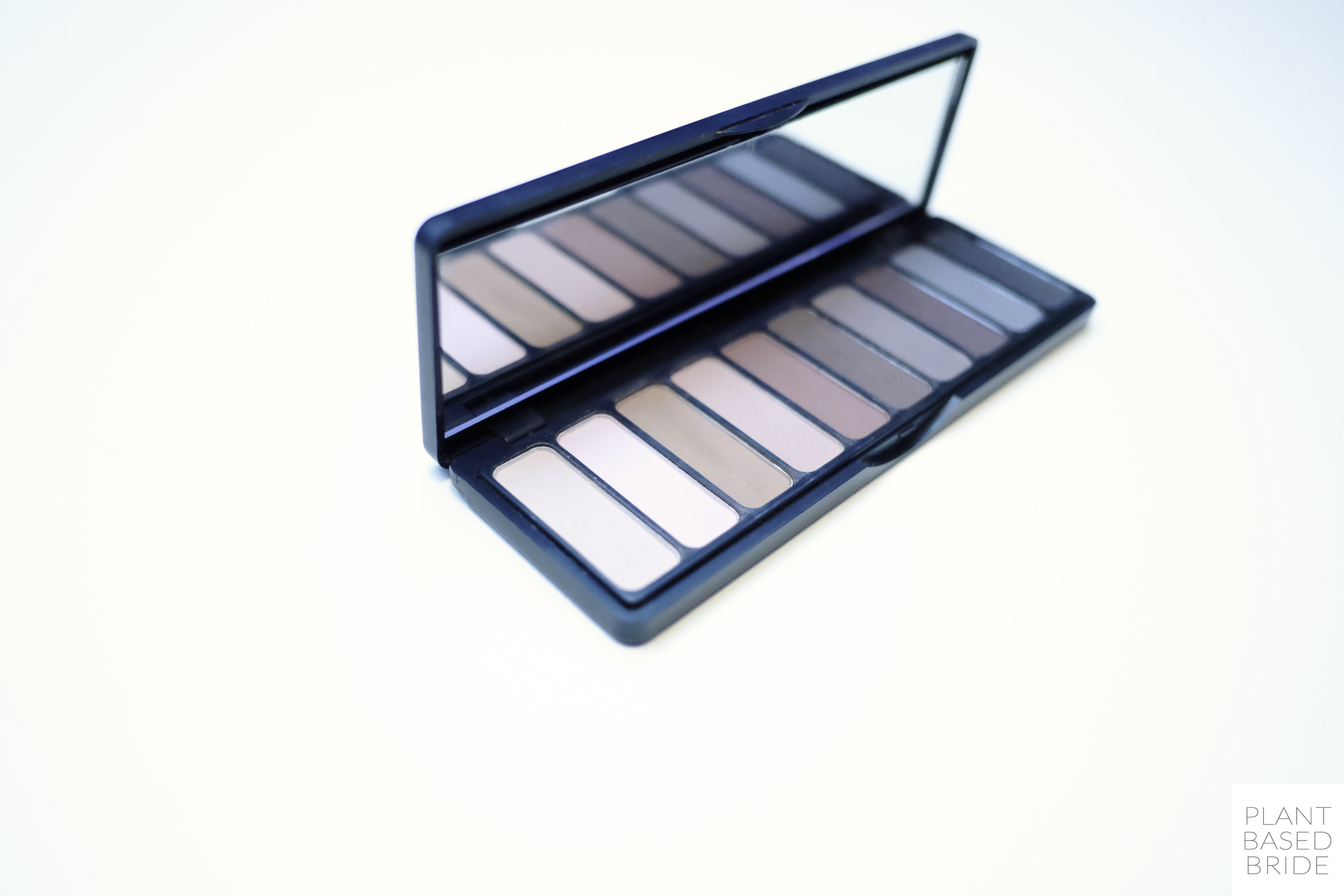
This palette comes with a 10 neutral matte shades, ranging from light to dark and cool to warm. From left to right there is light nude, baby pink, light warm brown, medium pink beige, medium red brown, medium cool brown, medium taupe, dark warm brown, medium gray, and soft black.
The Good
- This palette has a nice range of everyday shades, making this a great starter kit for anyone transitioning to vegan and cruelty-free makeup;
- The matte shades are very wearable and versatile;
- Most of the shades are quite pigmented;
- Very affordable, and;
- Decent longevity of about 5 hours when applied dry with a brush.
The Bad
- The shades are smooth, but slightly chalky which means they can cause fallout, so be sure to tap off the excess before applying and be prepared for a bit of cleanup;
- The two lightest colours don't show up on my skin at all (but would perhaps be pretty on someone with a darker skin tone);
- The darker colours are difficult to blend, and;
- There is no highlight shade for lighter skin tones.

Shade by shade...
light nude... good for setting my primer or concealer on the lid, but not light enough to work as a highlight (basically invisible on my skin).
baby pink... almost invisible and not a good shade for my skin tone.
light warm brown... my go-to eyebrow colour since I picked up this palette! I used to use omega from MAC, and while this one has a warmer undertone than the cooler taupe of omega, that's actually a better match for my slightly reddish brown hair.
medium pink beige... a very pretty 'no makeup makeup' shade for the crease on days you want your eye look to be subtle, or a lid colour for a more dramatic look. Blends well.
medium red brown... a pretty everyday crease colour, blends relatively well.
medium cool brown... the cool version of your everyday crease shade, also blends pretty well.
medium taupe... for me this is the cool version of the medium pink beige, aka a great crease shade for subtle eye makeup or a nice lid colour for something dark and dramatic. Blends well.
dark warm brown... my favourite 'natural' eyeliner shade applied with an angled brush and a nice dramatic crease shade, but is a bit difficult to blend.
medium gray... a pretty late gray shade that is a nice subtle eyeliner or a pretty crease shade. Blends relatively well.
soft black... my favourite for everyday liner, applied with an angled brush. Another one that is more difficult to blend. Wetting the brush can deepen this shade and give it more of a dramatic feel, but it is definitely a SOFT black, not a deep or true black.
RATING: 4/5
Final Thoughts: This is a very good quality palette considering the price point and is a great starter kit for any vegan beauty lover! I wish it contained a true highlight shade as that would land it squarely in the land of all-in-one everyday eyeshadow palette, but I do think the shades are well varied. I find the fallout slightly irritating but it doesn't prevent me from using this palette daily. I dislike shimmery eyeshadow and wear almost exclusively neutral shades, so this palette a big hit - convenient and affordable!
Would I recommend? I would definitely recommend this palette if you are just starting your makeup collection (or restarting it, as I have been!) or want an all-in-one neutrals palette. It is also great for those of us without extra cash to spend on expensive single shadows or high-end palettes. Plus, it's 100% vegan and cruelty-free!

Do you have the e.l.f mad for matte palette? What did you think? Is there a vegan and cruelty-free product you'd like me to review or another e.l.f. product that you love? Let me know in the comments below!
Also, be sure to check out my list of cruelty-free beauty brands before you head on your next shopping trip!
Until next time,


Why You Need To Get More Fibre
The Standard American Diet is dangerously low in fibre, and yet no one seems to be too concerned. They should be. Learn all about fibre and why YOU (yes, you) need to be eating more of it in today's blog post!
The Standard American Diet is dangerously low in fibre, and yet no one seems to be too concerned. They should be. Learn all about fibre and why YOU (yes, you) need to be eating more of it in today's blog post!

WHAT IS FIBRE?
Fibre is the structural component of plants (the equivalent of an animal's muscles and bones) that humans cannot digest, often known as roughage. Any transformation that occurs to the fibre we eat is due to the bacteria in our guts, rather than our own digestive system. There are two types of fibre: soluble and insoluble.
Soluble fibre is found in oats, legumes, vegetables, barley, and fruits and is great for reducing blood glucose and cholesterol in the body as well as preventing diarrhea.
Insoluble fibre is found in whole grains, nuts, fruits, and vegetables. This type of fibre prevents constipation and certain types of cancer.
WHY DO WE NEED IT?
Fibre is a necessity for a healthy diet. It:
- helps to control blood glucose;
- reduces the risk of obesity due to its ability to increase satiation;
- regulates bowel movements;
- manages blood pressure and cholesterol (reducing the risk of heart disease), and;
- reduces the risk of cancer.
Not too shabby, eh?
Fibre and Heart Disease
Fibre is inversely associated with the incidence of coronary heart disease, in other words, the more fibre you eat the less likely you are to suffer from heart disease. This is due to fibre's positive impact on heart health by reducing bad cholesterol (LDL) and managing blood pressure.
How does fibre reduce cholesterol? Viscous soluble fibre (found in barley, oats, sea vegetables, shiitake mushrooms, cherries, grapes, berries, citrus fruits, and other foods) has the ability to bind with cholesterol in the intestine, preventing its assimilation into the body by eliminating it in the stool instead.
Check out this study for more detail!
Fibre and Diabetes
From the Canadian Diabetes Association website:
'Soluble fibre may help control blood sugar by delaying gastric (stomach) emptying, retarding the entry of glucose into the bloodstream and lessening the postprandial (post-meal) rise in blood sugar. It may lessen insulin requirements in those with type 1 diabetes. Because fibre slows the digestion of foods, it can help blunt the sudden spikes in blood glucose (sugar) that may occur after a low-fibre meal. Such blood sugar peaks stimulate the pancreas to pump out more insulin. Some researchers believe that a lifetime of blood glucose (sugar) spikes could contribute to type 2 diabetes, which typically strikes after the age of 40, and more than doubles the risk of stroke and heart disease.'
Another great aspect of high-fibre meals? Their positive impact on blood sugar levels can continue for hours, even after other meals have been eaten. And there's something else - high fibre meals have been shown to significantly increase production of the blood sugar reducing hormone glucogon-like peptide 1 (GLP-1). This GLP-1 response is triggered not by the presence of soluble fibre, but by the products created through the fermentation of fibre by bacteria in the large intestine.
Essentially, if you want to control your blood sugar, you want to eat more fibre.
Fibre and Obesity
Fibre is well-known to increase satiety without adding calories and therefore encourages the maintenance of a healthy weight. This is largely due to fibre's effect of the speed of gastric emptying, in other words, fibre slows down the digestion process, keeping you full for longer. It also lowers the caloric density of the diet, meaning that a higher volume of food can be consumed for the same amount of calories.
Another benefit of fibre-rich foods for satiation? They often require more chewing than low-fibre foods - and the more you chew, the more satiated you feel. Cool, right?
Check out the following studies for more on the link between fibre and obesity: Study One, Study Two
Fibre and Colon and Bowel Health
It's time to talk about soluble and insoluble fibre again! You can't get off THAT easily.
Soluble fibre is broken down in the gut by colonic bacteria resulting in energy and gas. This type of fibre produces a gel-like substance in stool which binds to other substances (such as cholesterol) and removes them when the stool is eliminated. It also slows and regulates gastric emptying (as I previously mentioned) which results in more regular bowel movements.
Insoluble fibre is not so easily broken down in the gut, however it holds water extremely well (up to 15x its weight) and therefore aids in increasing the weight and size of stool as well speeding up the rate of food passage through the digestive system.
Consuming the right types of fibre in the proper amounts can aid in reducing the symptoms of IBS including abdominal pain, constipation, diarrhea, incomplete evacuation, and excessive gas. Learn which types of fibre aid in resolving each symptom here.
What about colon health?
Fibre aids our colons by directly fuelling the good bacteria in our gut. When you eat a low-fibre diet you are literally starving your gut bacteria, which you need to stay healthy. Different species of bacteria feed on different types of fibre, so eating a wide variety of plant foods is imperative for bacterial balance.
Another way that fibre supports the health of our colon is in their digestion by bacteria. This results in short-chain fatty acids which are then used by the cells of our large intestinal wall as fuel. Without this fuel the cells lining our colon cannot carry out their metabolic activities, and cannot support normal intestinal function.
Fibre and Cancer
A study conducted in 2010 (among others, such as this one) found a clear inverse-association between dietary fibre intake and colorectal cancer risk, meaning the more fibre that was consumed by the subjects, the lower their risk of developing colorectal cancers.
But why does fibre have this effect?
Well, we're not yet entirely sure. What we do know is that scientific evidence for this phenomenon has been accumulating since the 1970s, when the hypothesis was proposed by Denis Parson Burkitt, an Irish surgeon, that dietary fibre reduces the risk of colorectal cancer. This was based on his observation that rural Africans eating a high-fibre diet had low rates of these cancers.
'Several plausible mechanisms have been proposed to explain the hypothesis, including increased stool bulk and dilution of carcinogens in the colonic lumen, reduced transit time, and bacterial fermentation of fibre to short chain fatty acids.' (From the introduction of this 2011 study.)
More and more researchers are delving into this field of study, giving us hope that a definitive answer will be found soon!
HOW MUCH DO WE NEED?
You already know where you can get fibre. It is not found in any animal foods, but is present in abundance in plant foods such as vegetables, fruit, legumes, nuts, seeds, and unprocessed grains.
How much we need, however, is a slightly more complicated question. It is, in fact, possible to ingest too much fibre (which can lead to bloating, abdominal pain, increased gas, and diarrhea), but how much is too much? The conservative recommendation for dietary fibre consumption is 25-30g per day, but as a person on a whole foods plant based diet I eat more in the range of 70-80g of fibre a day (while experiencing none of the aforementioned side-effects of too much dietary fibre).
What gives?
Many experts in the plant based nutrition field see this daily recommendation as more of a bare minimum than an optimal range, and as there has been no upper limit of safe dietary fibre consumption set, see it as a 'more is better' type of situation. I tend to agree with them. The best way to know if you're ingesting too much fibre is to be in tune with your own body and watch for the signals it gives you. However, from my extensive research I have come to the conclusion that it would be VERY difficult indeed to ingest too much dietary fibre without vastly surpassing your daily calorie needs.
In other words, have at it!
I hope you enjoyed this post and learned a little more about fibre than you knew before!
Until next time,

How much fibre do you get in a typical day? Have I convinced you to up that amount?
SOURCES & FURTHER READING
http://www.whfoods.com/genpage.php?tname=nutrient&dbid=59
http://www.eatbalanced.com/why-eat-balanced/why-do-we-need-fibre/
http://www.bmj.com/content/347/bmj.f6879
http://www.diabetes.ca/diabetes-and-you/healthy-living-resources/diet-nutrition/fibre
http://www.ncbi.nlm.nih.gov/pubmed/3032822
http://link.springer.com/chapter/10.1007%2F978-1-4615-6850-6_13
http://www.hsph.harvard.edu/nutritionsource/fiber-and-colon-cancer/
http://www.jjs.me.uk/patientinfo/faf.html
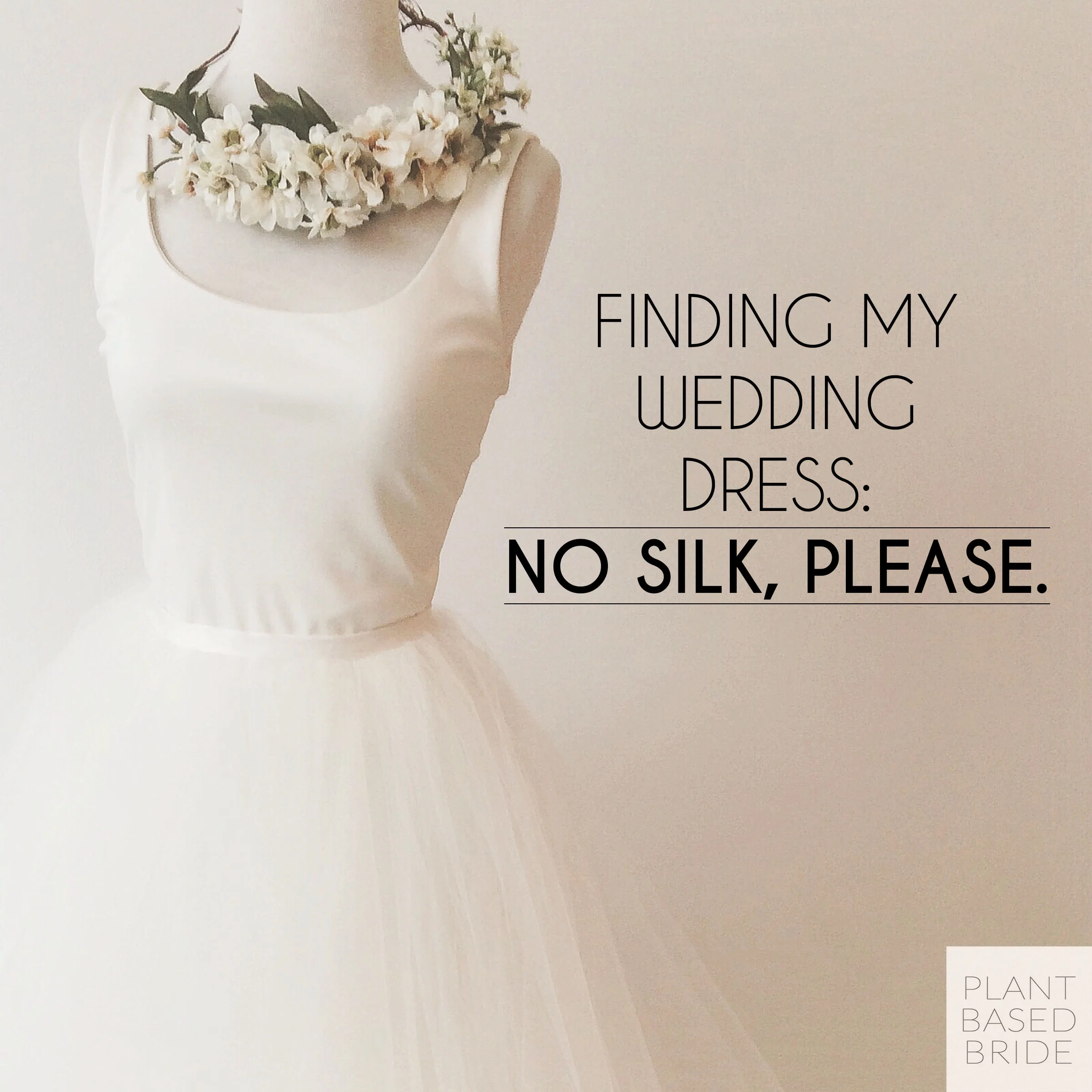
Finding My Wedding Dress: No Silk, Please.
If you follow me on instagram you will already know that I have chosen my wedding dress! (cue the squeals) You will also know that the number one biggest struggle in finding my dream dress was the lack of vegan options. Or in other words, the abundance of silk. Not sure why you should care about silkworms and the fabric they make? Neither was I. That was, of course, until I looked into the industry and really thought about what it's doing. And I want to share with you why you may want to rethink that silk blouse or snazzy silk bowtie you've been eyeing.
If you follow me on instagram you will already know that I have chosen my wedding dress! (cue the squeals) You will also know that the number one biggest struggle in finding my dream dress was the lack of vegan options. Or in other words, the abundance of silk. Not sure why you should care about silkworms? Neither was I. That was, of course, until I looked into the industry and really thought about what it's doing. And I want to share with you why you may want to rethink that silk blouse or snazzy silk bowtie you've been eyeing.

WHAT ARE SILKWORMS?
Silkworms are the larva or caterpillar of silk moths, or as they are scientifically classified, Bombyx mori. They are, therefore, young insects. They are also now extinct in the wild, existing only in captivity. They originally lived peacefully in northern China eating mulberry leaves and dreaming of unicorn moths and rainbows (presumably).
HOW IS SILK MADE?
Silk worms are raised on silk farms. The eggs are incubated for 8-10 days until tiny brown larva emerge. The larva are fed exclusively mulberry leaves for approximately a month as they grow from 3mm to 8 cm long and lighten in colour.
The silk worms are then ready to begin their transition from caterpillar to moth, and turn their efforts to weaving a cocoon. They do so using the "silk gland" below their lower lip to produce a sticky substance that hardens into silk thread when in contact with the air. They use this mechanism to form the skeleton of their cocoon, climb in, and finish it around themselves - using as much as 1 km of silk thread in the process. The cocoon goes from start to finish in about 4 days.
The sleeping caterpillar will become a pupa, and in the wild would finish its transition to moth, emerging from its cocoon to live another life. In the current silk industry, however, they are never given this chance. Once the cocoon is completed the pupae will be killed by extreme heat as their cocoons emerged in boiling water. The thread will then be reeled off, treated, and woven into silk fabric.
WEDDING DRESS SHOPPING
Wedding dresses have been made with silk for a very long time. It is viewed as a luxury fabric, and most brides want to feel luxurious on their wedding day. Silk is a beautiful fabric, in look and feel, and it is completely understandable that designers would wish to work with such a fabric to make their designs come to life.
But what can we do if we don't feel comfortable supporting the silk industry and yet want a beautiful gown?
My top tips for any vegan brides out there are as follows:
ONE Do your research.
This is an essential first step...
- Join a local vegan group online or off and ask any recently married women where they found their gown;
- Search online for vegan or eco-friendly designers with shops in your area, and;
- Find bridal boutiques that have a vast array of silk-free options by exploring their website and getting in contact with them to inquire.
The more research you do at the outset, the easier the entire process will go!
TWO Set your budget ahead of time and stick to it.
This isn't vegan specific, but it is VERY important. Just do it! Oh, and set your budget a couple hundred dollars below your max. You WILL need alterations, and they don't come cheap!
THREE Tell them upfront that you won't consider silk.
Once you've found a couple of shops with promising options you'll want to book your appointments. Be sure to tell them in that first communication that you are looking for silk-free gowns ONLY and will not consider buying a dress made with silk. Ask them (nicely!) if they can pull a selection of silk-free gowns or at least be able to point out during your appointment which options are available to you.
I didn't do this myself and very much regretted it, as I spent much of my short appointment time trying to figure out which dresses were and weren't vegan. Do yourself (and your associate) a favour and let them prepare ahead of time!
FOUR Don't be afraid to look into custom or vintage gown options.
If your perfect dress just isn't materializing, perhaps it's time to repurpose or get creative! A custom dress means you can get exactly what your heart desires, including the fabric choice. I seriously considered a custom gown before deciding on my dress, as many of my favourite pieces were just shy of perfect or were (unfortunately) not vegan friendly. A custom dress means every aspect is completely up to you!
Another great option is a vintage dress or a dress passed down in your family! In my opinion, buying a secondhand dress or repurposing one containing silk doesn't make you a "bad vegan". It doesn't contribute to the exploitation of silk worms and is reusing materials which is more eco-friendly, to boot!
If you are shopping in or around Toronto, I would whole-heartedly recommend Sash & Bustle! This is where I found my vegan gown, and they were very accommodating - sending me pictures of the material tags so that I could be triple sure that my top 2 were vegan, helping me find only the silk-free options, and being all-around awesome people.
A WORD ABOUT PEACE OR AHIMSA SILK
Some vegans see peace (or Ahimsa) silk as the perfect option to fulfill all their silk desires. While I will leave you to make up your own decision on this one (and I would love to hear what you think in the comments) I personally do not feel this is a compassionate option. Yes, the pupae are spared and allowed to hatch. But no, it is not a process free of killing. While the moths who emerge from their silk cocoons will be allowed to live and bread millions of their offspring will die, only they will die of starvation and dehydration approximately one day into their lives rather than of heat exposure within their cocoons.
This is the most comprehensive article I have read that expresses my opinion on this topic, I urge you to give it a read!
I know this is a tough one for many people to grasp, and I understand, truly. We don't know if insects can feel pain, and may never be able to determine the truth one way or the other. But what we DO know is that silk worms have just as much right to live out their lives as we do. If their deaths were a necessary sacrifice for our survival, I would likely come down on a different side of this argument. But as I have never heard anyone make a convincing argument for why silk is required for survival, that hypothetical has no bearing on real life.
While I sympathize with those who make a living in the silk trade, I would urge them to support their families through work that doesn't exploit innocent beings, and for those of us who are lucky enough to have been born into a more privileged life to help create those opportunities.
If we all work together, this amazing planet we call home could be a place of solidarity, compassion, peace, and acceptance - for every creature, whether they be big or small.
Until next time,

I REALLY want to know what your thoughts are on this topic. Let me know in the comments below!
Coined by Elizabeth Jean @xparmesanprincessx, the personal curriculum trend is about creating a self-directed learning plan focused on areas of personal interest, loosely based on a school curriculum structure, including things like assigned reading, goals, assignments, and final projects.
At its core, the personal curriculum movement is about celebrating lifelong learning and intellectual curiosity. It's about being more intentional about how we spend our time when we're not sleeping, or at work, or doing the basic maintenance or admin or chores to keep our lives going. It's about using our free time to enrich our lives in a way that is purposeful and intentional and joyful, indulging our curiosity as adults, even once we're outside of structured school environments, getting excited about learning and allowing ourselves the freedom to go down those rabbit holes in our special interests, to challenge our brains in ways that we maybe don't get the chance to in our day-to-day lives.