

the blog.
Beauty Lover's Gift Guide (Vegan & Cruelty Free!)
It's that time of year again... The time of year where we all bundle up, head to the overcrowded mall and try to find affordable gifts for the many people in ours lives - the ones we love and the ones we don't really know much about but kind of have to get them a present anyway and are completely lost. Whichever one you're shopping for, if they're a beauty lover, I've got you covered!
It's that time of year again... The time of year where we all bundle up, head to the overcrowded mall and try to find affordable gifts for the many people in ours lives - the ones we love and the ones we don't really know much about but kind of have to get them a present anyway and are completely lost. Whichever one you're shopping for, if they're a beauty lover, I've got you covered!

1. Deux Lux "I Do" Makeup Bag, $24.50
Adorable for any bride to be on your list!
2. Black Beauty Furless Brush Set, $89.99
A great starter kit of incredibly high-quality synthetic makeup brushes.
3. Dr. Bronner's Pure-Castile Liquid Soap, $6.69 for 8oz
This all-purpose soap is all-natural and a great brush cleanser!
4. Zoya Nail Polish in Amal MatteVelvet, $10
The perfect red for a holiday manicure!
5. Dose of Colors Matte Lipstick in Stone, $18
Or try truffle for a warmer shade. These lipsticks are long-wearing and gorgeous!
6. Too Faced Better Than Sex Mascara, $32
For crazy length and volume with one coat look no further than this gem!
7. Kat Von D Tattoo Liner in Trooper, $19
For a felt-tipped liner that just won't quit.
8. OCC Lip Tar / RTW in Stalker, $15
You can't go wrong with a red lip for the holidays.
Delicious flavours and wonderful at moisturizing even the most chapped lips!
10. e.l.f. Cosmetics Mad for Matte Eyeshadow Palette, $10
A great neutrals palette for everyday looks and smokey eyes!
There's something for just about everyone here, and every price point! Happy shopping :)
Until next time,

Which gift guide should I do next? Let me know in the comments below!














10 Tips To Help You Go Dairy-Free!
Decided to cut dairy out of your diet but not sure where to start? First of all, congratulations on taking the first step! I'm so proud of you and I want to help you make this change, so today I am sharing my top 10 tips for going dairy-free that I used when I transitioned from a vegetarian to a vegan diet almost 3 years ago. What are my credentials, you ask? Good question!
Right up until the day I committed to being vegan I was a cheese addict. I would eat cheese with every single meal and snack. I would eat melted cheese on a bagel for breakfast. I would eat sliced cheese as a mid-afternoon snack. I would eat a bowl of parmesan cheese with a spoon for dinner. (True story). Let me tell you, my family and friends were pretty shocked to hear I was no longer on the dairy train. So how did I, as a major cheese addict, give it up cold turkey? Keep reading to find out!
Decided to cut dairy out of your diet but not sure where to start? First of all, congratulations on taking the first step! I'm so proud of you and I want to help you make this change, so today I am sharing my top 10 tips for going dairy-free that I used when I transitioned from a vegetarian to a vegan diet almost 3 years ago. What are my credentials, you ask? Good question!
Right up until the day I committed to being vegan I was a cheese addict. I would eat cheese with every single meal and snack. I would eat melted cheese on a bagel for breakfast. I would eat sliced cheese as a mid-afternoon snack. I would eat a bowl of parmesan cheese with a spoon for dinner. (True story). Let me tell you, my family and friends were pretty shocked to hear I was no longer on the dairy train. So how did I, as a major cheese addict, give it up cold turkey? Keep reading to find out!
On to the tips!
ONE Have a clear image of WHY you're going dairy-free.
Every change is easier with a strong motivation. What's yours? Mine was purely ethical, read here for more on that, but there are a multitude of reasons to reduce, or even better eliminate dairy from your diet for health and environmental reasons as well! I've written about these in detail on my blog, if you need a starting point in your research:
The Truth About The Dairy Industry
Building Strong Bones With Plants
Should You Worry About Your Body's pH?
Milk IS NOT the Best Defence Against Osteoporosis
Still on the fence about giving up cow's milk and the products made from it? I encourage you, if you haven't already, to read my latest blog post, The Truth About The Dairy Industry, and peruse the resources I shared throughout. You can go now, it's ok, I'll wait! Still not sure? Comment below or send me an email at plantbasedbride@gmail.com and I'll answer any questions you may have and or chat with you, whatever you need! I want to be a support for you, so please don't hesitate to shoot me an email (or a tweet or a Facebook message or whatever social media you like using! I am on a good number of platforms. You can find links to my profiles on the right side of this page on a desktop or at the very bottom on a mobile device!)
Once you have your motivation, do whatever you need to do to keep it at the forefront of your mind. I found just having learned the truth about the dairy industry was enough for me, but you may need to write it down in your planner, or post a picture of dairy cows in a factory farm on your fridge, or have reminders pop up at meal times on your phone to keep your mind on your why. Whatever method works for you, do it!
TWO Consider your past successes.
Have you ever made a big change in your life? Were you successful? If so, take note of how you made that change. Did you do it cold turkey? Or was it more of a gradual change?
I won't tell you that one way is better than the other. Everyone is different and each individual person needs to approach their life in the way that best fosters their success! I cut out dairy in one fell swoop. No more milk, cheese, yogurt, butter, cream, etc. just like that. I won't lie, it was hard. But for me it was the very best option. I am not great with moderation; a slow transition would have left too much temptation to cheat and have "just a little bit more". My why was just too important for that.
The good thing is, no matter how you do it, you'll be making a huge impact! Even just a small reduction in your diary consumption at first will start to create improvements in your body as well as reducing the pain and suffering of animals and slowing the destruction of the environment. Do not beat yourself up if you're not a cold turkey kind of person (I'm not either *wink wink*), and don't let others beat you up for it! You're on your own journey. No one else can feel what you feel or is thinking your thoughts. You know which way is better for you and you are making a huge difference, no matter what anyone says!
THREE Tell your family and friends.
I'm not saying you should start preaching high and low, but I am saying you should hold yourself accountable. The best way to do that? Tell the people you're closest to your goal! It is especially important to tell those you find yourself eating with the most often. If the people in your life know you're off dairy, they'll give you a hard time for cheating! I found this to be one of the most helpful things I did to keep me on track in those first couple of weeks.
A caveat to this: Some people will try to derail you. Unfortunate, but true for almost any goal you could set. People feel strongly about what they put in their mouths everyday (not surprising, as we are literally made from it!) and will sometimes get defensive or feel judged, even if you didn't once lay judgement on them. It's ok. It can be very hard, but don't let them push you to go against your values or miss your goal. Maybe schedule more non-eating activities with them, or spend a little less time with them in that initial tough period while your willpower is still low. They will stop trying to make you cheat eventually, once they see you won't budge. I promise!
FOUR Try removing one form of dairy at a time.
If you're having trouble going full bore but aren't great with moderation, cutting out one type of dairy at a time could be the answer! Try removing milk from your diet, then once this has become easier add yogurt, then butter, then cheese... you get the picture. Focusing on just one product at a time can make a big goal seem a little more attainable!
FIVE Stock up on dairy substitutes.
While I don't encourage regular consumption of these products on a long-term vegan diet, dairy substitutes can be a life saver while transitioning!
Craving cheese? Here's some daiya! Need something for your breakfast cereal? How about some vanilla almond milk!
For any and every dairy product, there is a dairy-free substitute. Don't be afraid to rely on these heavily at first! I had daiya cheese daily on my salads and dinners for the first two or three weeks of giving up dairy, and it stopped me from caving many many times!
SIX Try something new!
Do you always go to the same restaurant and get the same dairy-laden dish? Maybe it's time to try something new! I suggest checking out vegan restaurants in your area (Happy Cow is a great resource for that) as there won't be any dairy in sight! Breaking your routine can really help cement the change.
You can even try this tip at home! Why not look up some new dairy-free recipes to try a couple of times a week, rather than just trying to cut out or substitute for the diary in your go-to meals? Check out these incredible blogs for some inspiration:
And check out my recipe posts!
SEVEN Eat well.
As they say, you don't win friends with salad. While I disagree (salad is awesome and so are friends!), eating foods you don't like is not going to help keep you on track. Eat well! Treat yourself to dairy-free deliciousness every single day. Don't give yourself the chance to start fantasizing about poutine. And if you do, go out and get a vegan version! (Poutineville and Fresh in Toronto both have ridiculously delicious vegan poutine!) The goal is not to deprive yourself, it's to thrive.
EIGHT Start a journal.
Not everyone likes journaling. I don't. But I really really wish I'd kept a journal before and after the switch to have more tangible proof of why I felt better. I definitely did, and could feel it, but recording my sleep, feelings, aches and pains, skin clarity, stuffiness, gas and bloating, and more would have really helped me recognize the benefits I was getting, right from the start!
Try keeping one every other day, or once a week, if your not a journal person. I promise you'll be glad you did!
NINE Don't do it alone!
Recruit your significant other, your best friend, your sibling, or your coworker to give up dairy with you! Everything is easier with a little teamwork, and making a significant dietary change is no different. You can encourage each other, go for meals together, and talk about the toughest and best parts of going dairy-free!
TEN Seek support.
This is especially important if you don't have someone to do it with you or if your closest friends and family aren't on board. Try vegan or dairy-free groups on Facebook, chatting on message boards, or reaching out to someone who has done what you're trying to do, even if you don't know them personally!
Like I said earlier in this post, I want to help you make this change. I am being 100% serious when I say you can email me (plantbasedbride@gmail.com) or direct message me on instagram (@elizabethturn) anytime you need support! I would be honoured to be the person to help you make a positive change in your life.
Whether it's me or not, seek that support and don't be afraid to use it!
Now, go forth and go dairy-free!
Until next time,

What helped you give up dairy? What was the hardest part? I want to hear about it in the comments below!

The Truth About The Dairy Industry
We all know the slogans... "Got milk?" We see ads every day picturing happy cows being milked by hand and grazing in lush fields. We've been told we need dairy to build strong bones for so long it has crystallized as fact in our society. But what if the dairy industry is lying to us? The recent influx of ads in Toronto for dairy products as a defence against osteoporosis got me riled up and I haven't yet calmed down. (I wrote a this page in response.) The dairy industry is a business. They are selling a product. They do their best to convince us their product is indispensable for good health because that's what drives profit, not because it's true. Let me tell you the truth about the dairy industry, behind all of the marketing spins and selective wording.
We all know the slogans... "Got milk?" We see ads every day picturing happy cows being milked by hand and grazing in lush fields. We've been told we need dairy to build strong bones for so long it has crystallized as fact in our society. But what if the dairy industry is lying to us? The recent influx of ads in Toronto for dairy products as a defence against osteoporosis got me riled up and I haven't yet calmed down. (I wrote a this page in response.) The dairy industry is a business. They are selling a product. They do their best to convince us their product is indispensable for good health because that's what drives profit, not because it's true. Let me tell you the truth about the dairy industry, behind all of the marketing spins and selective wording.

Let's begin with the basics.
MYTH: Dairy cows produce milk on a constant basis and require human intervention for milking.
I've heard this many more times than is reasonable, considering the ease of access to information today. Let's think about this for a moment. If dairy cows produced milk constantly, and required the intervention of another, completely unrelated, species to aid in the removal of this fluid from their bodies, how did they survive up to beginning of animal agriculture? Species work in tandem in the wild, of course, but not to such an extreme extent. And why are they the only species of the more than 5,000 in the world that produce milk that do it even without having recently given birth? Well, they don't.
TRUTH: Dairy cows, like all mammals, produce milk only after giving birth and with the sole purpose of feeding their offspring.
Just like a human, a cow must become pregnant, carry their baby for nine months, and give birth to begin the lactation process.
So how do the cows in dairy farms produce milk consistently enough to satisfy the wants of the human population?
It's a simple process. When a female cow is as young as 9 months (and up to about 22 months) old she will be forcibly artificially inseminated using what the industry calls "rape racks". She will then go through a standard, 9 month pregnancy. Once she has given birth her calf will be taken from her within hours (97% of newborn calves are removed from their mothers within 12 hours, the remainder in a day or two) to prevent bonding, and she will be hooked up to milking machines until she runs dry.
In this video we see a new calf being removed from their mother, never to see each other agin. This must happen each time a cow gives birth to ensure higher productivity (why waste the mother's milk on her baby when you can sell it to the human population?)
She will give birth once a year for as many years as she can without a slowing of productivity, never having more than a day or two with any of her babies. Once she reaches an age of around 4 or 5 years, she will be slaughtered for use in ground beef and burgers. She will have only lived a fifth of her potential lifespan.
MYTH: Dairy is good for your health.
Drink milk for strong bones. Get your protein. Dairy is high in calcium and calcium helps prevent osteoporosis. We hear these claims all the time. But what if they aren't true?
TRUTH: Dairy contributes to numerous diseases, including osteoporosis.
I've written about dairy's contribution to osteoporosis here. But what about everything else?
Cow's milk is ideal for calves. It has developed over millions of years to be perfect growth food for baby cows, helping them to grow big (1,400 lbs big) and strong. And you might suppose that if cow's milk is so good for cows, it would also be good for humans. But there's a problem with this theory. Cow's milk is not made for humans. Each species on this earth that produces milk produces a specific kind formulated perfectly for their individual species. Cow's milk has a protein content formulated for a species that doubles in size 4x faster than humans are meant to. And we wonder why obesity has become such a widespread issue! (Pardon the pun.)
Cow's milk also has about 4x the amount of calcium per calorie than human milk (194mg/100 cal (cow's milk) vs 45mg/100 cal (human milk)). This is far more calcium than we require. If we did require that level of calcium, human milk would have that amount. So why doesn't it? Perhaps because it's unnecessary to human health!
Calcium is a mineral that originates from the ground. Not from milk, not even from plants. It gets into the plants after dissolving in water in the soil and being absorbed by the plants' roots. It is then utilized in all areas of the plant. Animals can now eat the plants and absorb calcium for themselves, including we humans! We need never eat dairy or meat to meet our calcium requirements.
Much of the research done on the impact dairy on our health has been paid for by the dairy industry and is therefore skewed to fit their needs. They don't want you to know that dairy consumption promotes:
- obesity;
- type 1 diabetes;
- autoimmune diseases such as arthritis and multiple sclerosis (MS);
- high cholesterol;
- osteoporosis;
- heart disease, and;
- insulin-like growth factor 1 (IGF-1) in the body. (IGF-1 has been strongly linked to the development of various cancers such as breast, prostate, lung, and colon cancer. It inhibits cell death while stimulating cell production, which is a deadly cocktail when you have cancer cells in your body.)
Want to learn more about the negative health effects of consuming dairy? Check out these articles written by:
And take a gander at this video:
MYTH: The dairy industry does not contribute to the killing of innocent animals.
This is a common vegetarian's argument, and I once agreed with them. But unfortunately for these loving, intelligent creatures, it just isn't true.
TRUTH: The longest a dairy cow will be allowed to live is about 5 years. There are over 264 million dairy cows worldwide. You do the math.
As I mentioned, once a cow's productivity begins to slow between 4-5 years she will be sent to the slaughterhouse to become beef. But what of her babies? If they're female they will likely follow in their mother's footsteps, and be killed in half a decade when they are spent. But what about the males, who cannot produce milk? Many of them are chained in small wooden crates for 16 weeks and then slaughtered for veal. Others are raised to the ripe old age of 18 months before they are killed for beef. (Remember, a cow's natural lifespan can be in excess of 20-25 years). The grand total deaths for these male calves each year globally? 21 million.
MYTH: Transportation is the biggest source of emissions and contributor to global warming.
TRUTH: The animal agriculture industry contributes 51% of all worldwide greenhouse gas emissions. (And that's not all.)
If you have not yet watched Cowspiracy, bump it up to the first spot on your to-watch list and start right after you finish reading this article! It's on Netflix, so it's as easy as watching a couple episodes of your favourite show, but has a much more important message. The way they explain the environmental impact of animal agriculture is so clear and yet so shocking that even the many vegans I know were completely flabbergasted by their findings. Our planet is in much more dire condition than we know.
For those of you who are at work and can't take the time to watch a full length documentary (until you get home, of course!) I will summarize some of the film's points, sourced from the Cowspiracy Facts page:


MYTH: Cows in dairy farms are treated kindly and given adequate space, rest, and comfort.
TRUTH: Many cows in dairy farms are kept in atrocious conditions, and all are subjected to unnecessary mutilation and deprivation.
This video is graphic and not easy to watch. But if millions of innocent creatures can be subjected to this kind of horrific treatment every single day of their lives for human benefit, we can watch a short compilation of the injustices billions are supporting with their hard earned money and use it as motivation to create change.
MYTH: These negative actions are only on the part of large factory farms, not small "family" dairies.
TRUTH: This is the same whether we are talking about a small "family" dairy farm or a large factory farm.
While the living conditions themselves may be better, and the outright cruelty on the part of workers may be to a lesser extent or non-existent, mutilation in various forms is used across the entire industry, as a matter of standard procedure. Also, because farmers do not slaughter their own cows, they cannot ensure that the slaughterhouses are not subjecting their animals to further pain and suffering, above and beyond their murder.
Some of this information might have shocked you, or made you feel upset, angry or defensive. And that's completely OK. The important thing is what you do as a result. Getting angry at me, or any other person trying to spread this information, won't help you, let alone the animals or our planet. What will help is a reduction or elimination of your dairy consumption.
10 Tips To Help You Go Dairy-Free
I'm not trying to judge you, or tell you you're wrong. I'm trying to provide you with the information that I wish I'd known 20 years earlier than I did. I'm trying to look out for you, the animals, and the planet we call home. What are you trying to do?
Until next time,

Considering giving up dairy but not sure where to start? Feel free to send me an email at plantbasedbride@gmail.com and I will do my best to help you along in your journey!












Sources & Further Reading
- http://plantbasedbride.com/blog/building-strong-bones-with-plants
- http://www.peta.org/issues/animals-used-for-food/animals-used-food-factsheets/cows-milk-cruel-unhealthy-product/
- http://freefromharm.org/dairyfacts/
- http://plantbasedbride.com/osteoporosis
- http://milkiscruel.com
- https://www.aphis.usda.gov/animal_health/nahms/dairy/downloads/dairy07/Dairy07_is_ReprodPrac.pdf
- http://plantbasedbride.com/blog/ph
- http://www.indexmundi.com/agriculture/?commodity=cattle&graph=calf-slaughter
- https://www.ciwf.org.uk/media/5235182/Statistics-Dairy-cows.pdf
- http://nutritionstudies.org/12-frightening-facts-milk/
- http://www.peta.org/issues/animals-used-for-food/animals-used-food-factsheets/cows-milk-cruel-unhealthy-product/
- http://www.cowspiracy.com/facts/
- http://awfw.org/factory-farms/
Easy Nana Ice Cream Recipe!
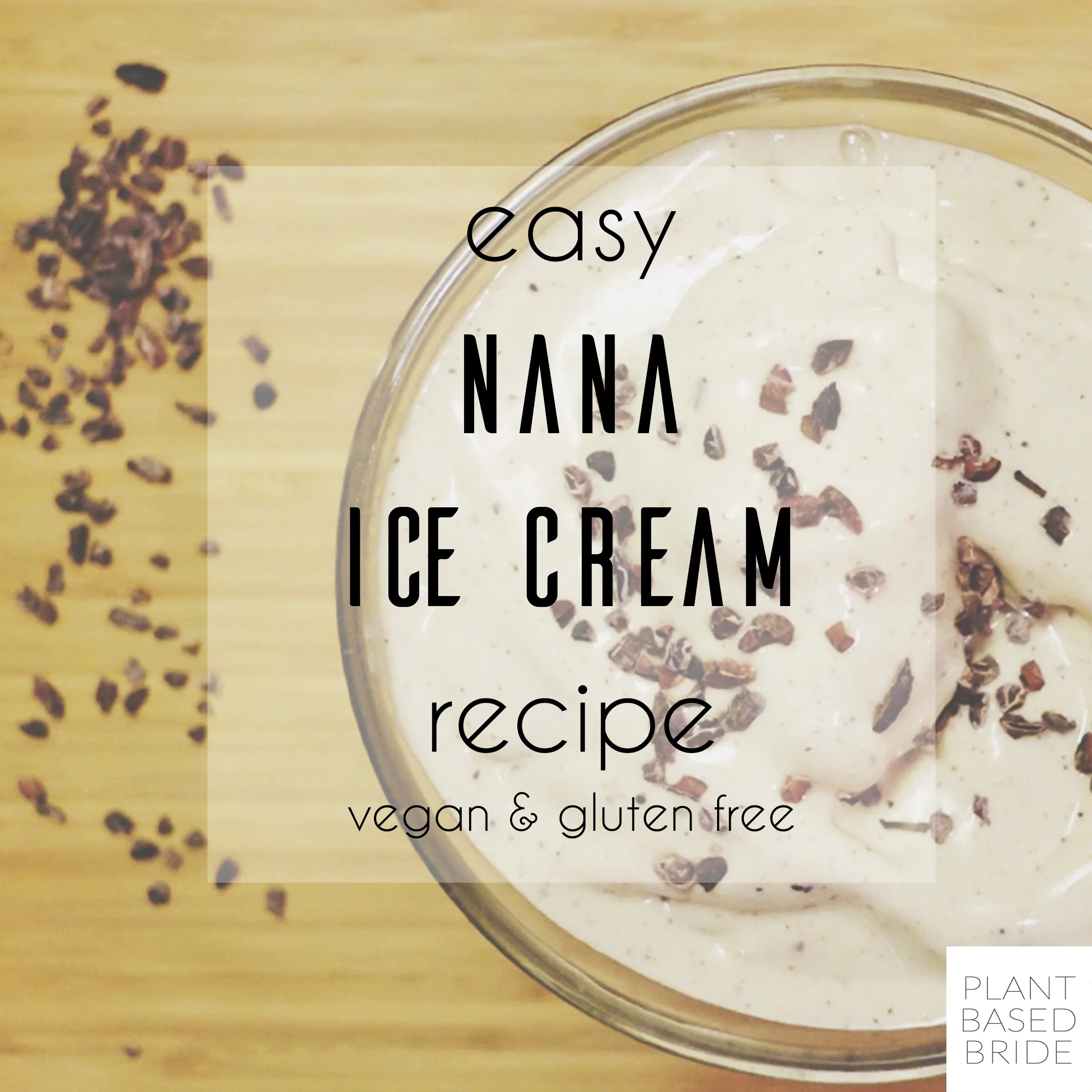
Nana ice cream, banana ice cream, nice cream; whatever you call it, it's delicious! Dairy-free ice cream is widely available, which is incredible for those of us who still want a sweet chilly treat from time to time. But what if you don't want to have to run to the store? Or you want something lower fat and less full of preservatives? Nana ice cream is the (mouth-watering) solution. Today I'm sharing a super simple recipe for you to make your own!
Nana ice cream, banana ice cream, nice cream; whatever you call it, it's delicious! Dairy-free ice cream is widely available, which is incredible for those of us who still want a sweet chilly treat from time to time. But what if you don't want to have to run to the store? Or you want something lower fat and less full of preservatives? Nana ice cream is the (mouth-watering) solution. Today I'm sharing a super simple recipe for you to make your own!
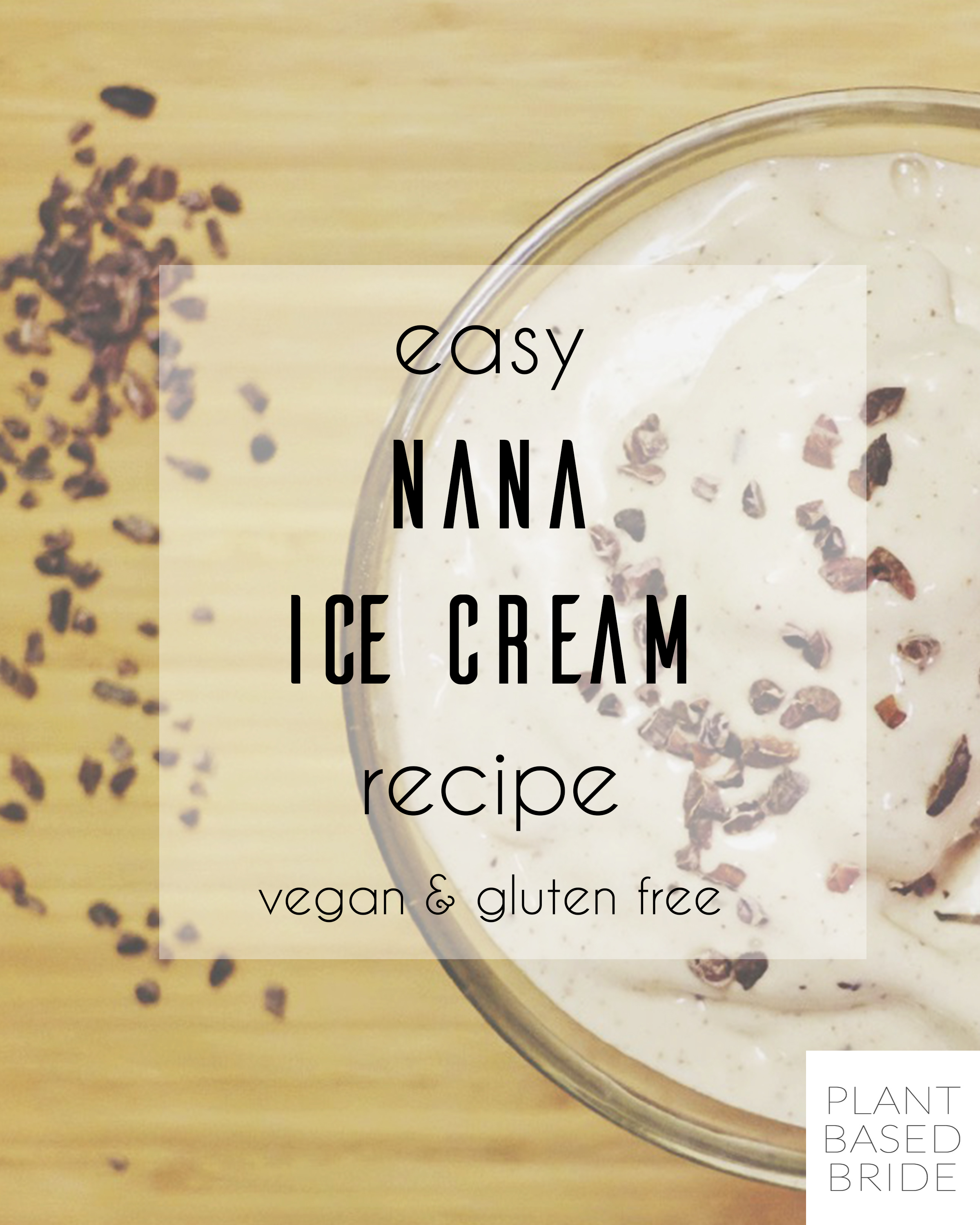
Easy Nana Ice Cream Recipe
serves 2 // 5 minutes prep time
- 4 frozen bananas
- 1/2 cup non-dairy milk
- 1 tsp vanilla
- 1 tbsp unsweetened cocoa powder
- 4 fresh dates, pitted
- handful cocoa nibs
Throw all ingredients but the cocoa nibs in your trusty blender, and blend until smooth. Add cocoa nibs on top. That's it! Keep in mind that if your blender runs hot you may need to pop your ice cream in the freezer for a 10-20 minutes to get it cold and solid again.
Looking for something simpler? I've got you covered!
Even Easier Nana Ice Cream Recipe
serves 2 // 5 minutes prep time
- 4 frozen bananas
- as much water as is needed to help the blender conquer those bananas
Blend and enjoy!
Nana ice cream is one of the absolutely simplest tasty treats you can make, and is so easy to change up! Try out adding your own ingredients to get new flavours every day of the week and tag me in your yummy food pictures so that I can see your creations (@elizabethturn)!
Until next time,

What's your favourite nana ice cream recipe? Share it below for everyone to try!
Coined by Elizabeth Jean @xparmesanprincessx, the personal curriculum trend is about creating a self-directed learning plan focused on areas of personal interest, loosely based on a school curriculum structure, including things like assigned reading, goals, assignments, and final projects.
At its core, the personal curriculum movement is about celebrating lifelong learning and intellectual curiosity. It's about being more intentional about how we spend our time when we're not sleeping, or at work, or doing the basic maintenance or admin or chores to keep our lives going. It's about using our free time to enrich our lives in a way that is purposeful and intentional and joyful, indulging our curiosity as adults, even once we're outside of structured school environments, getting excited about learning and allowing ourselves the freedom to go down those rabbit holes in our special interests, to challenge our brains in ways that we maybe don't get the chance to in our day-to-day lives.