

the blog.
![February Vegan Cuts Beauty Box Unboxing + Giveaway! [CLOSED]](https://images.squarespace-cdn.com/content/v1/5564e9d4e4b0750ee3a65382/1457303998364-AWYCLWU2WBFYSC0AN5O4/image-asset.jpeg)
February Vegan Cuts Beauty Box Unboxing + Giveaway! [CLOSED]
Welcome back to the blog, I'm so glad to have you! Today's going to be fun... I have a Vegan Cuts Beauty Box unboxing video for you AND you have the opportunity to enter for the chance to win your very own Beauty Box!
Welcome back to the blog, I'm so glad to have you! Today's going to be fun... I have a Vegan Cuts Beauty Box unboxing video for you AND you have the opportunity to enter for the chance to win your very own Beauty Box!

Without further ado, it's unboxing time!
Watch the video on YouTube HERE!
If you'd rather just subscribe to the box, click here. For the rest of you, I know you're excited to enter... so good luck!
Don't forget you can come back and get more entries every day, so bookmark this page and set a reminder on your phone!
Until next time,

This post contains affiliate links - this means if you click through a link and purchase something, I receive a commission at no extra cost to you! It's a win-win - you can support me while getting something you already wanted for the regular price! If you don't want to use my affiliate link (that's totally fine!) just go through a google search.









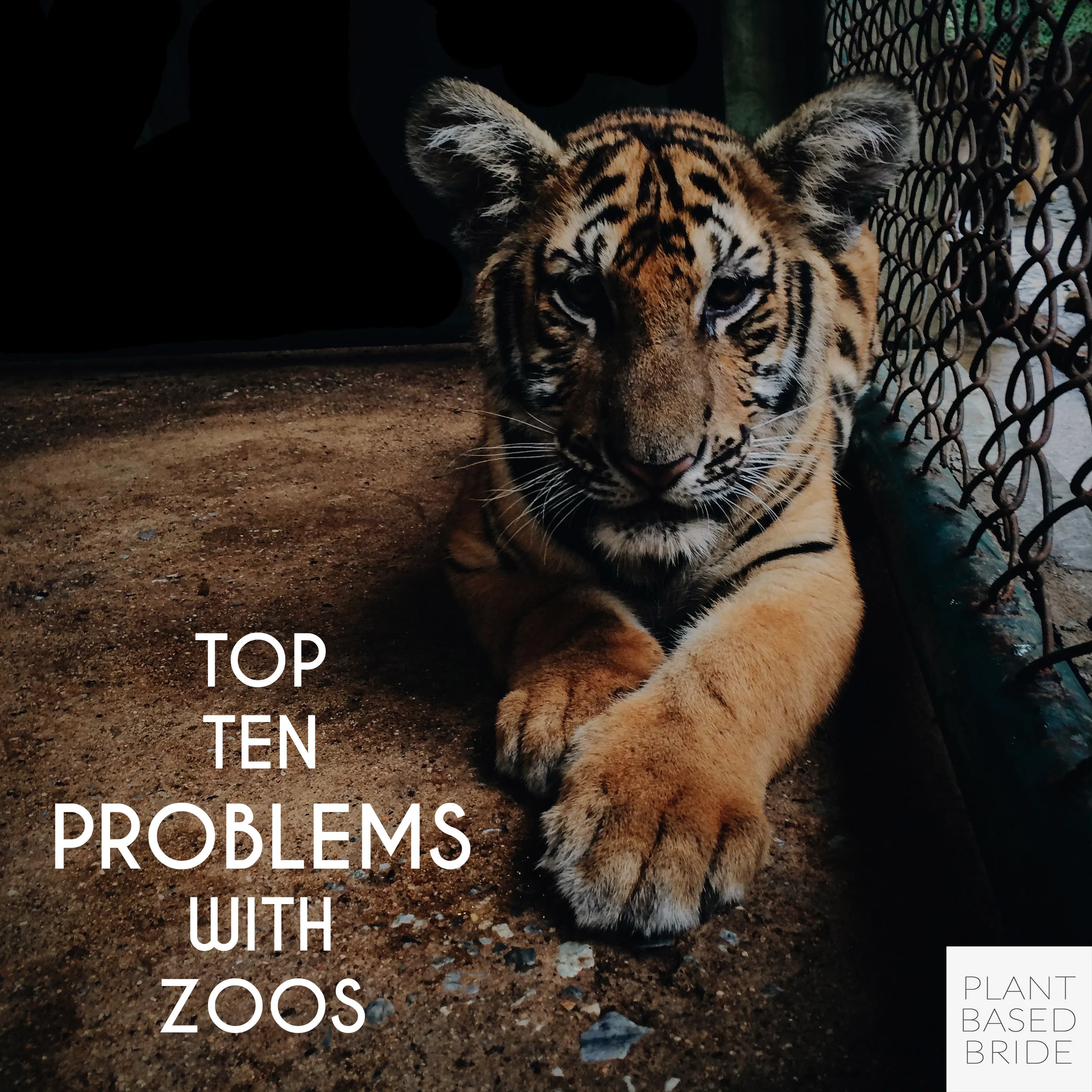
Top Ten Problems With Zoos
I understand the appeal... a day out with the family, road trip, sunshine, adorable baby animals from exotic lands...
But zoos aren't all they're cracked up to be.
The recent documentary film Blackfish has brought the whole world's critical attention to SeaWorld, and further, to zoos in general.
And yet, somehow, zoos and other establishments capitalizing on the lives of animals for human entertainment around the world are still in business.
Stick around for ten sobering problems with zoos. Hopefully you'll be convinced that your hard-earned money is far better spent supporting conservation efforts for animals in the wild and buying vegan food for your family than taking this particular type of day trip.
I understand the appeal... a day out with the family, road trip, sunshine, adorable baby animals from exotic lands...
But zoos aren't all they're cracked up to be.


The recent documentary film Blackfish has brought the whole world's critical attention to SeaWorld, and further, to zoos in general.
And yet, somehow, zoos and other establishments capitalizing on the lives of animals for human entertainment around the world are still in business.
Stick around for ten sobering problems with zoos. Hopefully you'll be convinced that your hard-earned money is far better spent supporting conservation efforts for animals in the wild and buying vegan food for your family than taking this particular type of day trip.
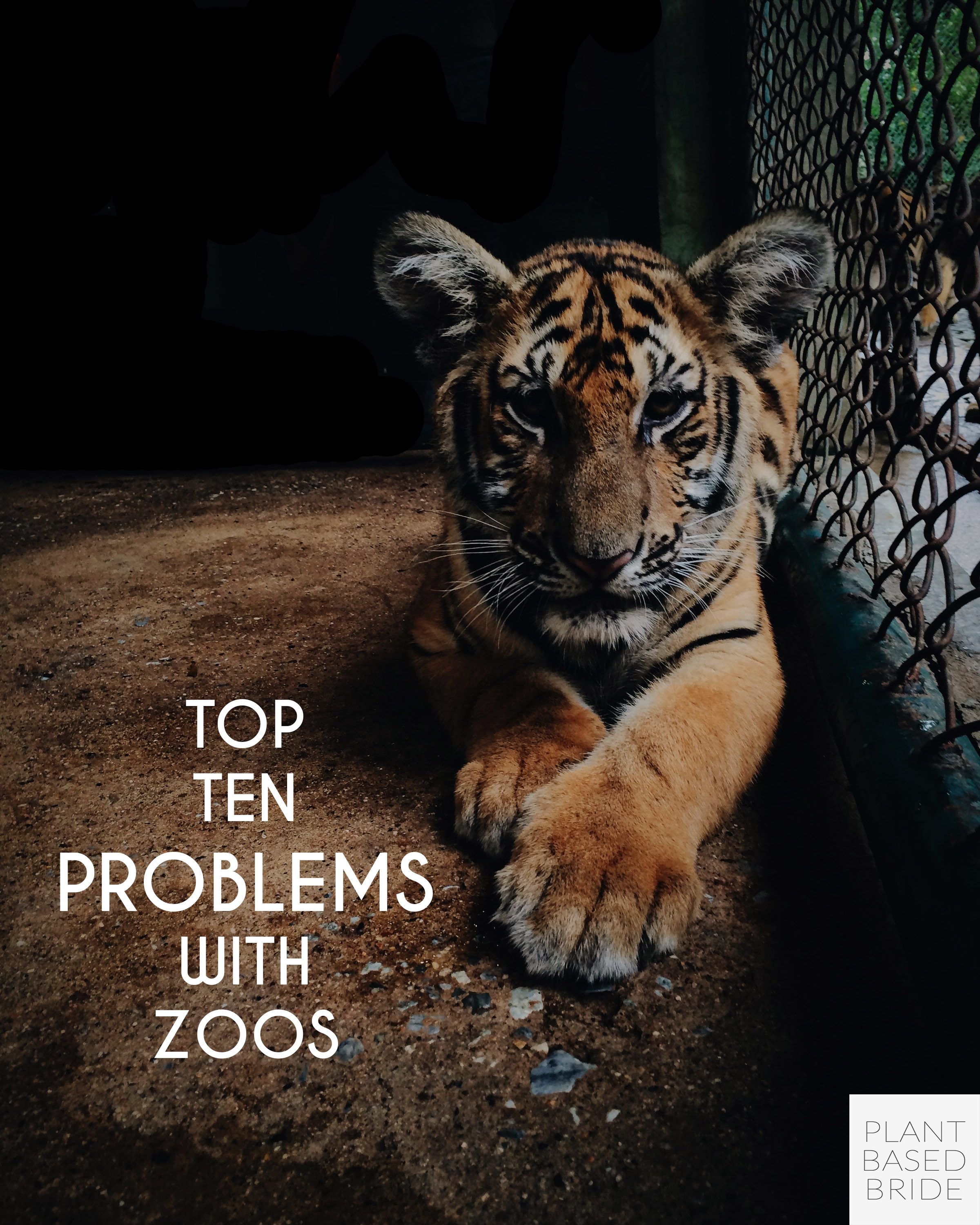
ONE... Life in Captivity
These animals are imprisoned, no ifs, ands, or buts about it. Ever notice the bars and glass preventing animals from leaving their pens? Zoos are not a resort for exotic animals, zoos are a jail. If you think for one moment that these animals prefer to live in a cage over their vast natural habitat, you are sorely mistaken.
TWO... Man's Best Friend
Dogs and cats? Sure. Lions and tigers? I don't think so. The exotic animals held in zoos are not domesticated. They are wild, just as they should be. They could no more live with you in your one bedroom downtown apartment than you could survive on the Savannah without air conditioning and your macbook. Wild animals should not be in such close and constant contact with humans.
Why not?
Because the more time they spend with us, in our 'care', the less able of living on their own in their natural habitat they become. They become dependent on us.
Not only are we imprisoning them, but we're taking away their ability to survive if we ever tried to correct our mistakes and set them free.
THREE... The Pursuit of Happiness
I don't know if you've ever noticed, but animals in zoos don't look very happy. Would you be, sentenced to life in prison when you had done nothing wrong? I think not.
Some argue that there is no way to confirm or deny an animal's sadness. Well I beg to differ. We can see their unhappiness in their eyes. And if that's too 'spiritual' for you, why not look at the plain facts?
Animals in captivity exhibit unnatural behaviours such as apathy, aggression, and stalled maturation (prolonged infantile behaviour). They also carry out a wide spectrum of stress behaviours, ranging from pacing to self-mutilation and beyond. These are not behaviours noted in the wild.
Abnormal repetitive behaviour is a term used to describe these stress behaviours, anything from pacing back and forth or circling, rocking from side to side, head bobbing or weaving, continuous licking or biting of walls and bars, overgrooming and self-mutilation, vomiting, and eating feces. For video examples of these behaviours, click here.
You don't need to be an expert to see that those animals are NOT happy.
FOUR... Profit Over Conservation
Contrary to popular belief, a zoos' main purpose is not conservation. It's profit.
Need proof?
The Toronto Zoo lists seven endangered species which they are attempting to breed in captivity and reintroduce to the wild on their website . That's seven out of more than 460 species found at the zoo, or just 1.5%.
And the profits? Just some simple math considering their over 100,000 person attendance in March 2013 and the cost of a ticket ($23 for an adult, $14 for a child), even assuming equal numbers of both, the zoo would be bringing in 1.85 million dollars in a single month, without considering the generous donations they undoubtably receive.
Something seems off with this equation, and I don't think it's my calculator.
Oh, and another tidbit, just for fun. The Toronto Zoo clearly states on their lion information page that "Lions are losing their habitat due to the expansion of human activity (primarily agriculture)..." and yet they serve the results of animal agriculture to the masses of visitors flooding through their gates each and every day.
Conservation is clearly the priority here.
FIVE... Lifespan
Many claim that animals live longer in captivity, but this may not be quite as accurate as they would hope. While some individuals may live longer due to lack of predators and competition for food; stress, obesity, and other factors lead to the early death of many zoo animals.
One study found a difference of almost 40 years between elephants in captivity (living an average of 16.9 years) and those in the wild (an average of 56 years).
Orcas? Their lifespan is cut by as much as 87 years (from a lifespan of up to 100 years for females in the wild to an average lifespan of 13 years at SeaWorld).
Perhaps they would be better off in their natural habitat?
SIX... Victim Blaming is NOT the Answer
The solution to hunting and poaching is not to displace the animals, but the hunters and poachers. Why should the victims be further punished?
Of course hunting and poaching are immoral behaviours and the animals must be protected. But we need to imprison the abusers, not the abused.
SEVEN... What's 'Natural' Anyway?
Definitely not the tiny enclosures with painted backgrounds in zoos all over the world. These pens are not these animals' natural habitat, nowhere close. Who could ever think that a 5.8 million gallon pool at SeaWorld is equivalent to the over 350 quintillion gallons of water in the world's oceans? Or a 10,000 by 10,000 meter enclosure sufficient when wild African elephants walk more than 50 miles (more than 80,000 meters) per day?
Zoos are poor imitations of the many incredible ecosystems on Earth, and a poor substitute for a home.
EIGHT... The Birds and the Bees
Zoos are known for their breeding programs, both because they tout them proudly as conservation efforts for endangered species, and because they produce the cute cuddly baby animals we all love to gawk at.
As a statement from SeaWorld so eloquently put it: "Breeding is a natural, fundamental and important part of an animal's life and depriving a social animal of the right to reproduce is inhumane."
Because keeping Orcas in tiny pools and forcing them to do tricks in front of thousands of screaming people is a natural, fundamental and important part of an animal's life, and social animals love to have no choice whatsoever in whether or not they reproduce, and with whom.
Right.
What happens when one too many cute baby animals have been bred and there's not enough space to keep them? There are two options: kill them (after which point they may be fed to other captive animals) or sell them.
Who would buy surplus zoo animals? Other zoos, exotic animal dealers, ranches, circuses, pet shops, research centres, and the exotic meat industry.
And the zoo pockets the cash.
NINE... A Life Full of Purpose
Quiz time! Where do you think a lioness is most able to fulfill her life's purpose: on the African savannah with her 7 or so fellow adult pride members and cubs, contending with other predators, hunting for food, and protecting her young OR being forced into association with other lions, fed at regular intervals, selectively bred, and kept in a small enclosure free from other species or any true semblance to her natural habitat?
I think the answer is pretty clear.
TEN... Which E Is It?
Everyone loves to bring up the point that zoos are educational.
I'd argue that zoos are far more entertainment than education.
I can learn much more over the course of 15 minutes on the internet than I can watching animals suffering from zoochosis in an unnatural habitat for those same 15.
Perhaps families should commit more time to the watching of documentaries and reading of books rather than contributing to the unnecessary and cruel exploitation of animals.
They've done nothing to deserve it.
Well, there you have it, ten of the most poignant problems with zoos. I, for one, will never again attend a zoo, circus, or other area of captivity for non-domesticated animals.
What are your thoughts on zoos? Start a conversation in the comments!
Until next time,

Don't forget to subscribe to the Plant Based Bride newsletter below the comment section! Get first dibs on freebies, news, and other fun stuff and be in direct contact with yours truly.
(You know you want to.)


Sources & Further Reading
http://www.all-creatures.org/articles/ar-zoos.html
http://www.veganpeace.com/animal_cruelty/zoos.htm
http://www.peta.org/living/entertainment/reality-zoos/
http://www.bornfree.org.uk/campaigns/zoo-check/captive-wildlife-issues/abnormal-behaviours/
http://www.onegreenplanet.org/animalsandnature/the-life-of-animals-in-captivity-versus-the-wild/
http://www.onegreenplanet.org/animalsandnature/the-life-of-animals-in-captivity-versus-the-wild/
http://www.cnn.com/2015/10/08/us/seaworld-orca-tank-expansion-plan-hearing/
http://www.seaworldofhurt.com/features/8-reasons-orcas-dont-belong-seaworld/
http://www.thestar.com/news/gta/2010/01/13/tusk_tusk_toronto_is_on_worst_zoo_list.html
http://oceanservice.noaa.gov/facts/oceanwater.html
http://www.onegreenplanet.org/news/zoochosis-what-really-happens-to-animals-in-captivity-video/
A Vegan's Biggest Regret
I love just about everything about being a vegan. The past (almost) 4 years have been full of transformation, discovery, growth, and meaning. But there is one thing I regret about going vegan, and today I'm sharing it with all of you.
I love just about everything about being a vegan. The past 3 years have been full of transformation, discovery, growth, and meaning. But there is one thing I regret about going vegan, and today I'm sharing it with all of you.

My biggest regret is...
That I didn't go vegan sooner.
I went vegan at 19 after 8 months as a vegetarian. That means I spent almost 2 full decades contributing to unnecessary slaughter and abuse of innocent animals. Almost 20 years of contributing to the industry with the number one largest negative impact on the environment. The vast majority of my life punishing my body with unhealthy foods.
In the past 33 months as a vegan, and 8 months as a vegetarian before that, I have saved (according to PETA's estimate) at least 365 animals, and potentially many more.
But in my 18 years and 11 months as an omnivore? Despite eating relatively little meat compared to the average, I likely consumed somewhere in the ballpark of 1,900 animals. That's almost 2,000 sentient beings gone, just because I wanted to eat chicken nuggets and ice cream.
If I could, I would go back in time and do it over. I would go vegan as soon as I could make my own food choices.
I would correct my biggest mistake.
But I can't. And so, instead, I would like to urge you to go vegan. Try it for a day, a week, a month. Preferably forever. Because it makes a difference. YOU can make a difference, no matter what anyone says. I promise you that difference is not a small one to the animals who live rather than die, to a planet that needs every ounce of help it can get, and to your body that is suffering under the weight of an unhealthy diet.
One person can create a ripple effect that changes everything.
And that person can be you.
Not sure how to start? Read this post on how to go vegan, pick up a book from my resources page, or book a coaching with me one on one.
Oh, and subscribe to my newsletter for updates about my ebook, coming soon!
You can do it, and I'm committed to helping you succeed.
Learn from my biggest regret.
Go vegan today!
Until next time,


Should You Stop Drinking Coffee?
Hi. My name is Elizabeth, and I'm a coffeeholic.
It's not just one thing, but the whole that makes coffee so irresistible. The heavenly aroma, the slightly bitter toasty taste, the warm fuzzies, the kick of energy... Basically, coffee is damn good. But is it good FOR you? I'm on a mission to find out.
Why don't you come along?
Hi. My name is Elizabeth, and I'm a coffeeholic.
It's not just one thing, but the whole that makes coffee so irresistible. The heavenly aroma, the slightly bitter toasty taste, the warm fuzzies, the kick of energy... Basically, coffee is damn good. But is it good FOR you? I'm on a mission to find out.
Why don't you come along?

C O F F E E & Y O U R H E A L T H
Depression
In a 2011 study, caffeinated coffee was shown to reduce the rate of depression in women, lowering the rate further with each additional cup consumed (up to 4+ cups a day). Decaffeinated coffee did not have the same effect.
A similar result was found in Finnish men in this 2010 study, showing that heavy drinkers of caffeinated coffee (more than 3.25 cups a day) had a lower risk of developing depression than men who did not drink coffee.
A further study found an unexplained lowering in the risk of suicide with each additional cup of coffee per day.
The evidence is not definitive by any means, but these studies seem to indicate that the consumption of 3-4 cups of coffee or more a day can aid in the prevention of depression and suicide.
Diabetes
A 2002 study found a 50% reduction in the risk of developing type 2 diabetes with 7 or more cups of coffee a day, compared to those who drank 2 or fewer cups a day.
This finding was supported by an observational reduction in the risk of diabetes and obesity in those with a higher coffee intake in a study conducted in 2015 and by a 2014 Harvard study which found that over a 4 year period those who increased their coffee consumption by 1 cup per day lowered their risk of developing type 2 diabetes by 11%, while those who reduced their coffee intake by 1 cup per day increased their risk by 17%.
While this is good news for those of us without type 2 diabetes, it looks like coffee consumption may have a negative effect for those already affected by the disease.
This study (though conducted with a small sample size) found that caffeine impaired postprandial glucose metabolism (the body's ability to metabolize glucose after a meal). The study did not look at the effect of coffee and tea, but of caffeine in isolation. Another study found that caffeine consumption may make the control of glucose in those with type 2 diabetes more difficult with adverse effects on glucose metabolism and exaggerated postprandial glucose responses.
Cardiovascular Disease
Could coffee protect your heart?
This 2012 study observed the strongest inverse association between coffee consumption and heart failure at 4 cups of coffee/day, but a potentially higher risk when the number of daily cups was increased.
Another study observed that higher consumption of coffee and tea reduced the risk of stroke and cardiovascular disease (measured up to 4 cups of tea and 2 cups of coffee per day).
Longevity
Coffee has been associated with no (or very small) change in mortality rates, beginning with 1-2 cups per day. According to one study, the risk of death was reduced by 3% with each additional cup of coffee consumed daily.
This study found an overall 10-15% lower risk of dying for those drinking 6 or more cups of coffee a day for those between 50-71 years old at the beginning of the study, but that any amount over 4 cups a day actually increased the risk of mortality in those under the age of 50.
Cancer
This 2015 liver cancer report from World Cancer Research Fund International found strong evidence that coffee consumption was linked to a decreased risk of liver cancer, by as much as 50%.
Further studies have found lower rates of colon, breast, and rectal cancers with increased coffee consumption.
Parkinson’s Disease
A significant reduction in the risk of developing Parkinson's was observed in men who drank at least 3.5 cups of coffee/day in this 2000 study and this one showed promise in the use of caffeine to improve motor function in those already suffering from Parkinson's.
Unfortunately, 'coffee seems to protect men but not women against Parkinson’s disease. One possible explanation for the sex difference may be that estrogen and caffeine need the same enzymes to be metabolized, and estrogen captures those enzymes.' - Harvard Health Publications
Further Effects of Coffee
- Alertness. Caffeine can make you feel more awake and focused, and as this study found, may improve performance on simple tasks.
- Acid Reflux. This study found that coffee caused acid reflux in a way that tea did not, regardless of whether the coffee was caffeinated or not (although decaf did result in less acid reflux than the caffeinated variety).
- Anxiety. Those with anxiety may notice that it worsens with caffeine consumption, or perhaps that it improves. The evidence is not conclusive.
- Fractures. This meta-analysis found that daily coffee consumption was associated with a higher risk of bone fracture in women and a lower risk in men.
- Insomnia. This study demonstrated that a cup of coffee at dinner time reduces sleep quality (duh). But if you're having trouble sleeping you may want to reduce your caffeine intake (and do it earlier in the day)!
- Gallstones. While it has been shown that coffee drinkers may be less likely to suffer from gallstones, this study found no correlation between coffee intake and gallstone incidence.
- High Cholesterol. There are two specific substances in coffee which raise cholesterol levels: kahweol and cafestol. While paper filters capture these substances, many people now drink un-filtered coffee, such as espresso. Those with high cholesterol would do well to drink solely filtered coffee and to avoid decaf, which is also linked to cholesterol increases.
- Epilepsy. This study documented the case of a man who's epileptic seizures became less frequent when he reduced his coffee intake from heavy to zero consumption, but more research must be done on the subject.
- Atrial Fibrillation. Caffeine does not, in contrast to popular belief, cause atrial fibrillation. In fact, this study found that 1-5 cups of coffee a day may actually reduce your risk.
- Tooth Health. While it is well-known that coffee stains teeth, it may surprise you to learn that coffee may actually protect against cavities!
- Urinary Incontinence. For both men and women, coffee intake at 2 or more cups a day had a strong association with urinary incontinence.
- Blood Pressure. Unlike what was previously thought coffee does not increase the risk for high blood pressure over time, though it does increase it temporarily. Researchers believe this phenomenon may be due to the development of a tolerance to the hypertensive effects of coffee after extended use.
A Quick Note on Energy Drinks
While I would hope that most are aware that energy drinks are NOT good for our health, and are no substitute for REAL energy which we get from food. 20 standard energy drinks contain approximately 5g of caffeine, the lethal dose. So PLEASE be careful if you like to drink energy drinks throughout the day in high amounts in addition to coffee, tea, and other caffeinated substances!
(*of course, you can reach 3g of caffeine from any source if you ingest enough, but with the trend of downing large quantities of energy drinks mixed with alcohol popping up all over college campuses, I felt it was important to add!)
F A I R T R A D E C O F F E E
...may not be all we thought. We wish it were, as in the standard coffee industry individual growers may receive as little as 10% of the retail price after working in sub-par conditions. Learn more in this article: 10 Reasons Why Fair-Trade Coffee Doesn't Work.
C O F F E E & T H E E N V R I R O N M E N T
As with any business, the coffee industry is rife with competition. The drive to produce more coffee, more quickly, has lead to less sustainable methods of cultivation which have resulted in the clearing of 2.5 million acres of forest in Central America, according to WWF. Tellingly, deforestation is most present in those countries that are also major coffee producers, and the trend doesn't seem to be going away anytime soon.
C O F F E E & T H E A N I M A L S
What does this mean for the animals? Well, as we all know, virtually no species can survive the utter destruction of their habitat at lightning fast speed. In other words, the mammals, insects, and plants that populate the rainforest are being driven to extinction at astounding rates.
So what can we do?
If you can, buy Rainforest Alliance-certified coffee. Learn more about their initiative here.
Feeling overwhelmed?
I don't blame you.
Allow me to summarize:

S O, S H O U L D Y O U S T O P D R I N K I N G C O F F E E ?
That's up to you.
As for me?
I'll continue to enjoy my daily cup or two of joe, but I'll be sure it comes with a Rainforest Alliance certification and goes into my eco-friendly mug or tumbler.
Until next time,

How many cups of coffee do you drink a day? Let me know in the comments!
Don't forget to subscribe to the Plant Based Bride newsletter (form below) for weekly updates and other goodies!
S O U R C E S & F U R T H E R R E A D I N G
http://nutritionfacts.org/video/coffee-and-mortality/
http://www.health.harvard.edu/family_health_guide/coffees-health-benefits
http://www.healthline.com/health/food-nutrition/is-coffee-good-for-you#2
http://www.ncbi.nlm.nih.gov/pubmed/22591295
http://archinte.jamanetwork.com/article.aspx?articleid=1105943
http://www.ncbi.nlm.nih.gov/pubmed/8275213/
http://www.ncbi.nlm.nih.gov/pubmed/12433517
http://www.ncbi.nlm.nih.gov/pubmed/26002927
http://link.springer.com/article/10.1007/s00125-014-3235-7
http://care.diabetesjournals.org/content/27/8/2047.full
http://care.diabetesjournals.org/content/31/2/221.full
http://www.ncbi.nlm.nih.gov/pubmed/7918922
http://stroke.ahajournals.org/content/early/2013/03/14/STROKEAHA.111.677500.abstract
http://www.ncbi.nlm.nih.gov/pubmed/?term=Effects+of+habitual+coffee+consumption+on+cardiometabolic
http://www.ncbi.nlm.nih.gov/pubmed/23934579
http://jama.jamanetwork.com/article.aspx?articleid=192731
http://www.neurology.org/content/early/2012/08/01/WNL.0b013e318263570d.abstract
http://www.ncbi.nlm.nih.gov/pubmed/?term=Caffeine+and+urinary+incontinence+in+US+women
http://www.ncbi.nlm.nih.gov/pubmed/23276513
http://www.ncbi.nlm.nih.gov/pubmed/24576685
http://onlinelibrary.wiley.com/doi/10.1111/j.1747-0080.2012.01601.x/abstract
http://www.ncbi.nlm.nih.gov/pubmed/?term=Heavy+coffee+drinking+and+epilepsy
http://www.huffingtonpost.com/bruce-wydick/10-reasons-fair-trade-coffee-doesnt-work_b_5651663.html
http://www.ncbi.nlm.nih.gov/pubmed/24009307
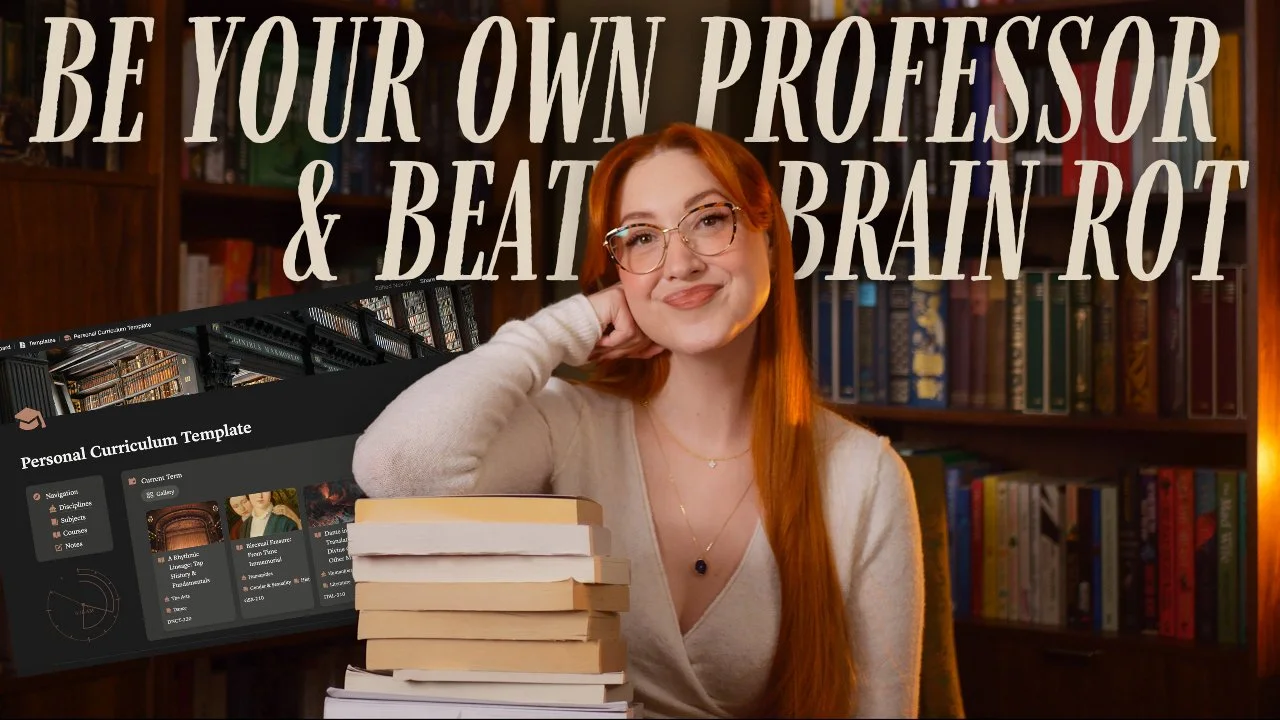
Coined by Elizabeth Jean @xparmesanprincessx, the personal curriculum trend is about creating a self-directed learning plan focused on areas of personal interest, loosely based on a school curriculum structure, including things like assigned reading, goals, assignments, and final projects.
At its core, the personal curriculum movement is about celebrating lifelong learning and intellectual curiosity. It's about being more intentional about how we spend our time when we're not sleeping, or at work, or doing the basic maintenance or admin or chores to keep our lives going. It's about using our free time to enrich our lives in a way that is purposeful and intentional and joyful, indulging our curiosity as adults, even once we're outside of structured school environments, getting excited about learning and allowing ourselves the freedom to go down those rabbit holes in our special interests, to challenge our brains in ways that we maybe don't get the chance to in our day-to-day lives.