

the blog.
How To Get A Better Sleep in Ten Easy Steps
Did you know that one third of the world's adult population suffers from insomnia? And that 62% of Canadians suffer from some type of sleep problem? Over a quarter of Canadians have called in sick to catch up on sleep, and I know that I have first hand experience with the way a lack of quality sleep can turn us into slower, more stressed, underperforming zombies with a far less creativity.
Have you ever felt like you, but worse, when you haven’t had a good night’s sleep? That’s because the parts of your brain responsible for decision making, social interaction, morality, and thought lose as much as 14% of their fuel after even mild sleep deprivation.
When you sleep, your brain is able to discard toxins and other waste by way of the glymphatic system. What happens when your brain isn’t able to dispose of the waste? Contemporary science believes this is one of the main causes of Alzheimer’s disease.
I know that I feel so much better after a good night’s sleep. Let’s collect some strategies and some quality Zzzs along the way. It’s time to sleep better, starting tonight!
Did you know that one third of the world's adult population suffers from insomnia? And that 62% of Canadians suffer from some type of sleep problem? Over a quarter of Canadians have called in sick to catch up on sleep, and I know that I have first hand experience with the way a lack of quality sleep can turn us into slower, more stressed, underperforming zombies with a far less creativity.
Have you ever felt like you, but worse, when you haven’t had a good night’s sleep? That’s because the parts of your brain responsible for decision making, social interaction, morality, and thought lose as much as 14% of their fuel after even mild sleep deprivation.
When you sleep, your brain is able to discard toxins and other waste by way of the glymphatic system. What happens when your brain isn’t able to dispose of the waste? Contemporary science believes this is one of the main causes of Alzheimer’s disease.
I know that I feel so much better after a good night’s sleep. Let’s collect some strategies and some quality Zzzs along the way. It’s time to sleep better, starting tonight!

STEP ONE // GET ON A SCHEDULE
One of the most important strategies for a good night’s sleep is to fall asleep and wake up at the same time everyday. Your body craves this type of routine, and you’ll begin to crave the energy boost it brings!
Shawn Stevenson, sleep expert extraordinaire, recommends sleeping during what he likes to call ‘money time’ - the hours between 10pm and 2am during which time we humans secrete the most beneficial hormones for growth, repair, and wellbeing and experience the most recovery.
Of course, many of us have lives that don’t allow for sleeping during this entire period. If you regularly finish work at 11, don’t fret! Just aim to get to sleep as soon as possible when you arrive home and stick to that schedule as regularly as possible.
But I’m never tired at 10pm. I’m a night-owl!
I know how you feel. I have always considered myself a night owl. But this is an artificial phenomenon born of our dependance on electricity to stimulate our senses far past the setting sun. It may take time, but training yourself to get sleepy around 10pm and wake naturally around 7am each day will allow you to be far more productive than you ever were during an all-nighter!
So, how many hours should I sleep?
That’s a great question. Many recommend the standard 8 hours, which I have never felt to be sufficient in my personal experience. Considering that a full healthy sleep cycle takes 90 minutes to complete, it makes the most logical sense to aim for 7.5 or 9 hours of sleep, depending on your life and needs. If you’ve ever experienced awaking in the middle of a sleep cycle, you know that it leaves you feeling groggy and less than fully rested. Aim to sleep in multiples of 90 minutes for your most restful sleep and energetic day!
STEP TWO // GET MOVING FIRST THING
Whether it’s a full workout or a quick walk around the neighbourhood, moving your body shortly after waking has incredible benefits for our sleep and general health. When you move in the morning, you encourage a spike of the hormone cortisol which will gradually lower over the course of the day as melatonin increases. By the time you are getting ready to sleep your melatonin will be at it’s peak, helping you to fall asleep faster and stay asleep!
I love to start my day with yoga or HIIT training, and find it boosts my energy and productivity all day long!
If you’re really a star player, try working out in the great outdoors to combine this step with the next one! (Who doesn’t love a good two in one?)
STEP THREE // GET SUNLIGHT ON YOUR SKIN
Humans love sunlight, and for good reason. You may have heard of circadian rhythm, which is based on the Earth’s natural cycle of light and dark. We evolved at the mercy of this rhythm, sleeping in the dark and waking with the light. Our bodies developed a schedule of hormonal release based on this natural sun cycle, which we are still subject to today.
Unfortunately, despite our technological advances, we cannot escape our evolution.
Our own circadian timing system and the hormones it controls are responsible for all sorts of vital functions in the body, including our digestion, blood pressure, appetite, immune system, mental energy, and more.
When you are exposed to sunlight your hypothalamus orders the release of day-specific hormones which regulate your inner clock. When you don’t get exposure to the sun during the day, and have excessive exposure to artificial light at night, you are throwing your circadian rhythm out of whack (and negatively impacting your sleep).
So when should you be getting sunlight, and how much?
You are most responsive to sunlight between the hours of 6am and 8:30am, around the time you should be waking up! Direct sunlight on skin WITHOUT sunscreen for at least 30 minutes is a good guideline for regulating your hormone production and getting a deeper, more restorative sleep.
As an added bonus, try going without sunglasses during your morning sun-worshipping. Your eyes are another essential organ for absorbing sunlight, and even on a cloudy day they will allow you to receive the benefits of your time outdoors.
STEP FOUR // COMMIT TO A CAFFEINE CUT-OFF
We have become addicted to caffeine. And to be honest, I am right there along with the majority of the population in my love for the dark, warm drink. But while caffeine has health benefits that cannot be ignored, it can also have a negative impact on sleep. The best way to have your coffee and drink it too is to set a caffeine curfew, and stick to it.
When should you finish your last cup of joe? Likely before 2pm. If you’re more sensitive to the effects of caffeine, even earlier!
If you’re looking to harness the power of caffeine to your benefit, try drinking it first thing in the morning to help boost that morning cortisol release you’re already stimulating with your morning exercise! This will add fuel to the fire of your natural hormonal rhythm, helping you to be ready for sleep when that time comes around.
STEP FIVE // EAT SLEEP-PROMOTING FOODS
As we all know, the better your diet the healthier your body. Your sleep is no exception.
Our gut bacteria is responsible for much more than digestion, and feeding it the right foods can have a wonderful impact on our sleep quality.
What foods should we be eating more of?
- foods high in selenium (such as brazil nuts);
- foods high in vitamin C (such as green leafy vegetables and a variety of fruits such as papaya kiwi, citrus fruits, and strawberries);
- foods containing tryptophan (such as sweet potatoes, chia, hemp and pumpkin seeds, almonds, bananas, and leafy greens);
- foods high in potassium (such as leafy greens, potatoes, cremini mushrooms, broccoli, and avocados);
- foods high in calcium (such as kale, collards, mustard greens, sea veggies, and sesame seeds);
- a vitamin D supplement (or that daily sunlight exposure we covered in step three!);
- plant-based sources of omega-3 (such as chia, pumpkin, flax, or hemp seeds, walnuts, and micro-algae supplements);
- foods containing melatonin (such as tart cherries, ginger root, asparagus, and walnuts) and foods that boost your body’s production of this essential sleep hormone (such as pineapples, bananas, oranges, and tomatoes);
- foods containing vitamin B6 (such as bananas, cashews, peanut butter, almonds, avocados, tomatoes, spinach, sweet potatoes, and sea vegetables);
- pro- and pre-biotics (found in fermented foods such as sauerkraut, kimchi, pickles, miso, non-dairy yogurt, and kombucha and non-fermented foods like Jerusalem artichokes, raw garlic, raw and cooked onions, dandelion greens, and asparagus);
- and last, but definitely not least, magnesium (found in green leafy vegetables, pumpkin and sesame seeds, spirulina, and brazil nuts).
What foods should we be avoiding?
- chemicals such as pesticides;
- processed foods;
- foods treated with antibiotics (such as meat); and
- food additives and preservatives of a chemical nature.
With these foods in mind, you are sure to keep your gut bacteria full and happy!
STEP SIX // TURN OFF YOUR IPHONE
Many of us are attached to our mobile devices at the hip (or the ear). I am definitely guilty. But the blue light emitted from those screens has an incredibly detrimental effect on our sleep. Turn off your devices at least an hour before bed (if not earlier!) and keep them out of the bedroom! (If that means spending $10 on an old school alarm clock, do it. It’s worth it.)
STEP SEVEN // TURN DOWN THE THERMOSTAT
I don’t know about you, but I can never sleep if I’m hot. And I am happy to report that it isn’t just me! The human body sleeps best in a cooler environment of between 15-20 degrees celsius. So turn down that thermostat, and enjoy getting a better sleep (and a more affordable heating bill!)
If it’s summer time and you don’t want to overdo it on air-conditioning, consider wearing less (or no) clothing while you sleep, using lighter weight blankets, or investing in a cooling pad for your mattress.
STEP EIGHT // SAY BYE-BYE TO ALCOHOL
At least right before bed!
Waking up with a hangover is never fun. (But I don't have to tell you that!) Reducing your alcohol consumption is the easiest way to avoid the tell-tale headache and weak stomach, and being sure to wrap up the fun more than 3 hours before bed time ensures a better quality sleep. If you don’t give your body time to rid itself of the alcohol before hitting the sack you will be more likely to wake frequently in the night, drastically reducing the recovery benefits of sleep!
So limit your alcohol intake to a couple of drinks at most, and give yourself lime to digest (if only so that you can hit the bathroom before you hit the hay!)
STEP NINE // BLACK IT OUT
This one is common sense, but as we all know too well, common sense isn’t too common. The darker our sleep environment, the better our sleep. So be sure to remove any blinking lights, invest in blackout curtains, and turn off that pesky hall light that leaks under your door.
Amazingly enough, not only do we sense light through our eyelids, but our bodies actually have photoreceptors all over the surface of our skin - so using an eye mask while your husband/wife/partner/roommate works late into the night on their laptop isn’t a grade A idea.
Turn the lights off, all the way, and enjoy that pitch-black sleepy time.
STEP TEN // GET COMFY
We all know that the more comfortable we are, the better we sleep. So how come so many of us sleep on lumpy mattresses in positions that make us feel sore and stiff?
- invest in a new mattress with high resiliency made with non-toxic materials;
- talk openly with your partner about what positions are most comfortable for you and for them, and;
- find the position that feels best for you AND keeps your body in its ideal alignment.
I suggest picking up a copy of Sleep Smarter for tips on finding your perfect position - it really can make a whole world of difference!
You may be overwhelmed by this list, so let me suggest that you begin by implementing just one of these ten steps and keep at it until it’s a habit. Once you feel comfortable, add another one! Before you know it you will be falling asleep faster, staying asleep longer, and waking up more refreshed.
Do you have a tip for better sleep that I missed? Let me know in the comment below! If you liked this post, please check out Shawn’s book Sleep Smarter! It is such a fascinating read and was the inspiration for this post.


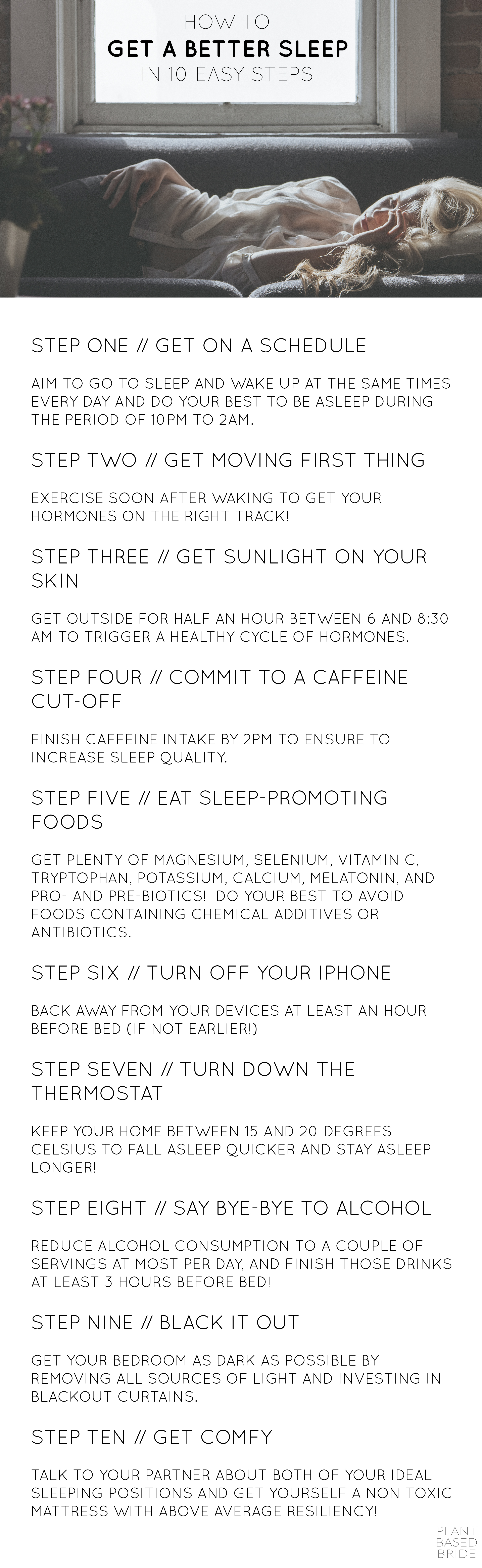
Also, feel free to pin this graphic I put together for you to remember these ten tips and spread the word!
Oh, and there's going vegan. That definitely helped me sleep at night!
Until next time,












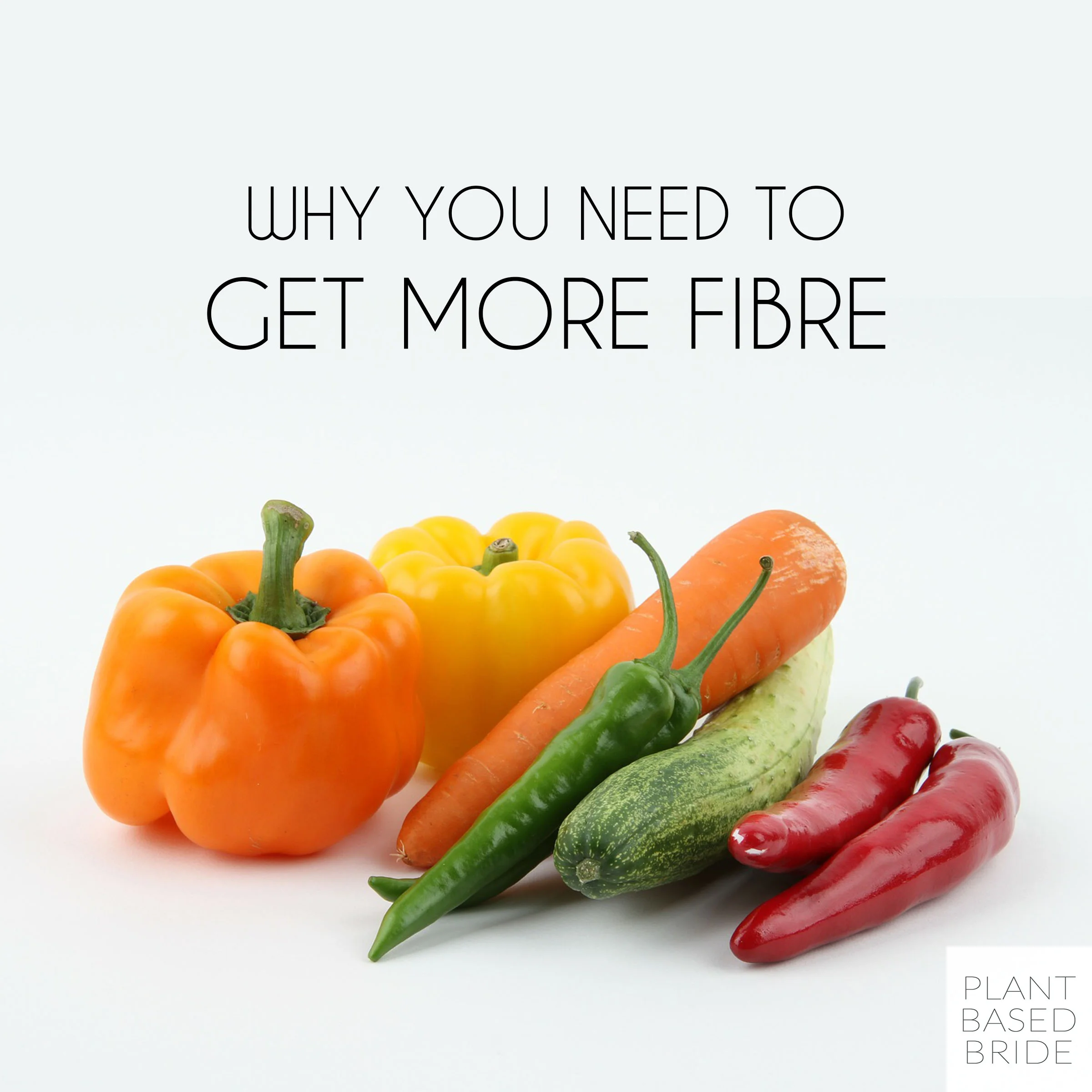
Why You Need To Get More Fibre
The Standard American Diet is dangerously low in fibre, and yet no one seems to be too concerned. They should be. Learn all about fibre and why YOU (yes, you) need to be eating more of it in today's blog post!
The Standard American Diet is dangerously low in fibre, and yet no one seems to be too concerned. They should be. Learn all about fibre and why YOU (yes, you) need to be eating more of it in today's blog post!

WHAT IS FIBRE?
Fibre is the structural component of plants (the equivalent of an animal's muscles and bones) that humans cannot digest, often known as roughage. Any transformation that occurs to the fibre we eat is due to the bacteria in our guts, rather than our own digestive system. There are two types of fibre: soluble and insoluble.
Soluble fibre is found in oats, legumes, vegetables, barley, and fruits and is great for reducing blood glucose and cholesterol in the body as well as preventing diarrhea.
Insoluble fibre is found in whole grains, nuts, fruits, and vegetables. This type of fibre prevents constipation and certain types of cancer.
WHY DO WE NEED IT?
Fibre is a necessity for a healthy diet. It:
- helps to control blood glucose;
- reduces the risk of obesity due to its ability to increase satiation;
- regulates bowel movements;
- manages blood pressure and cholesterol (reducing the risk of heart disease), and;
- reduces the risk of cancer.
Not too shabby, eh?
Fibre and Heart Disease
Fibre is inversely associated with the incidence of coronary heart disease, in other words, the more fibre you eat the less likely you are to suffer from heart disease. This is due to fibre's positive impact on heart health by reducing bad cholesterol (LDL) and managing blood pressure.
How does fibre reduce cholesterol? Viscous soluble fibre (found in barley, oats, sea vegetables, shiitake mushrooms, cherries, grapes, berries, citrus fruits, and other foods) has the ability to bind with cholesterol in the intestine, preventing its assimilation into the body by eliminating it in the stool instead.
Check out this study for more detail!
Fibre and Diabetes
From the Canadian Diabetes Association website:
'Soluble fibre may help control blood sugar by delaying gastric (stomach) emptying, retarding the entry of glucose into the bloodstream and lessening the postprandial (post-meal) rise in blood sugar. It may lessen insulin requirements in those with type 1 diabetes. Because fibre slows the digestion of foods, it can help blunt the sudden spikes in blood glucose (sugar) that may occur after a low-fibre meal. Such blood sugar peaks stimulate the pancreas to pump out more insulin. Some researchers believe that a lifetime of blood glucose (sugar) spikes could contribute to type 2 diabetes, which typically strikes after the age of 40, and more than doubles the risk of stroke and heart disease.'
Another great aspect of high-fibre meals? Their positive impact on blood sugar levels can continue for hours, even after other meals have been eaten. And there's something else - high fibre meals have been shown to significantly increase production of the blood sugar reducing hormone glucogon-like peptide 1 (GLP-1). This GLP-1 response is triggered not by the presence of soluble fibre, but by the products created through the fermentation of fibre by bacteria in the large intestine.
Essentially, if you want to control your blood sugar, you want to eat more fibre.
Fibre and Obesity
Fibre is well-known to increase satiety without adding calories and therefore encourages the maintenance of a healthy weight. This is largely due to fibre's effect of the speed of gastric emptying, in other words, fibre slows down the digestion process, keeping you full for longer. It also lowers the caloric density of the diet, meaning that a higher volume of food can be consumed for the same amount of calories.
Another benefit of fibre-rich foods for satiation? They often require more chewing than low-fibre foods - and the more you chew, the more satiated you feel. Cool, right?
Check out the following studies for more on the link between fibre and obesity: Study One, Study Two
Fibre and Colon and Bowel Health
It's time to talk about soluble and insoluble fibre again! You can't get off THAT easily.
Soluble fibre is broken down in the gut by colonic bacteria resulting in energy and gas. This type of fibre produces a gel-like substance in stool which binds to other substances (such as cholesterol) and removes them when the stool is eliminated. It also slows and regulates gastric emptying (as I previously mentioned) which results in more regular bowel movements.
Insoluble fibre is not so easily broken down in the gut, however it holds water extremely well (up to 15x its weight) and therefore aids in increasing the weight and size of stool as well speeding up the rate of food passage through the digestive system.
Consuming the right types of fibre in the proper amounts can aid in reducing the symptoms of IBS including abdominal pain, constipation, diarrhea, incomplete evacuation, and excessive gas. Learn which types of fibre aid in resolving each symptom here.
What about colon health?
Fibre aids our colons by directly fuelling the good bacteria in our gut. When you eat a low-fibre diet you are literally starving your gut bacteria, which you need to stay healthy. Different species of bacteria feed on different types of fibre, so eating a wide variety of plant foods is imperative for bacterial balance.
Another way that fibre supports the health of our colon is in their digestion by bacteria. This results in short-chain fatty acids which are then used by the cells of our large intestinal wall as fuel. Without this fuel the cells lining our colon cannot carry out their metabolic activities, and cannot support normal intestinal function.
Fibre and Cancer
A study conducted in 2010 (among others, such as this one) found a clear inverse-association between dietary fibre intake and colorectal cancer risk, meaning the more fibre that was consumed by the subjects, the lower their risk of developing colorectal cancers.
But why does fibre have this effect?
Well, we're not yet entirely sure. What we do know is that scientific evidence for this phenomenon has been accumulating since the 1970s, when the hypothesis was proposed by Denis Parson Burkitt, an Irish surgeon, that dietary fibre reduces the risk of colorectal cancer. This was based on his observation that rural Africans eating a high-fibre diet had low rates of these cancers.
'Several plausible mechanisms have been proposed to explain the hypothesis, including increased stool bulk and dilution of carcinogens in the colonic lumen, reduced transit time, and bacterial fermentation of fibre to short chain fatty acids.' (From the introduction of this 2011 study.)
More and more researchers are delving into this field of study, giving us hope that a definitive answer will be found soon!
HOW MUCH DO WE NEED?
You already know where you can get fibre. It is not found in any animal foods, but is present in abundance in plant foods such as vegetables, fruit, legumes, nuts, seeds, and unprocessed grains.
How much we need, however, is a slightly more complicated question. It is, in fact, possible to ingest too much fibre (which can lead to bloating, abdominal pain, increased gas, and diarrhea), but how much is too much? The conservative recommendation for dietary fibre consumption is 25-30g per day, but as a person on a whole foods plant based diet I eat more in the range of 70-80g of fibre a day (while experiencing none of the aforementioned side-effects of too much dietary fibre).
What gives?
Many experts in the plant based nutrition field see this daily recommendation as more of a bare minimum than an optimal range, and as there has been no upper limit of safe dietary fibre consumption set, see it as a 'more is better' type of situation. I tend to agree with them. The best way to know if you're ingesting too much fibre is to be in tune with your own body and watch for the signals it gives you. However, from my extensive research I have come to the conclusion that it would be VERY difficult indeed to ingest too much dietary fibre without vastly surpassing your daily calorie needs.
In other words, have at it!
I hope you enjoyed this post and learned a little more about fibre than you knew before!
Until next time,

How much fibre do you get in a typical day? Have I convinced you to up that amount?






SOURCES & FURTHER READING
http://www.whfoods.com/genpage.php?tname=nutrient&dbid=59
http://www.eatbalanced.com/why-eat-balanced/why-do-we-need-fibre/
http://www.bmj.com/content/347/bmj.f6879
http://www.diabetes.ca/diabetes-and-you/healthy-living-resources/diet-nutrition/fibre
http://www.ncbi.nlm.nih.gov/pubmed/3032822
http://link.springer.com/chapter/10.1007%2F978-1-4615-6850-6_13
http://www.hsph.harvard.edu/nutritionsource/fiber-and-colon-cancer/
http://www.jjs.me.uk/patientinfo/faf.html

Why You Need Blackstrap Molasses In Your Life
Blackstrap molasses. Sounds like something you wouldn't want to put in your mouth. But what if I told you that you should, and everyday? Find out why you're missing out if you're not taking blackstrap religiously after the jump!
Blackstrap molasses. Sounds like something you wouldn't want to put in your mouth. But what if I told you that you should, and everyday? Find out why you're missing out if you're not taking blackstrap religiously after the jump!

First things first, what is blackstrap molasses?
Blackstrap is just one type of molasses. Molasses is the byproduct of removing the sugar from sugar cane juice by boiling. The first boiling produces light molasses (the sweetest type) and second boiling produces dark molasses (the mid-sweetness type). This is because each time the juice is boiled, more sugar is extracted - rendering the left over substance (molasses) less sweet.
Blackstrap molasses is a result of the third boiling, making it thicker, darker, and the least sweet. It is more bitter than regular or light molasses, but also has incredible health effects - as its vitamin and mineral content has been highly concentrated.
The benefits of blackstrap molasses...
...are plentiful. Just one tablespoon of blackstrap molasses is only 60 calories yet carries a serious nutritional punch with:
- 21% of your recommended daily intake of potassium (important for a healthy nervous system and preventing arthritis);
- 10% of your recommended daily intake of calcium (essential for bone health);
- 15% of your recommended daily intake of iron (vital for the creation of red blood cells);
- 10% of your recommended daily intake of vitamin B6 (another piece of the red blood cell puzzle), and;
- 8% of your recommended daily intake of magnesium (used in conjunction with calcium for bone production and maintains heart heath).
It has also been noted, anecdotally, that consumption of blackstrap molasses improves hair and skin health due to its copper content, approximately 14% of your recommended daily intake, which aids in cell rebuilding. It also contains manganese and zinc, both essential to good health.
Not enough for you? The vitamins, minerals, and antioxidants in blackstrap molasses are speculated to:
- soften stool (and therefore improve bowel movement regularity and quality);
- reduce skin aging,
- improve skin conditions such as acne, eczema, and psoriasis, and;
- help prevent cancer.
So now that you're convinced that you SHOULD take it...
How much do you need?
Most recommendations are for between 1 and 2 tablespoons a day. Depending on the nutrient density of your diet you should adjust blackstrap intake accordingly (aka those who eat a whole food plant based diet may only need 1 tbsp, while junk food vegans may want to take 2!)
How do you take it?
Some like to mix it into a glass of warm water for a mineral tonic, while others simply spoon it into their mouths and chase it with water or another drink! I like to maximize my iron absorption by chasing it with a juice or smoothie that's high in vitamin C.
I hope you'll consider picking up some organic blackstrap molasses and adding it to your daily routine!
Until next time,

What's a healthy habit that you do everyday? Let me know in the comments below!
Read some more about Blackstrap Molasses or...


The Truth About Eggs
A month ago I put together a post on the dairy industry and why I will never again support it - but eggs have gone largely uncovered on my blog, that is, until today. Let's talk facts!
A month ago I put together a post on the dairy industry and why I will never again support it - but eggs have gone largely uncovered on my blog, that is, until today. Let's talk facts!

H E A L T H
Most people claim to eat eggs for the health benefits, especially their protein content. Let's consider the actual makeup of an egg:
An egg is 2% carbohydrates, 63% fats, and 35% protein. One large egg (50g) contains approximately 211mg of cholesterol, no fibre, and 2g of saturated fat (almost half of the total fat content).
Now let's take a look at what this means for the human body.
Carbohydrates
The 100 000 billion cells in our body rely on carbohydrates as their main source of energy, as each and every cell can use them for fuel. We need carbohydrates for all of our major systems including the central nervous system, the heart, and the brain to function properly and they are the easiest macronutrient to convert to energy. For a food touted as the perfect health food, you would think it would be made up of more than 2% of our ideal energy source!
Fat
While we need a small amount of fat in our diets for maintaining cell membranes and providing cushioning for organs, it is widely accepted that a high-fat diet is an unhealthy one. Recommendations for fat intake from physicians and nutritionists range from 35% of daily calories on the high end to 10% on the low end.
Not only are eggs high in total fat, but they are high in saturated fat - the single biggest contributor to high cholesterol and heart disease (which killed more than 17.5 million people in 2012).
Cholesterol
From Virginia Tech's Educational Report on Heart Healthy Eating: "A cholesterol lowering diet should first be low in total fat, especially saturated fat, as well as cholesterol."
The only foods that contain cholesterol are animal products, with egg yolks and organ meats ranking highest for cholesterol content. It is recommended that those with heart disease, high cholesterol, or diabetes keep their dietary cholesterol intake to below 200mg per day - less than that found in a single egg. There is also the (often unmentioned) fact that the human body has no need whatsoever for dietary cholesterol. We make 100% of the cholesterol we need for normal, healthy functioning in our own bodies, and never to excess.
"Patients at risk of cardiovascular disease should limit their intake of cholesterol. Stopping the consumption of egg yolks after a stroke or myocardial infarction would be like quitting smoking after a diagnosis of lung cancer: a necessary action, but late." - Dietary cholesterol and egg yolks: Not for patients at risk of vascular disease
But what about egg whites? While it's true that the majority of the fat and cholesterol is found in the yolk, and if your only concern is reducing dietary cholesterol intake eliminating the yolk may seem like the solution, the unfortunate truth is that the egg white is a much more concentrated vessel for animal protein than the whole egg, and that's not so good for us either.
Protein
Protein has been hailed the most important macronutrient in popular culture for decades, and while it is very important for proper growth in children, tissue repair, preserving muscle mass, and creating essentials hormones and enzymes (among other things), we don't need NEARLY as much of it as people think. The average healthy adult of either gender requires 0.66g of protein per day per kg of weight, meaning a 150lb (68kg) person would need 44.9g of protein per day to meet their daily protein needs. This is easily achievable in a vegan diet, and is quickly surpassed in a vegetarian or omnivorous one.
So what's the problem with getting more protein? Excess protein increases the risk of kidney disease, kidney stones, and some types of cancer. Animal protein in particular has a startling effect on the growth of cancerous tumours, as seen in the extensive research done by Colin T. Campbell in The China Study.


Fibre
Eggs are completely devoid of fibre, which is essential for eliminating waste. Low fibre diets can cause constipation, hemorrhoids, and an increased risk of colon cancer while high fibre diets reduce the risk of heart disease, diabetes, and obesity and lower cholesterol.
Salmonella
More than 100,000 people are poisoned by salmonella-tainted eggs per year in the US alone and experience diarrhea, fever, and abdominal cramps for up to a week.
Diabetes
A review of fourteen studies conducted on the effect of egg consumption on diabetes concluded that highest egg intake increased the risk of developing diabetes by 68% compared to those who consumed the least.
Cancer
Egg consumption has an effect on the development on many types of cancer:
- Consuming 1.5 eggs per week resulted in almost 5 times higher risk of colon cancer when compared to those who consumed less than 11 eggs per year;
- Men who consume 2.5 eggs per week increase their risk for developing a deadly form of prostate cancer by 81% when compared to those who consume less than half an egg per week;
- The WHO found that eating eggs is associated with death from colon and rectal cancer when analyzing data from 34 countries in 2003, and;
- Moderate egg consumption was found to triple the risk of developing bladder cancer in a 2005 study published in International Urology and Nephrology.
Do you still think that eggs are a healthy choice?
A N I M A L R I G H T S
As if the health risks of consuming eggs weren't convincing enough, life is not pleasant for the hens and chicks on factory farms.
While chickens can live up to 14 years on average, hens only lay eggs for about two of those. Guess how many years they're allowed to live on factory farms? Correct. Two. What happens next? They are sent to the slaughterhouse, as they are no longer "useful" for anything but their flesh.
It begins at birth: chicks will never see their mothers and are quickly separated, males from females. Many die from the rough treatment in automated sorting machines. The females are kept and raised to lay, but what about the males? They are of no use to the egg industry and are either thrown in trash bags to suffocate or ground up alive. Babies, only days old, are GROUND UP ALIVE. By the millions. “There is, unfortunately, no way to breed eggs that only produce female hens. If someone has a need for 200 million male chicks, we’re happy to provide them to anyone who wants them. But we can find no market, no need.” - Mitch Head, the spokesperson for United Egg Producers. How is this allowed to go on?
Life for the females may be longer, but is full of suffering nonetheless. Crammed into tiny battery cages, 5 to 11 in each, they are stacked on top of each other allowing the filth from cages above to drop into those below. Dead and diseased hens may be left to decompose in the cages with the living (who are producing eggs for human consumption, mind you), causing further death and disease.
Due to the crammed and stressful living conditions the birds are subjected to, farmers clip off the tips of their sensitive beaks, full of nerve endings, to prevent hens pecking each other to death.
Many turn to organic or "free-range" eggs, under the impression that the hens live happier lives. That is not necessarily the case. Labels on egg cartons, other than "organic", are not subject to any government regulations. That means that there is no government body keeping tabs on the conditions at egg farms ensuring that birds are treated humanely and approving "free-range" status.
Many organic and “free-range” farms are just like factory farms in the way they crowd thousands of birds into sheds or on muddy lots and debeak the hens. Most hens never have the chance to go outside and breathe fresh, clean air. Male chicks are disposed of in the exact same way as on factory farms and death and disease from less-than-ideal conditions still occur regularly.
There is another similarity. The hens will still be sent to slaughter once egg production stops a mere 7th into their lives. The suffering they experience during their lives may be incrementally less than those on factory farms, but they are still only allowed to live until they can no longer bring in a profit.
Chickens are smart, funny, and have distinct personalities from one another. They have a sense of time and can communicate using more than 24 different vocalizations, beginning even before hatching. By the time they have broken out of their shell they can recognize their mother's voice. Chickens have very good memories and can not only count, but understand geometry. They are caring beings who develop relationships and learn from observing the habits of others.
They don't deserve to experience only suffering each and every day of their lives, which are being cut so incredibly short.
Make the healthiest and most compassionate choice available and stop including eggs in your diet today!
Until next time,

What surprised you most about eggs - their negative impact on health or the horrifying conditions of farms?
Not sure what to read next? Try How To Go Vegan or 10 Reasons To Go Vegan!
S O U R C E S
http://nutritiondata.self.com/facts/dairy-and-egg-products/111/2
http://pubs.ext.vt.edu/348/348-898/348-898.html
http://nutritiondata.self.com/facts/dairy-and-egg-products/112/2
http://www.forksoverknives.com/whats-wrong-with-eggs/
http://www.mckinley.illinois.edu/handouts/macronutrients.htm
http://www.who.int/mediacentre/factsheets/fs310/en/index2.html
http://plantbasedbride.com/blog/vegansvsprotein
http://www.ncbi.nlm.nih.gov/pmc/articles/PMC2989358/
http://breakingmuscle.com/nutrition/the-great-egg-debate-4-reasons-you-need-to-stop-eating-eggs
http://www.webmd.com/food-recipes/food-poisoning/salmonellosis-topic-overview
http://www.peta.org/features/egg-industry-cruelty/
http://www.care2.com/causes/hipster-farmers-abandoning-backyard-chickens-by-the-hundreds.html
http://www.care2.com/causes/ground-up-alive-baby-chicks-suffer.html
http://www.care2.com/causes/horrific-conditions-for-factory-farmed-chickens-exposed.html
Coined by Elizabeth Jean @xparmesanprincessx, the personal curriculum trend is about creating a self-directed learning plan focused on areas of personal interest, loosely based on a school curriculum structure, including things like assigned reading, goals, assignments, and final projects.
At its core, the personal curriculum movement is about celebrating lifelong learning and intellectual curiosity. It's about being more intentional about how we spend our time when we're not sleeping, or at work, or doing the basic maintenance or admin or chores to keep our lives going. It's about using our free time to enrich our lives in a way that is purposeful and intentional and joyful, indulging our curiosity as adults, even once we're outside of structured school environments, getting excited about learning and allowing ourselves the freedom to go down those rabbit holes in our special interests, to challenge our brains in ways that we maybe don't get the chance to in our day-to-day lives.