

the blog.

What Is Sentience?
Sentience. A term, just like cognitive dissonance, oft-used yet seldom understood. Today we go deep into the true meaning of sentience and its impact on our perception and treatment of animals.
Sentience. A term, just like cognitive dissonance, oft-used yet seldom understood. Today we go deep into the true meaning of sentience and its impact on our perception and treatment of animals.

SENTIENT
- responsive to or conscious of sense impressions <sentient beings>
- aware
- finely sensitive in perception or feeling
Or in simpler terms, sentient being are able to feel, see, hear, smell, or taste. Sentience refers to a being's ability to experience and perceive these sensations.
The term Sentience was first used by philosophers in the 1700s to make a distinction between a being's ability to think (reason) and feel (sentience).
Many eastern religions recognize non-human animals as sentient, such as Buddhism and Jainism. This is largely due to their understanding of ahimsa, which refers to a commitment to nonviolence towards all other beings. Many yogis will be familiar with this concept, as it is the first (and arguably most important) yama described in the Yoga Sutra.
Are Animals Sentient?
In a word, yes. By the widely held definition of the term, non-human animals are sentient.
A cow can feel, see, hear, smell, and taste.
So can a pig.
And a cat. And a lamb.
And a dog. And a chicken.
Not only can they do that, but they can feel pain and pleasure.
This is a non-disputed fact. You know from first-hand experience that your cat or dog or other household companion feels pain and pleasure. And we know from observation and other forms of scientific enquiry that all other animals do as well.
This is a basic tenant of the animal rights movement. It is held that as sentient beings capable of suffering, non-human animals are entitled to protection from that very suffering.
The following quote from Jeremy Bentham, an 18th-century philosopher, encompasses the logic quite well:
The French have already discovered that the blackness of the skin is no reason why a human being should be abandoned without redress to the caprice of a tormentor... What else is it that should trace the insuperable line? Is it the faculty of reason, or, perhaps, the faculty of discourse? But a full-grown horse or dog is beyond comparison a more rational, as well as a more conversable animal, than an infant of a day, or a week, or even a month, old. But suppose the case were otherwise, what would it avail? The question is not Can they reason? nor, Can they talk? but, Can they suffer?
A simple example?
If you scratch a table with your keys, the table will not suffer. But if you cut into a cow's skin? You better bet he's going to feel pain.
Need further proof? In 2012 an international panel of neuroscientists came together to sign the Cambridge Declaration on Consciousness, stating that humans are not unique in having consciousness as many animals including "all mammals and birds, and many other creatures, including octopuses" also posses the neurological substrates allowing them to possess a consciousness.
Humans are not alone in our ability to feel pain and pleasure, to see, to hear, to taste, to touch, and to smell. This is known.
Chimpanzees understand and exhibit fairness.
Cows form life-long friendships and feel stressed when they are separated.
We know these things. And yet, as a society, we avoid declaring animal sentience.
Perhaps we are afraid to acknowledge that we have been systematically torturing and killing billions of sentient beings for centuries.
Or perhaps, even more damaging to our fragile human ego, we are afraid to come to terms with the truth - that we are far more similar to other species than we like to think.
What is your take on animal sentience? Weigh in in the comments.
Until next time,

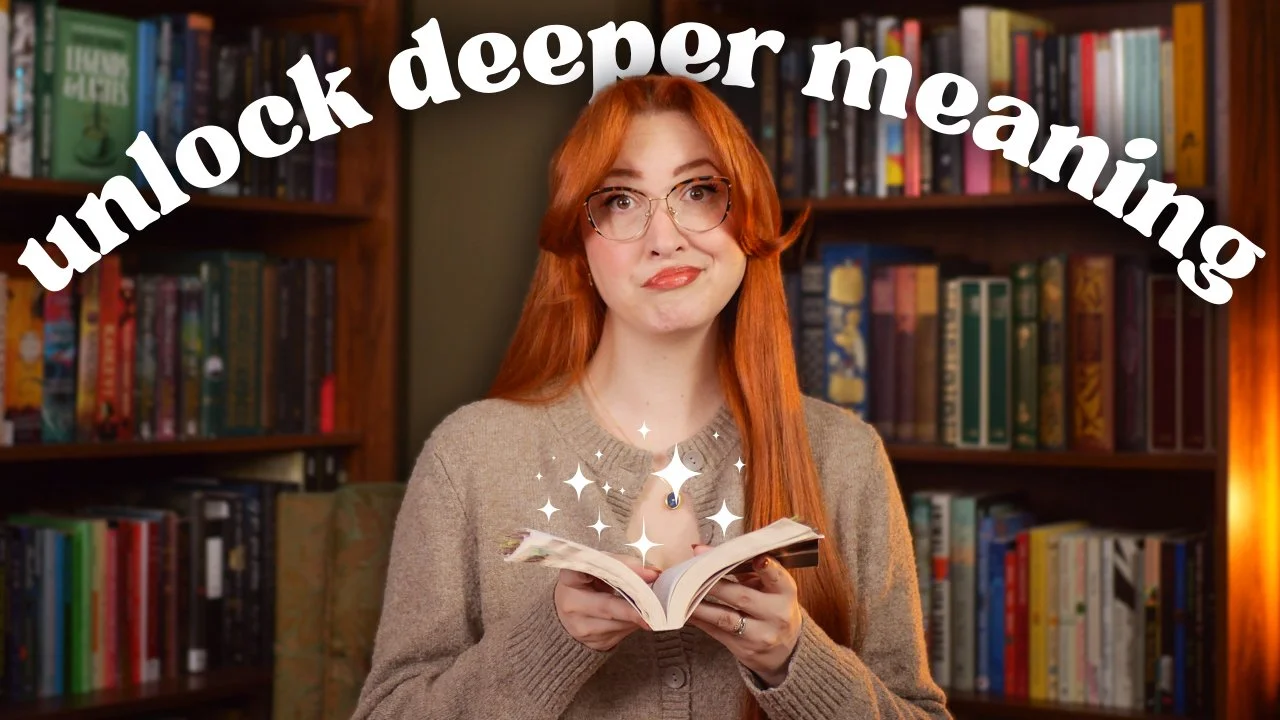











Coined by Elizabeth Jean @xparmesanprincessx, the personal curriculum trend is about creating a self-directed learning plan focused on areas of personal interest, loosely based on a school curriculum structure, including things like assigned reading, goals, assignments, and final projects.
At its core, the personal curriculum movement is about celebrating lifelong learning and intellectual curiosity. It's about being more intentional about how we spend our time when we're not sleeping, or at work, or doing the basic maintenance or admin or chores to keep our lives going. It's about using our free time to enrich our lives in a way that is purposeful and intentional and joyful, indulging our curiosity as adults, even once we're outside of structured school environments, getting excited about learning and allowing ourselves the freedom to go down those rabbit holes in our special interests, to challenge our brains in ways that we maybe don't get the chance to in our day-to-day lives.